
Safety group rates ChatGPT for Teens 'unacceptable risk'; OpenAI disputes tests
AI-generated illustration
Advertisement
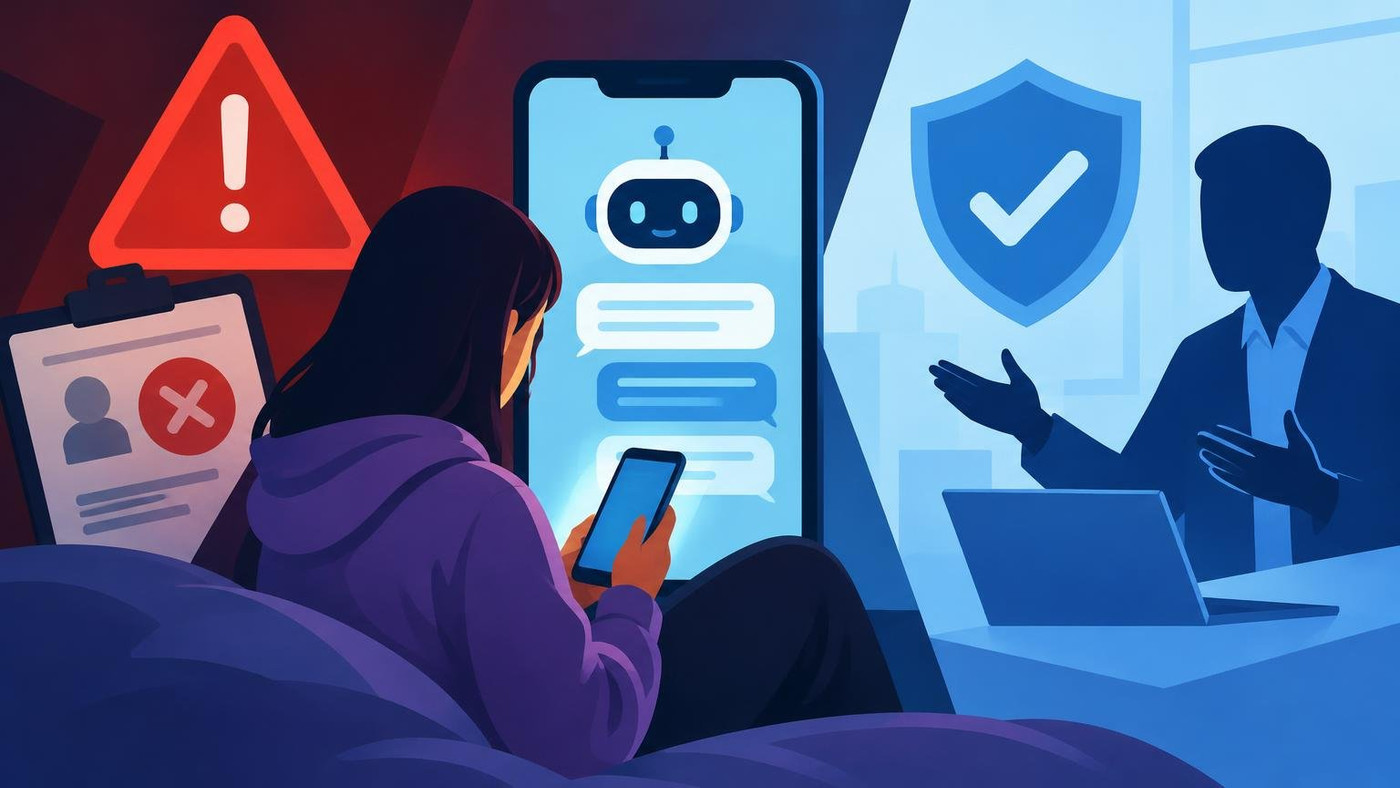
Common Sense Media rated ChatGPT for Teens an 'unacceptable risk' for under-18s after crisis tests produced no parental alerts; OpenAI disputes the findings.
What Happened
A child safety group has rated OpenAI's "ChatGPT for Teens" an "unacceptable risk" for all users under 18, and OpenAI has pushed back. The Youth AI Safety Institute of Common Sense Media, a US non-profit, published its assessment this week and it drew wide coverage on Friday, October 9, 2026. The institute said it tested more than 4,000 prompts before and after the teen mode launched in August, and that its testers received no parental alerts when they discussed suicidal thoughts, self-harm and disordered eating on parent-linked accounts. It urged OpenAI to pause marketing the product and keep teenagers off ChatGPT until it can offer a safe, age-appropriate experience. OpenAI said much of the testing may have happened before parental controls were fully active, making the findings inaccurate.
Key Facts
- Common Sense Media's Youth AI Safety Institute rated ChatGPT for Teens "unacceptable risk" for everyone under 18.
- The institute says it tested more than 4,000 prompts, before and after the teen mode launched in August 2026.
- Testers on more than a dozen parent-linked accounts got no parental alerts during conversations about suicide, self-harm and eating disorders, the institute said.
- Some protections worked, such as refusing sexual role-play; others failed, including notifications, ways around learning features, and adult-registered accounts not switching to teen protections.
- OpenAI says parent and teen accounts must be linked for three hours before alerts can be sent, and that much of the testing may have come before controls were active.
- Common Sense chief executive Jim Steyer said, "We 100% stand behind the quality of our research." The group has also rated Grok and Meta AI "unacceptable risk".
Why It Matters
Many teenagers already use AI chatbots for homework, advice and company. OpenAI launched a teen version of ChatGPT in August, with features such as parental controls and alerts meant to warn parents if a teenager appears to be in crisis. Those alerts are the feature many parents would count on most. If they fail in the situations that matter, families may be relying on a safety net that is not there.
The disagreement turns on a technical detail. OpenAI says alerts only work after a parent and teen account have been linked for three hours. The institute says some, but not all, of its test accounts were inside that window. Both points can be true at once, which leaves the core question open: how reliably do the alerts work in real use? An independent re-test after the three-hour period would help settle it.
For young users, the lesson is practical. A chatbot is not a counsellor. If you or a friend are struggling, talk to a trusted adult, a teacher or a professional. In India, the government's Tele-MANAS mental health helpline is free and available around the clock at 14416. Using AI for study or ideas is fine, but serious personal problems need real people.
For parents, the report is a reminder that safety settings are a starting point, not a guarantee. Linking accounts, checking that controls are switched on, and talking openly with teenagers about what they use AI for matter more than any single feature.
| Point | Common Sense Media | OpenAI |
|---|---|---|
| Overall rating | Unacceptable risk for under-18s | Disputes the findings |
| Parental alerts | None received in crisis tests | Need accounts linked for three hours first |
| Testing | Over 4,000 prompts, before and after launch | Much testing may predate active controls |
Impact
Short-term: Parents and schools may hold back on encouraging teen use of ChatGPT, and OpenAI faces pressure to show its alerts work as promised.
Long-term: Independent safety ratings are becoming a check on AI companies, and regulators looking at children's use of AI may draw on such tests when setting rules.
Who is affected: Teenagers who use ChatGPT, their parents and teachers, OpenAI, and other AI companies whose products face similar ratings.
Key Takeaway
Common Sense Media rated ChatGPT for Teens an "unacceptable risk" after its crisis tests produced no parental alerts, while OpenAI says the tests ran before controls were fully active.
Questions and Answers
Is ChatGPT for Teens safe for under-18s?
Common Sense Media's Youth AI Safety Institute rated it an "unacceptable risk" for all users under 18, citing failed parental alerts in crisis conversations; OpenAI disputes the findings.
Why does OpenAI disagree with the report?
OpenAI says parent and teen accounts must be linked for three hours before alerts can be sent and that much of the testing may have happened before parental controls were active.
Which other AI chatbots got the same rating?
Common Sense Media has also rated Grok and Meta AI as "unacceptable risk".
Where can a young person in India get help if they are struggling?
The government's Tele-MANAS helpline at 14416 offers free, round-the-clock mental health support, and talking to a trusted adult or professional is better than relying on a chatbot.
Sourced and fact-checked by the Peepals Global Editorial Team
Reported, fact-checked and published by the Peepals Global Editorial Team.
Advertisement