
Cellegant hydrogen drones: IIT Gandhinagar start-up raises Rs 2.61 crore
 By Siddharth VermaBusiness Correspondent, Peepals Bharat
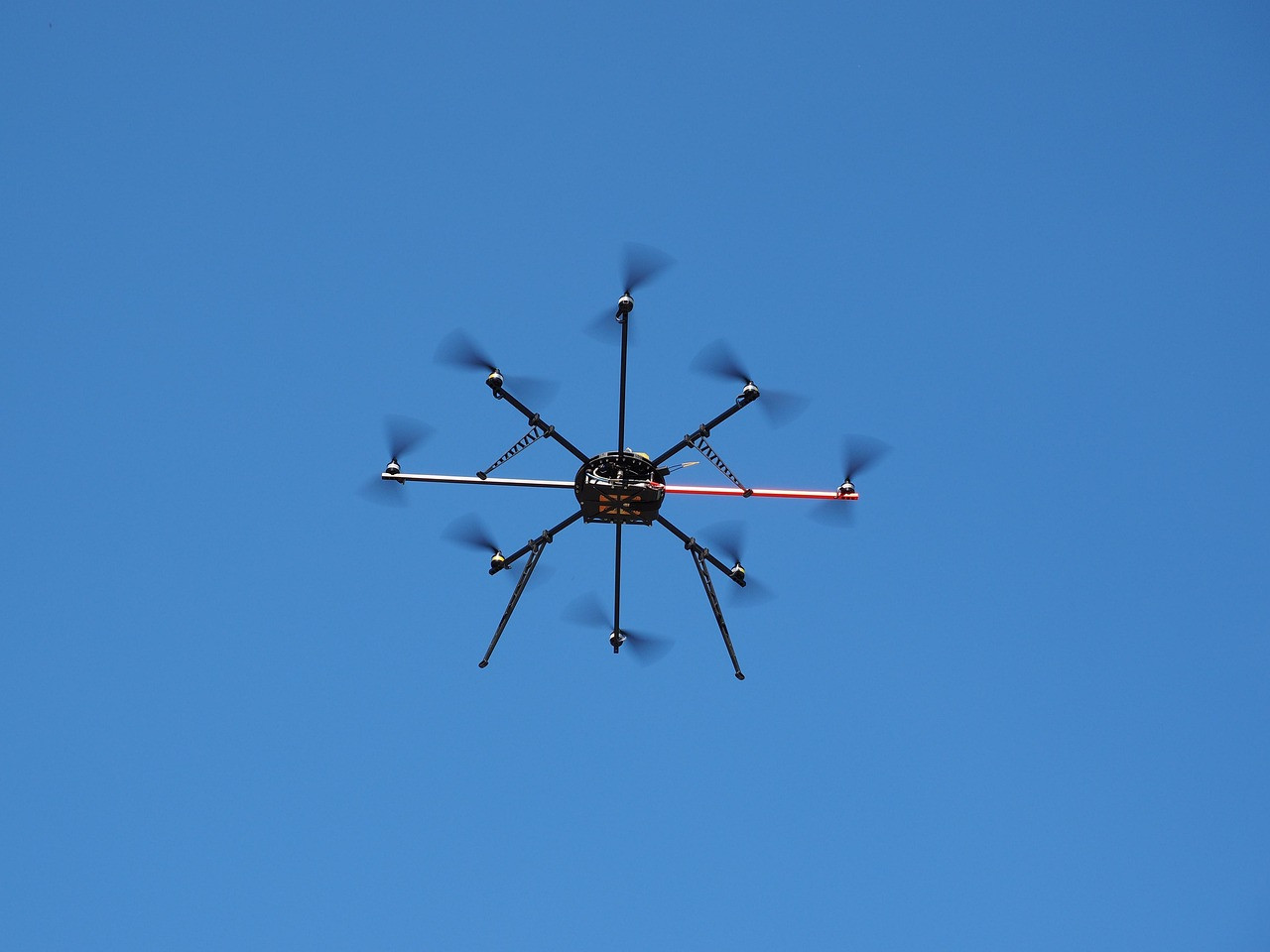
Representative image: Hans / Pixabay
Cellegant Energy Systems, founded by IIT Gandhinagar professor Atul Bhargav, raised Rs 2.61 crore led by GVFL to build hydrogen fuel-cell drone drivetrains.
What Happened
Cellegant Energy Systems, a start-up founded by IIT Gandhinagar professor Dr Atul Bhargav, has raised Rs 2.61 crore to develop hydrogen fuel-cell power systems for drones and other unmanned vehicles, according to reports published on 3 and 4 November 2026. The round was led by GVFL through its Prarambh Fund, with CoCreate Aarambh and IIEC, the incubation centre of IIT Gandhinagar, also investing. The company says it will use the money to build its hybrid hydrogen drivetrains, protect its intellectual property and expand its team, with a 35-kg hydrogen-powered drone as its immediate goal.
Key Facts
- Company: Cellegant Energy Systems, founded by Dr Atul Bhargav, a professor at IIT Gandhinagar.
- Amount raised: Rs 2.61 crore, reported as about $275,000.
- Investors: GVFL (lead, through its Prarambh Fund), CoCreate Aarambh and IIEC, IIT Gandhinagar's incubator.
- Product: hybrid hydrogen fuel-cell drivetrains that aim to extend the flight time of drones and other unmanned vehicles and cut reliance on batteries and imported parts.
- Technologies named: hybrid power management, passive hydrogen recirculation and solid-state hydrogen storage.
- Near-term goal: a 35-kg hydrogen-powered drone, and moving the technology from technology readiness level 3 to level 6 over six to twelve months, reports said.
- Other target markets: autonomous robots, heavy-lift drones, marine and underwater vehicles, and stationary power.
Why It Matters
Most drones today run on lithium batteries, which limits how long they can stay in the air, especially when they carry heavy loads. For uses such as farm spraying, surveying, border patrol, disaster relief and deliveries, flight time is often the biggest constraint. A hydrogen fuel cell produces electricity from hydrogen and oxygen, with water as the by-product, and can store more energy for its weight than a battery, which is why hydrogen is being tested as a way to keep drones flying longer.
Cellegant's approach is a hybrid: a fuel cell paired with power-management electronics so that the drone can draw extra power when it needs it, such as at take-off. Storing hydrogen in solid form, rather than as a high-pressure gas, is meant to make it safer and easier to handle. The company says its aim is also to reduce India's dependence on imported components for unmanned systems.
The funding round is small by start-up standards, but it is typical of deep-technology companies coming out of Indian research institutions. A professor-founder, an institute incubator and a state-linked venture fund are a common combination at this early stage, before the technology is proven at scale. GVFL's managing director, Mihir Joshi, said the company's focus on powering unmanned systems for longer durations appealed to the fund, according to reports.
Technology readiness levels (TRL) are a scale from 1 to 9 used to describe how mature a technology is. Level 3 broadly means the idea has been shown to work in the laboratory, while level 6 means a prototype has been demonstrated in a relevant environment. Moving from 3 to 6 in under a year would be a significant step.
Peepals calculation: The reported amounts of Rs 2.61 crore and about $275,000 imply an exchange rate of roughly Rs 95 to the dollar (2,61,00,000 ÷ 2,75,000 ≈ 94.9). The planned jump from TRL 3 to TRL 6 covers three of the nine levels on the scale, or a third of the full path to a proven system (3 ÷ 9 ≈ 0.33). Our calculation from the reported figures.
| Item | Detail |
|---|---|
| Company | Cellegant Energy Systems |
| Founder | Dr Atul Bhargav, IIT Gandhinagar |
| Amount | Rs 2.61 crore (about $275,000) |
| Lead investor | GVFL, through its Prarambh Fund |
| Near-term goal | 35-kg hydrogen-powered drone; TRL 3 to 6 in 6-12 months |
Impact
Short-term: The money lets the company build and test its drivetrain and work towards a 35-kg drone prototype, while hiring more engineers and filing for patents.
Long-term: If hydrogen drivetrains prove reliable, drones used in agriculture, logistics, defence and disaster response could fly much longer on a single load of fuel. Success would also show that research from Indian institutes can be turned into products in a field now dominated by imported parts.
Who is affected: Drone makers and operators, defence and security users, researchers and student entrepreneurs at IIT Gandhinagar, and early-stage investors in Gujarat's deep-tech ecosystem.
Key Takeaway
IIT Gandhinagar professor Atul Bhargav's start-up Cellegant has raised Rs 2.61 crore, led by GVFL, to build hydrogen fuel-cell power systems that could keep drones flying longer.
Questions and Answers
How much did Cellegant Energy Systems raise?
Cellegant raised Rs 2.61 crore, reported as about $275,000, in a round led by GVFL through its Prarambh Fund, with CoCreate Aarambh and IIT Gandhinagar's incubator IIEC also investing.
What does Cellegant make?
It is developing hybrid hydrogen fuel-cell drivetrains for drones and other unmanned vehicles, using hybrid power management, passive hydrogen recirculation and solid-state hydrogen storage, to extend flight time and reduce reliance on batteries and imported parts.
Who founded Cellegant?
Dr Atul Bhargav, a professor at IIT Gandhinagar.
Why use hydrogen in drones?
A hydrogen fuel cell can store more energy for its weight than a battery, so a drone can fly longer or carry more. The only by-product of the reaction is water.
Disclaimer: Prepared by the Peepals newsroom from publicly available sources with AI assistance. Information is accurate to the best of our knowledge at the time of publication and may change. Images may be representative. Not professional advice. Report an error via our contact page.
By Siddharth Verma, Business CorrespondentCovers Business and more for Peepals Bharat. All stories by Siddharth Verma
Punjab computer teachers DA hike: 181% to 221% for 6,507 PICTES staff
Diwali sales 2026: CAIT says trade tops Rs 6 lakh crore
Get the day's stories in your inbox
Peepals Weekly: the week decoded, free. One email a week, unsubscribe in one click.
Siddharth Verma is a pen name of the Peepals Global Editorial Team, which researches, fact-checks and publishes every story. The portrait is an illustration.