
Customs notifies origin rules for India-New Zealand trade pact, in force October 20
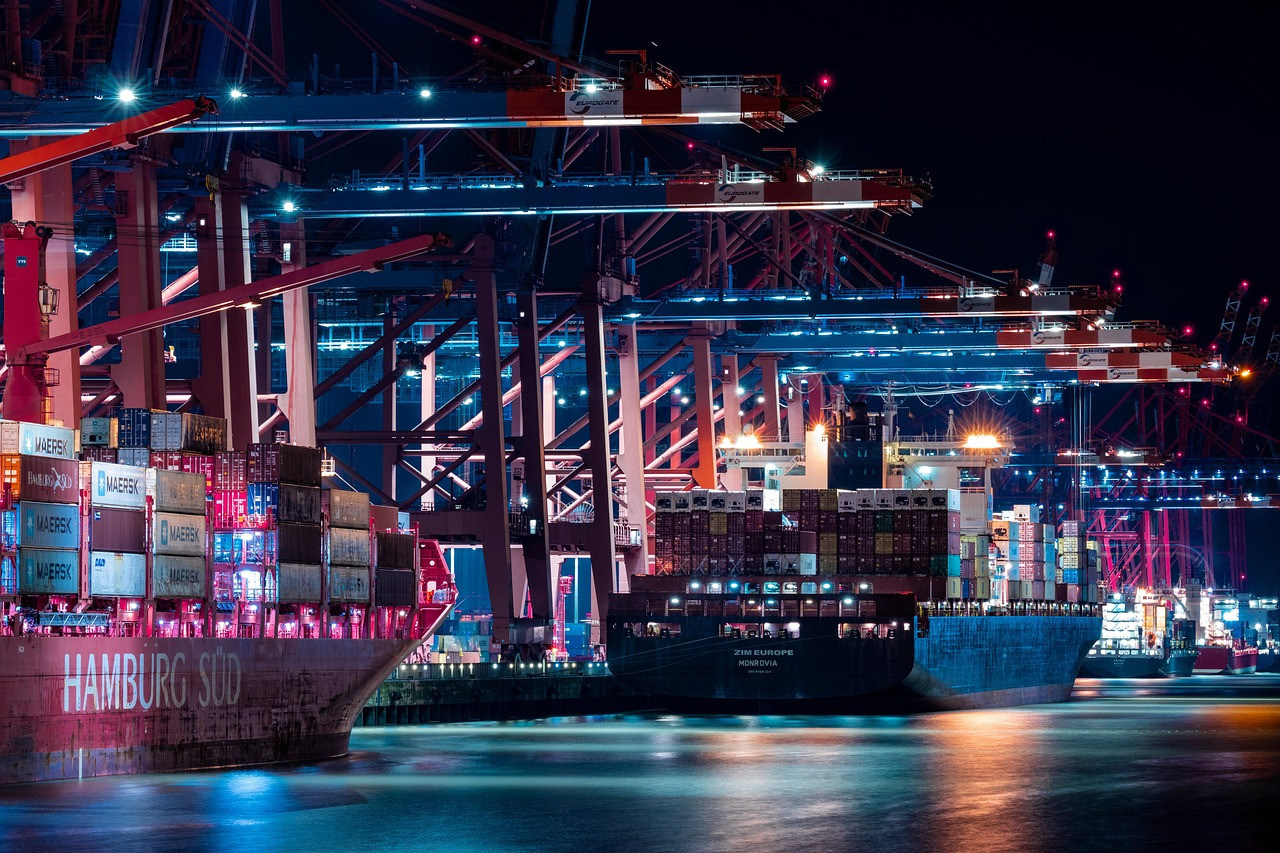
Representative image: Niklas9416 / Pixabay
CBIC notified rules of origin for the India-New Zealand FTA on October 12, 2026; they take effect on October 20 along with the trade pact.
What Happened
The Central Board of Indirect Taxes and Customs (CBIC), under the Ministry of Finance, has notified the rules that decide which goods count as originating from India or New Zealand under the two countries' free trade agreement. The Customs Tariff (Determination of Origin of Goods under the Free Trade Agreement between India and New Zealand) Rules, 2026 were issued as Notification No. 82/2026-Customs (N.T.) on Monday, October 12, 2026, and were reported on October 13. They take effect on Tuesday, October 20, 2026, the day the trade agreement is due to come into force.
Key Facts
- The rules were issued under section 5(1) of the Customs Tariff Act, 1975, and published as G.S.R. 878(E).
- They apply from October 20, 2026, in step with the start of the India-New Zealand free trade agreement.
- An importer claiming a lower, preferential duty must back the claim with a valid proof of origin: a certificate of origin or an eligible origin declaration.
- A proof of origin is generally valid for twelve months.
- Eligible importers may claim the preferential rate after import and seek a refund of excess duty paid.
- Importers, exporters, producers and the authorities must keep the prescribed records for at least five years.
- Preferential treatment can be suspended for a time where origin is misrepresented persistently or deliberately.
- Three annexures set out product-specific rules (Annexure A), the certificate of origin template (Annexure B) and the origin declaration template (Annexure C).
Why It Matters
A free trade agreement lowers or removes duties only for goods that genuinely come from the partner country. Rules of origin are how customs officers check that claim. Without them, goods made in a third country could be routed through a partner with little or no processing and still enjoy the lower duty. The new rules give Indian customs the legal basis to accept, question or refuse such claims once the pact starts.
The rules deal with the technical tests that decide origin. According to the notification, they cover bilateral cumulation, which lets inputs from one partner count as originating in the other; the calculation of qualifying value content, meaning how much of a product's value must come from the partner countries; minimal operations, such as simple packing or labelling, that are not enough on their own to confer origin; and de minimis tolerances, which allow a small share of non-qualifying material. Product-specific rules in Annexure A set the test for each item.
The notification comes a week before the agreement starts, giving traders and customs brokers only a few days to update their paperwork. The rulebook puts its stress on documents, record-keeping and the power to suspend benefits where abuse is found.
For exporters, the rules work in both directions. Indian firms selling to New Zealand will need correct origin paperwork to claim lower duties there, while Indian importers buying New Zealand goods must hold valid proof before claiming the concession at an Indian port.
| Rule | What it requires |
|---|---|
| Proof of origin | Certificate of origin or eligible origin declaration |
| Validity of proof | Generally 12 months |
| Record-keeping | At least 5 years |
| Misuse | Preferential treatment can be suspended |
| Start date | October 20, 2026 |
Impact
Short-term: Importers, exporters and customs brokers dealing with New Zealand must align their documents with the new templates before October 20. Eligible importers who cannot claim the lower rate at the time of import can still claim it afterwards and seek a refund of excess duty.
Long-term: Clear origin rules should make it easier to use the trade pact as intended and harder to route third-country goods through it. Firms that keep good records will find audits and verification simpler over the five-year retention period.
Who is affected: Indian exporters to New Zealand, importers of New Zealand goods, customs brokers and freight forwarders, small manufacturers that use imported inputs, and customs officers at Indian ports.
Key Takeaway
From October 20, 2026, any claim to a lower duty under the India-New Zealand trade pact must meet the newly notified origin tests and be backed by valid proof of origin.
Questions and Answers
When do the India-New Zealand rules of origin take effect?
The rules, notified by CBIC on October 12, 2026, take effect on October 20, 2026, the day the India-New Zealand free trade agreement is due to come into force.
What document is needed to claim a lower duty under the agreement?
An importer needs a valid proof of origin, either a certificate of origin or an eligible origin declaration. Templates for both are attached to the rules as Annexures B and C.
How long must traders keep records under the new rules?
Importers, exporters, producers and the relevant authorities must keep the prescribed records for at least five years.
What happens if a trader misstates where goods come from?
Where origin is misrepresented persistently or deliberately, preferential treatment can be temporarily suspended, in addition to any other action under customs law.
Disclaimer: Prepared by the Peepals newsroom from publicly available sources with AI assistance. Information is accurate to the best of our knowledge at the time of publication and may change. Images may be representative. Not professional advice. Report an error via our contact page.
Sourced and fact-checked by the Peepals Global Editorial Team
Assam reopens Pobitora rhino sanctuary; elephant safaris to follow in November
L. Murugan quits as Union minister and Rajya Sabha MP to build BJP in Tamil Nadu
Reported, fact-checked and published by the Peepals Global Editorial Team.