
Victims, not just the accused, can seek a speedy trial, Supreme Court rules

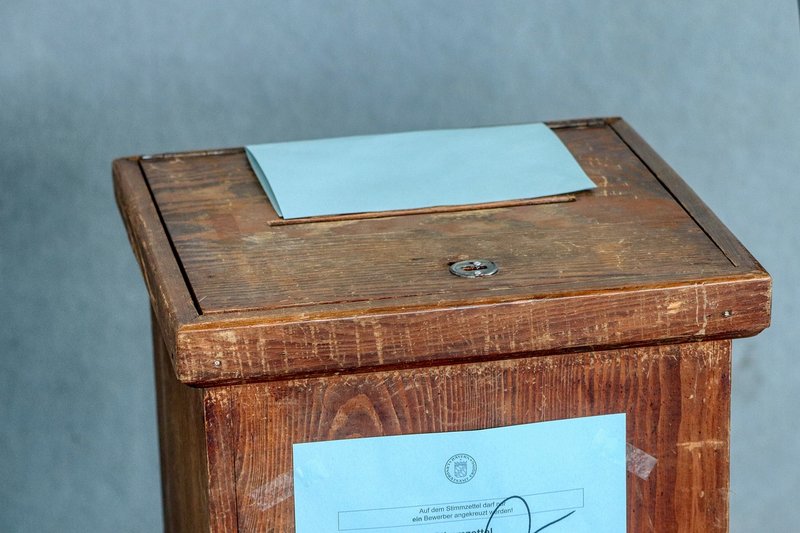
Representative image: succo / Pixabay
In a ruling reported October 9, 2026, the Supreme Court said crime victims can ask High Courts under Section 528 BNSS to speed up a trial.
What Happened
The Supreme Court of India has held that the victim of a crime, and not only the accused, has the right to ask for a speedy trial, and can approach a High Court to have a slow trial expedited. A bench of Justices Ujjal Bhuyan and Atul S. Chandurkar gave the ruling in Renuka Jain v. State of NCT of Delhi & Ors., reported as 2026 INSC 1100, in a judgment reported on October 9, 2026. The court set aside a Delhi High Court order of January 6, 2026, which had dismissed the complainant's plea as frivolous and ordered her to pay Rs 10,000 in costs. The Supreme Court cancelled the costs and directed the trial court to finish the trial within one year.
Key Facts
- Bench: Justices Ujjal Bhuyan and Atul S. Chandurkar of the Supreme Court.
- Case: Renuka Jain v. State of NCT of Delhi & Ors., 2026 INSC 1100.
- The Delhi High Court had accepted the prosecution's argument that in a case prosecuted by the State, the complainant is only a witness and cannot file such a petition.
- The Supreme Court held that a victim has locus standi, or legal standing, to seek a speedy trial.
- The route is a petition under Section 528 of the Bharatiya Nagarik Suraksha Sanhita (BNSS), asking the High Court to direct the trial court to speed up proceedings.
- The High Court's order and the Rs 10,000 costs were set aside; the trial court was told to conclude the trial within one year.
- The court said it expressed no view on the merits of the criminal case.
Why It Matters
The right to a speedy trial is usually discussed as a protection for the accused, flowing from the right to life and liberty under Article 21 of the Constitution. Long delays can keep an undertrial in jail for years. This judgment says the same delay also hurts the person who suffered the crime, and that they too can go to court to push a stalled case forward.
In practice, many complainants have felt shut out once the police file a charge sheet and the State takes over the prosecution. The Delhi High Court's view, that the complainant is merely a witness, reflects that traditional approach. By treating the victim as a stakeholder, the Supreme Court gives complainants a clear legal tool: a petition under Section 528 of the BNSS, the provision that preserves the inherent powers of High Courts under the new criminal procedure law that replaced the Code of Criminal Procedure.
The ruling builds on an August 2026 decision in which the Supreme Court said the right to a speedy trial is also a valuable right of the victim, in a murder case where the Allahabad High Court had kept the trial on hold. Taken together, the two judgments set out a steadier line that victims' interests count when courts decide how fast a trial must move.
The order also matters for the costs it removed. Penalising a complainant for asking for a faster trial could discourage others from approaching courts. Setting that aside sends a signal to lower courts.
| Point | Delhi High Court (January 6, 2026) | Supreme Court (reported October 9, 2026) |
|---|---|---|
| Can the victim seek a speedy trial? | No, complainant is only a witness | Yes, victim has locus standi |
| Petition | Dismissed as frivolous | Maintainable under Section 528 BNSS |
| Costs | Rs 10,000 imposed | Set aside |
| Trial | No direction | To be concluded within one year |
Impact
Short-term: Complainants in long-pending criminal cases can cite this judgment when asking High Courts to direct trial courts to move faster.
Long-term: The ruling strengthens the place of victims in India's criminal process and may lead High Courts to take such petitions more seriously instead of dismissing them at the threshold.
Who is affected: Crime victims and their families, complainants in State-prosecuted cases, accused persons facing trials, prosecutors, trial courts and High Courts.
Key Takeaway
The Supreme Court has said that a crime victim, like the accused, can go to the High Court under Section 528 of the BNSS to demand that a delayed trial be speeded up.
Questions and Answers
Can a crime victim in India ask a court to speed up a trial?
Yes. The Supreme Court has held that a victim has the legal standing to approach the High Court under Section 528 of the BNSS, asking it to direct the trial court to expedite the case.
What had the Delhi High Court decided?
On January 6, 2026, it dismissed the complainant's petition as frivolous, accepting that in a State prosecution she was only a witness, and imposed Rs 10,000 in costs on her.
What did the Supreme Court order in this case?
It set aside the High Court order and the costs, and directed the trial court to complete the trial within one year, without commenting on the merits of the case.
Does this mean the accused loses any right?
No. The judgment adds to the victim's rights; the accused's own right to a speedy and fair trial remains.
Disclaimer: Prepared by the Peepals newsroom from publicly available sources with AI assistance. Information is accurate to the best of our knowledge at the time of publication and may change. Images may be representative. Not professional advice. Report an error via our contact page.
Sourced and fact-checked by the Peepals Global Editorial Team
Dasara rush: Karnataka, Andhra roll out over 8,000 special buses for October 15-26
AMU sets students' union poll for November 5 after 19-day hunger strike
Reported, fact-checked and published by the Peepals Global Editorial Team.