

Bank of Canada raises rate to 2.5%, its first hike since 2023
 By Neha KapoorEconomy Correspondent, Peepals Business
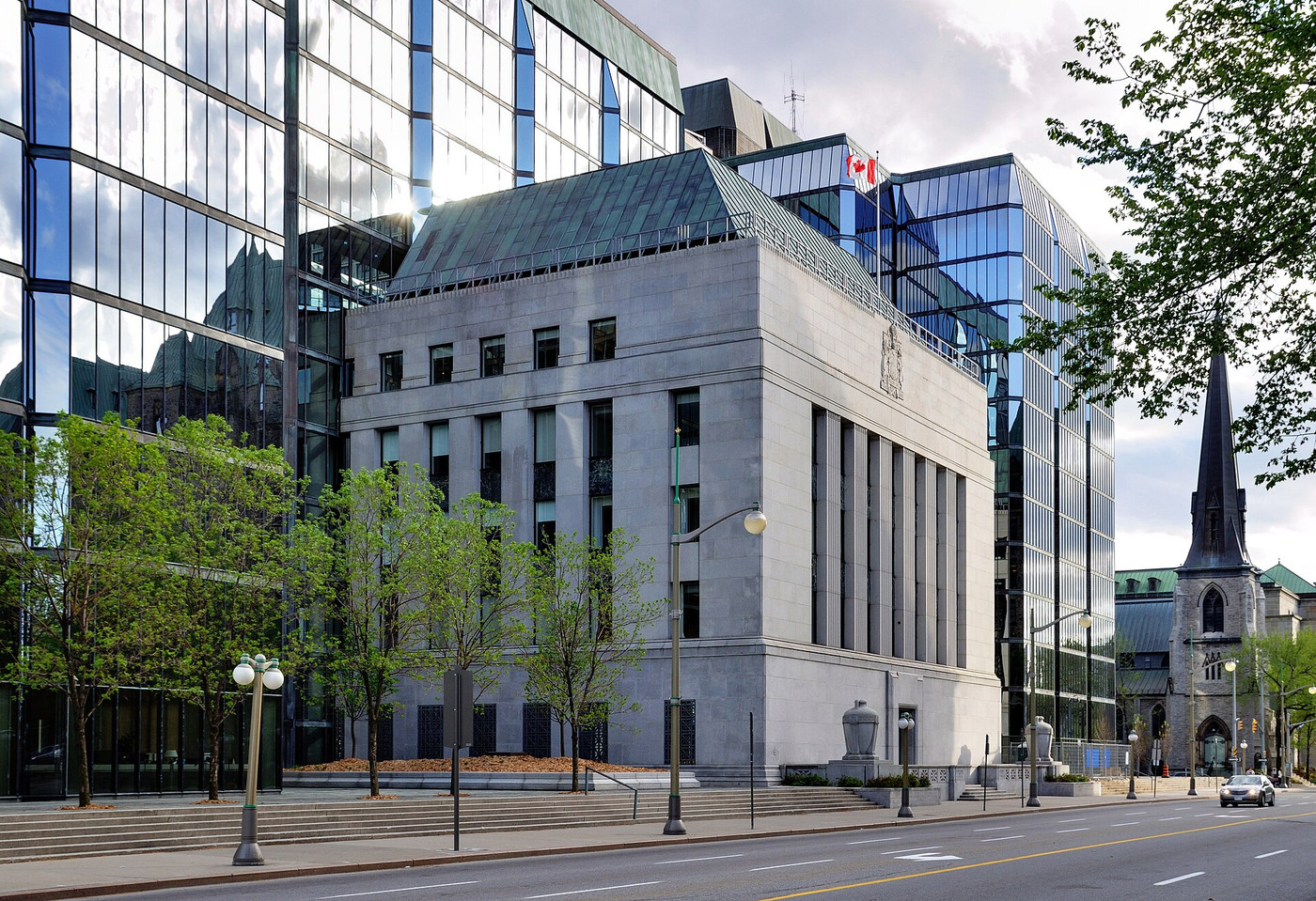
File photo: Wladyslaw (CC BY-SA 3.0), via Wikimedia Commons
The Bank of Canada raised its policy rate by 0.25 point to 2.5% on October 28, 2026, its first increase since July 2023, as inflation runs near 3%.
What Happened
The Bank of Canada raised its key interest rate, the policy rate, by 25 basis points (0.25 percentage point) to 2.5% on Wednesday, October 28, 2026. It was the central bank's first increase since July 2023 and its first move of any kind in a year, after holding the rate at 2.25% since a cut in October 2025. The bank said consumer price inflation has been around 3% since April and is expected to rise to about 3.5% by the end of the year, and that global oil prices are expected to stay higher for longer.
Key Facts
- Policy rate: raised to 2.5% from 2.25%, effective October 28, 2026.
- Bank Rate: 2.75%; deposit rate: 2.45%, according to the Bank of Canada.
- First increase since July 2023 and the first change in a year.
- Inflation: around 3% since April 2026, expected to reach about 3.5% by year-end, the bank said.
- Growth forecast: 1% in 2026, and 2% in both 2027 and 2028.
- Guidance: decisions will be taken one meeting at a time, and further increases may be needed, the bank said.
- Key driver: higher global oil prices, which the bank expects to persist.
Why It Matters
A central bank raises interest rates to slow inflation. Higher rates make borrowing more expensive for households and businesses, which cools spending and, over time, eases pressure on prices. Canada's central bank aims to keep inflation at 2%. With inflation around 3% and expected to rise further, the bank decided it could no longer hold rates steady.
The decision is part of a wider shift, with energy prices pushing inflation up again. The US Federal Reserve held its rates at 3.75-4% this week, but two of its members voted for an increase. The European Central Bank meets on October 29. Canada's move shows that at least some central banks are now willing to raise rates again despite slow growth.
That tension is clear in the bank's own forecasts. It expects the Canadian economy to grow only 1% in 2026, a weak pace, and still chose to raise rates. That means it judged the risk of inflation settling at a higher level as more serious than the risk of slowing the economy further. Its statement that it will decide "one meeting at a time" and that more increases may be needed tells markets that further hikes are possible if inflation does not ease.
For India, Canadian policy matters indirectly. Higher interest rates abroad tend to pull global investment money towards those countries, which can weigh on currencies such as the rupee and on foreign investment into Indian markets. The same oil-price pressure behind Canada's decision also affects India through fuel prices and inflation. Readers with loans, studies or family in Canada will also see the effect through higher borrowing costs there.
Impact
Short-term: Variable-rate loans and lines of credit in Canada become more expensive, and new fixed-rate mortgages may also rise in price. The Canadian dollar may find support from the higher rate.
Long-term: If inflation rises to 3.5% as forecast, further increases are possible. That would slow borrowing and spending in an economy already expected to grow only 1% this year. The bank's next decision will show whether this was a single move or the start of a series of increases.
Who is affected: Canadian households with mortgages and loans; businesses that borrow; savers, who may earn slightly more on deposits; and global investors watching whether more central banks turn towards raising rates.
Key Takeaway
The Bank of Canada raised its rate to 2.5% on October 28, 2026, its first increase since 2023, to fight inflation driven by higher oil prices, and said more increases may follow.
Questions and Answers
What did the Bank of Canada decide on October 28, 2026?
It raised its policy rate by 0.25 percentage point to 2.5%, its first increase since July 2023, and said further increases may be needed.
Why did the Bank of Canada raise interest rates?
Inflation has been around 3% since April and is expected to rise to about 3.5% by year-end, above the bank's 2% target, with global oil prices expected to stay high.
What is the Bank of Canada's growth forecast?
It expects the Canadian economy to grow 1% in 2026 and 2% in each of 2027 and 2028.
Will the Bank of Canada raise rates again?
The bank said it will decide one meeting at a time and acknowledged that it may need to raise its policy rate further.
Disclaimer: Prepared by the Peepals newsroom from publicly available sources with AI assistance. Information is accurate to the best of our knowledge at the time of publication and may change. Images may be representative. Not professional advice. Report an error via our contact page.
By Neha Kapoor, Economy CorrespondentCovers Economy and more for Peepals Business. All stories by Neha Kapoor
Ace Blend raises $9.9 million, will put nutrition products through clinical trials
EXL raises 2026 forecast as data and AI revenue jumps 36%
Get the day's stories in your inbox
Peepals Weekly: the week decoded, free. One email a week, unsubscribe in one click.
Neha Kapoor is a pen name of the Peepals Global Editorial Team, which researches, fact-checks and publishes every story. The portrait is an illustration.