
Froncort.AI gets $2.3 million from Google.org for AI tuberculosis screening
 By Arjun MehtaSenior Business Editor, Peepals Business
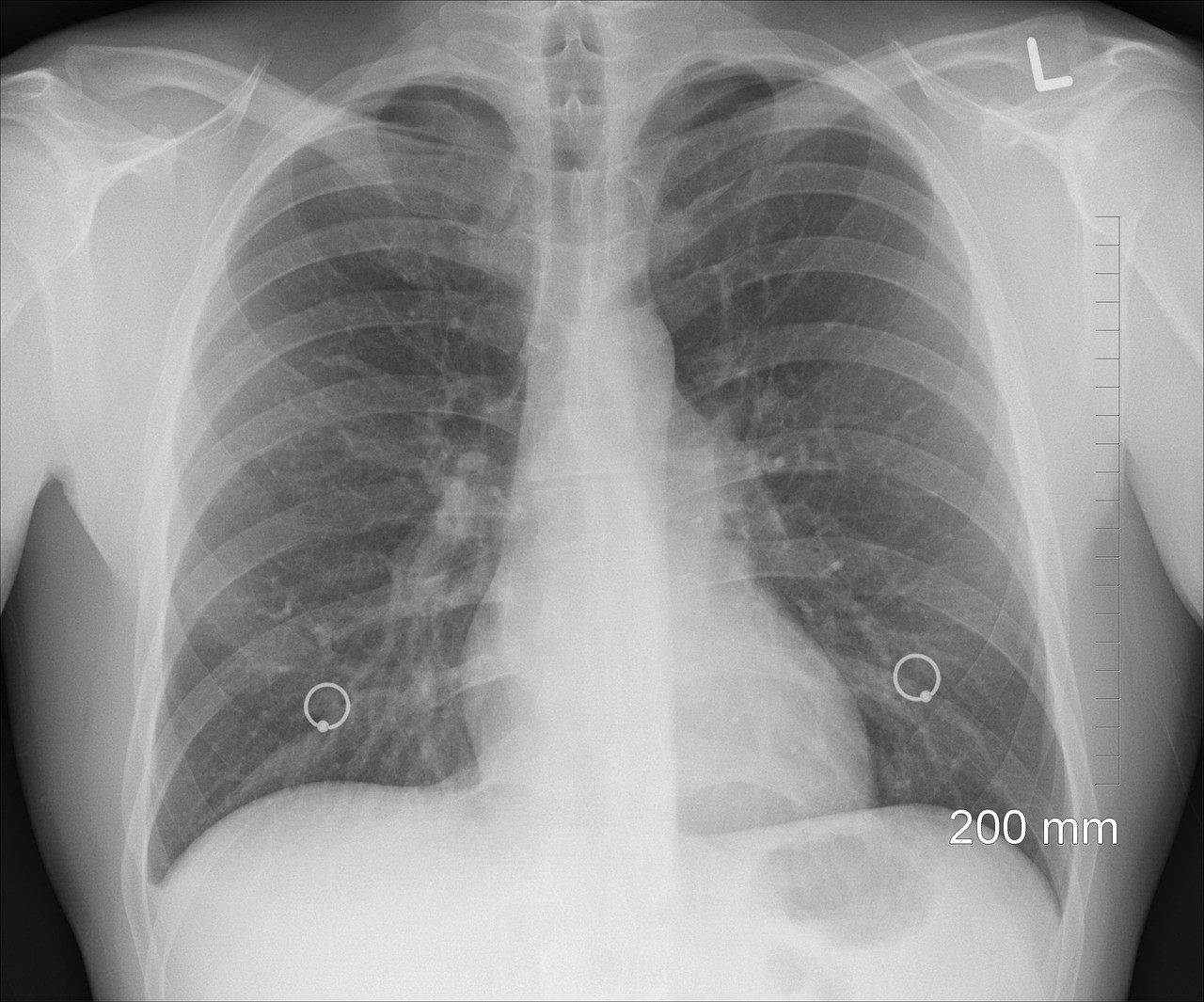
Representative image: oracast / Pixabay
Pune start-up Froncort.AI won $2.3 million from Google.org, reported on 10 November 2026, to take its mAI-NETRA TB screening app to eight districts.
What Happened
Froncort.AI, a Pune-based healthcare artificial intelligence start-up, has received $2.3 million (about Rs 21.5 crore) from Google.org, the philanthropic arm of Google, to expand its AI-based disease screening tool for frontline health workers, it was reported on Tuesday, 10 November 2026. The grant comes with $200,000 in Google Cloud credits and free technical help from Google staff. Froncort.AI will use the money to build and roll out mAI-NETRA, an app that helps health workers find tuberculosis (TB) hotspots and plan door-to-door screening, in up to eight high-burden districts across three Indian states, covering two to three million people.
Key Facts
- Recipient: Froncort.AI, a healthcare AI start-up based in Pune.
- Amount: $2.3 million from Google.org, plus $200,000 in Google Cloud credits and pro bono technical support.
- Product: mAI-NETRA, an offline-first app in local languages that runs on health workers' own phones.
- Rollout: up to eight high-burden districts in three states, reaching two to three million people.
- Froncort.AI is one of 15 recipients of Google.org's Impact Challenge: AI for Government Innovation.
- The grant builds on Google.org's earlier support for the company's AI-NETRA validation study in 2025, run with Maharashtra's state TB programme.
- In that study, the company reports that 6,610 people were screened for each confirmed TB case in the AI-guided arm, against 19,702 under standard screening.
- Government health programme data will be stored and processed within India, the company says.
Why It Matters
Finding TB early is one of the hardest parts of fighting the disease. Many people with TB do not seek care quickly, so health programmes send community workers door to door to screen households. That is slow and costly: most of the people screened do not have TB. A tool that points workers towards the neighbourhoods and households most likely to have undiagnosed cases could let the same staff find more patients in less time.
That is the claim behind Froncort.AI's platform. The figures from its 2025 validation study, conducted with Maharashtra's TB programme, suggest the AI-guided approach needed far fewer screenings to find each case. These are the company's reported results from one study; the wider rollout in eight districts will show whether the gains hold in other places.
The design choices matter for India's public health system. An app that works offline and in local languages, on the workers' own phones, avoids two common problems: patchy mobile data in rural areas and the cost of buying new devices. Keeping government health data within India addresses privacy and data-sovereignty concerns that have slowed other technology projects in public health.
For India's start-up ecosystem, the grant is a reminder that health AI companies can grow through public-sector partnerships, not only through venture capital. Philanthropic money from big technology companies, paired with state health programmes, offers a route to scale for products whose main customers are governments.
Peepals calculation: In the reported study, standard screening needed 19,702 people screened per confirmed TB case, against 6,610 with AI guidance. That is about three times as efficient (19,702 ÷ 6,610 ≈ 2.98), or about 66% fewer screenings for each case found (1 − 6,610 ÷ 19,702 ≈ 0.66). Our calculation from the reported figures.
| Item | Detail |
|---|---|
| Start-up | Froncort.AI, Pune |
| Funder | Google.org |
| Grant | $2.3 million plus $200,000 cloud credits |
| Product | mAI-NETRA app for frontline health workers |
| Rollout | Up to 8 districts in 3 states, 2 to 3 million people |
| People screened per TB case (study) | 6,610 with AI vs 19,702 standard |
Impact
Short-term: Froncort.AI can build out the mAI-NETRA app and begin deployment in the selected high-burden districts with state health programmes.
Long-term: If the results hold at scale, AI-guided targeting could become part of how India's TB programme plans community screening, helping it find missed cases sooner.
Who is affected: Frontline health workers, people in high-TB districts, state TB programmes, and other health AI start-ups seeking government partnerships.
Key Takeaway
Pune's Froncort.AI has won $2.3 million from Google.org to take its AI tool for finding TB cases to up to eight districts and two to three million people, after a study it says tripled screening efficiency.
Questions and Answers
How much did Froncort.AI get from Google.org?
$2.3 million (about Rs 21.5 crore), plus $200,000 in Google Cloud credits and pro bono technical support.
What is mAI-NETRA?
It is an offline-first, local-language app from Froncort.AI that helps frontline health workers identify disease hotspots and plan household screenings for tuberculosis.
Where will Froncort.AI's tool be used?
In up to eight high-burden districts across three Indian states, covering two to three million people.
Does the AI tool really find TB faster?
In the company's 2025 study with Maharashtra's TB programme, 6,610 people were screened per confirmed case with AI guidance, compared with 19,702 under standard screening. Wider use will test whether the result holds.
Disclaimer: Prepared by the Peepals newsroom from publicly available sources with AI assistance. Information is accurate to the best of our knowledge at the time of publication and may change. Images may be representative. Not professional advice. Report an error via our contact page.
By Arjun Mehta, Senior Business EditorCovers Start-ups & Opportunities and more for Peepals Business. All stories by Arjun Mehta
Egypt urban prices: CAPMAS shows third monthly slowdown, rate at 12.7%
Mahanadi Coalfields IPO: SEBI clears Coal India's 10% stake sale
Get the day's stories in your inbox
Peepals Weekly: the week decoded, free. One email a week, unsubscribe in one click.
Arjun Mehta is a pen name of the Peepals Global Editorial Team, which researches, fact-checks and publishes every story. The portrait is an illustration.