
Global debt: developing nations' external debt hits record $9.4 trillion
 By Neha KapoorEconomy Correspondent, Peepals Business

Representative image: Barta4 / Pixabay
The World Bank's International Debt Report 2026, out on 5 November, says developing countries' external debt rose 5.5% in 2025 to a record $9.4 trillion.
What Happened
The external debt of low- and middle-income countries rose 5.5% in 2025 to a record $9.4 trillion, the World Bank said in its International Debt Report 2026, released on Thursday, 5 November 2026. External debt is money a country's government, companies and banks owe to lenders abroad. The bank said the pace of increase was the fastest since 2021 and about four times the average of 2022 to 2024. Debt rose fastest among the poorest countries, those eligible for the bank's low-cost International Development Association (IDA) loans, where it grew 8.1% to $1.3 trillion. The bank's message is that these countries can borrow again from markets, but at a high price.
Key Facts
- External debt of low- and middle-income countries: a record $9.4 trillion at the end of 2025, up 5.5% in the year.
- The 2025 rise was the fastest since 2021 and roughly four times the 2022-24 average, according to the World Bank.
- IDA-eligible countries, the poorest group: external debt up 8.1% to $1.3 trillion.
- Lending by private creditors, including bond buyers, drove much of the increase as bond markets reopened to these countries.
- For countries that borrow only on the World Bank's non-concessional IBRD terms, the average interest rate on new bonds eased to 5.5% from 5.8%.
- The World Bank's chief statistician summed up the finding as countries "borrowing more and paying more".
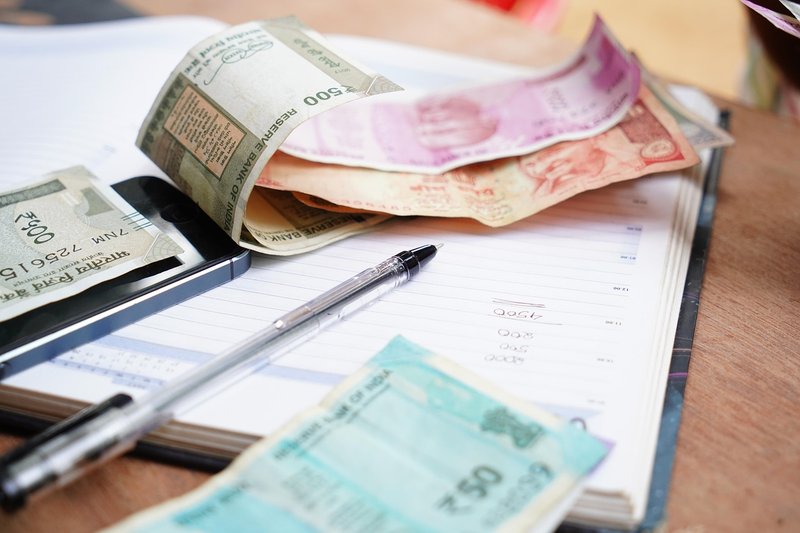
- India, for comparison: the Reserve Bank of India put the country's external debt at $778.2 billion at end-June 2026, or 20.8% of GDP.
Why It Matters
When a country owes money abroad, it has to pay interest and repay principal in foreign currency, usually US dollars. Each dollar spent servicing old debt is a dollar not spent on schools, clinics, roads or power. The World Bank's report is the standard annual count of this burden for more than a hundred developing economies, and it shapes how governments, the International Monetary Fund and lenders talk about debt relief.
The 2026 report describes a shift. In 2022 to 2024, high global interest rates shut many poorer countries out of bond markets, so new borrowing slowed. In 2025, markets reopened and private lenders came back, which is why debt rose faster. That brings money in, but on harder terms than the cheap, long-term loans of development banks. The poorest countries, the IDA group, saw the steepest rise in debt, which the bank flags as the main risk: their economies are smallest and least able to absorb a shock such as a weaker currency or a fall in export prices.
There is a small piece of good news for middle-income borrowers. Countries that borrow on the World Bank's regular, non-concessional terms paid slightly less on new bonds, 5.5% against 5.8%. But the bank's overall verdict is that better access to finance has not solved the problem of its cost.
India is not among the countries the report worries about most. The RBI's latest figures show external debt of $778.2 billion at end-June 2026, against $762.8 billion at end-March 2026, with the ratio to GDP at 20.8%. US dollar debt was 54.8% of the total. That is a moderate level for an economy of India's size. The global picture still matters to Indian businesses and households: when many developing countries compete for the same dollars, borrowing costs for Indian companies abroad can rise, and debt trouble in neighbours such as Sri Lanka, Pakistan or Bangladesh can hurt Indian exporters and lenders in the region.
Peepals calculation: A 5.5% rise to $9.4 trillion means developing countries' external debt was about $8.9 trillion at the end of 2024 (9.4 ÷ 1.055 ≈ 8.91), an increase of about $0.5 trillion in one year. The IDA countries' $1.3 trillion is about 14% of the total (1.3 ÷ 9.4 ≈ 0.138). India's external debt rose $15.4 billion between end-March and end-June 2026 (778.2 − 762.8), about 2.0% in a quarter. Our calculation from the reported figures.
| Measure | Figure | Period |
|---|---|---|
| Developing countries' external debt | $9.4 trillion (+5.5%) | End-2025 |
| IDA-eligible countries' external debt | $1.3 trillion (+8.1%) | End-2025 |
| Average rate on new bonds, IBRD-only countries | 5.5% (from 5.8%) | 2025 |
| India's external debt (RBI) | $778.2 billion, 20.8% of GDP | End-June 2026 |
Impact
Short-term: Governments of the poorest borrowing countries face higher interest bills, leaving less room in their budgets; lenders and the IMF will use the report in debt-relief talks.
Long-term: If borrowing keeps growing faster than these economies, more of them may struggle to repay, which can slow growth across developing regions, including India's neighbourhood.
Who is affected: Governments and citizens of low- and middle-income countries, private bondholders, development banks, and Indian exporters and lenders with business in debt-stressed countries.
Key Takeaway
The World Bank's International Debt Report 2026 shows developing countries' external debt hit a record $9.4 trillion in 2025, rising fastest among the poorest nations.
Questions and Answers
What does the World Bank's International Debt Report 2026 say about global debt?
Released on 5 November 2026, it says the external debt of low- and middle-income countries rose 5.5% in 2025 to a record $9.4 trillion, the fastest increase since 2021.
Which countries' debt grew fastest?
The poorest countries, those eligible for the World Bank's International Development Association loans. Their external debt rose 8.1% to $1.3 trillion in 2025.
How much external debt does India have?
According to the Reserve Bank of India, India's external debt was $778.2 billion at the end of June 2026, equal to 20.8% of GDP.
Why did developing-country debt rise faster in 2025?
According to the World Bank, private lenders returned and bond markets reopened to developing countries, so they borrowed more, but on costlier terms than development-bank loans.
Disclaimer: Prepared by the Peepals newsroom from publicly available sources with AI assistance. Information is accurate to the best of our knowledge at the time of publication and may change. Images may be representative. Not professional advice. Report an error via our contact page.
By Neha Kapoor, Economy CorrespondentCovers Economy and more for Peepals Business. All stories by Neha Kapoor
Indian rice export prices hit one-month low as Vietnam, Thailand soar
IIFL Finance share price: Blackstone's Rs 5,000 crore for 16% at Rs 602
Get the day's stories in your inbox
Peepals Weekly: the week decoded, free. One email a week, unsubscribe in one click.
Neha Kapoor is a pen name of the Peepals Global Editorial Team, which researches, fact-checks and publishes every story. The portrait is an illustration.