
Torus raises $500 million Series C for modular AI data centres
 By Arjun MehtaSenior Business Editor, Peepals Business
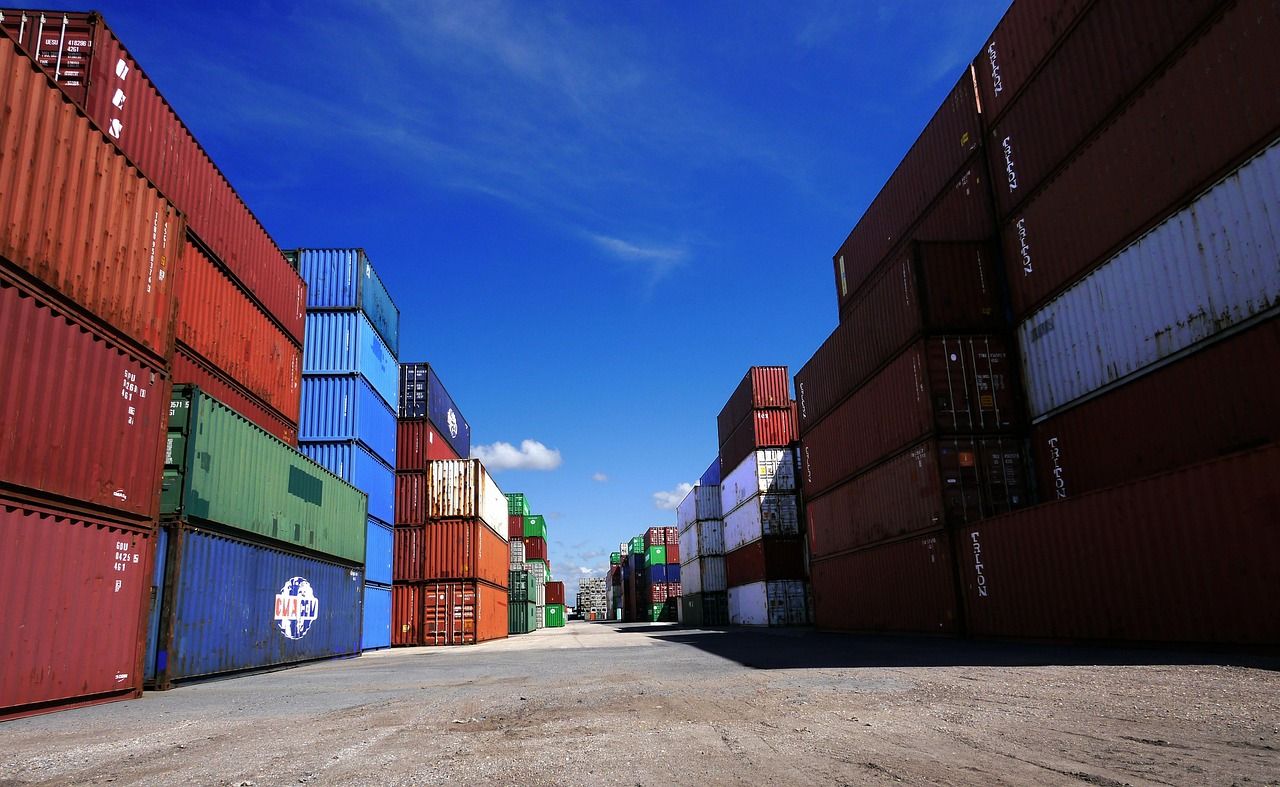
Representative image: trackmetal / Pixabay
Salt Lake City's Torus raised a $500 million Series C led by Magnetar on 11 November 2026 to build Foundry, container-sized AI data centres.
What Happened
Torus, an energy storage company based in Salt Lake City in the United States, has raised $500 million in a Series C round led by Magnetar to scale up production of Foundry, a modular data centre for artificial intelligence that is built in factory units the size of shipping containers. The raise was reported on Wednesday, 11 November 2026. ICONIQ, Origin Ventures and Trinity Capital also took part, and some reports list Ridgeline Partners as well. The company did not disclose its valuation. Torus says each Foundry site can provide 1 to 20 megawatts of computing capacity, paired with its own flywheel-and-battery power system.
Torus: key facts
- Company: Torus, an energy storage firm in Salt Lake City, Utah.
- Round: $500 million Series C, reported on 11 November 2026, led by Magnetar; ICONIQ, Origin Ventures and Trinity Capital also invested.
- Valuation: not disclosed.
- Product: Foundry, a prefabricated modular AI data centre of 1 to 20 megawatts per site, delivered in shipping-container-sized modules.
- Power: each unit is paired with Torus's flywheel-and-battery storage system, which the company says smooths power demand and provides backup.
- Factory: built at the 545,000-square-foot GigaOne plant in Salt Lake City, whose line is rated for 500 megawatts of IT load, with plans to reach 1 gigawatt.
- Customers named so far: GPU cloud company Hydra Host, plus another AI cloud provider that has not been named.
- Earlier funding: a $200 million investment from Magnetar in September 2025 for Torus's modular power plant business.
Torus: why it matters
Companies building and running AI models need large amounts of computing capacity, and they want it quickly. Torus's pitch is a factory-made alternative: data centre modules built on an assembly line, shipped to a site and switched on in months. The company says a unit can go from contract to running computers in about 12 to 16 weeks. These are company claims, and the product is only beginning to reach customers.
The power side is the other half of the idea. AI workloads can cause sharp swings in power demand, which the company says its storage system is designed to smooth. Torus combines flywheels, which store energy in a spinning mass, with batteries to even out those swings and keep the computers running if the grid supply drops. If this works at scale, smaller sites could host AI computing in places where grid capacity is tight.
There are risks. The company has named only one customer so far, and building complex hardware in volume is hard, as is deploying it reliably in the field. Investors are betting that demand for fast, flexible AI capacity will outweigh those risks.
For Indian readers and founders, the round shows where infrastructure money is flowing: into hardware that makes AI computing faster to set up and less dependent on the grid. Factory-built, modular data centres with their own storage are one approach Indian developers and start-ups could study, although Torus has not announced any plans for India.
Peepals calculation: At the maximum size of 20 megawatts per site, the GigaOne line's current rating of 500 megawatts is equal to about 25 full-size sites (500 divided by 20), rising to about 50 sites at 1 gigawatt (1,000 divided by 20). The new round is 2.5 times the $200 million Magnetar invested in September 2025 (500 divided by 200). A 12- to 16-week deployment equals roughly 84 to 112 days. Our calculation from the reported figures.
| Item | Detail |
|---|---|
| Round | Series C, $500 million |
| Lead investor | Magnetar |
| Other investors | ICONIQ, Origin Ventures, Trinity Capital |
| Product | Foundry modular AI data centre, 1 to 20 MW per site |
| Factory | GigaOne, Salt Lake City, 545,000 sq ft, 500 MW line |
| Named customer | Hydra Host |
Impact
Short-term: The money will expand Foundry production at the GigaOne plant and support deliveries to the first customers, including Hydra Host.
Long-term: If modular AI data centres prove reliable and quick to deploy, they could become a standard way to add computing capacity near available power, changing how and where AI infrastructure is built.
Who is affected: AI cloud companies looking for capacity; utilities and grid operators; data centre builders who compete with modular products; and investors in AI infrastructure.
What to watch next: whether Torus names more customers beyond Hydra Host and meets its stated deployment timelines.
Key Takeaway
Torus's $500 million Series C, led by Magnetar, backs factory-built AI data centres with their own energy storage, a bet that speed and flexible power can beat traditional builds.
Questions and Answers
How much did Torus raise and who led the round?
Torus raised $500 million in a Series C round led by Magnetar, reported on 11 November 2026, with ICONIQ, Origin Ventures and Trinity Capital also investing.
What is Torus Foundry?
Foundry is Torus's prefabricated modular AI data centre, delivered in shipping-container-sized units of 1 to 20 megawatts per site and paired with flywheel-and-battery storage.
Who are Torus's customers?
The first named customer is the GPU cloud company Hydra Host; a second AI cloud provider has not been named.
How fast can a Torus data centre be deployed?
The company says about 12 to 16 weeks from contract to running computers, though this has not yet been shown at scale.
Disclaimer: Prepared by the Peepals newsroom from publicly available sources with AI assistance. Information is accurate to the best of our knowledge at the time of publication and may change. Images may be representative. Not professional advice. Report an error via our contact page.
By Arjun Mehta, Senior Business EditorCovers Start-ups & Opportunities and more for Peepals Business. All stories by Arjun Mehta
Japan GDP Q3 2026: economy shrinks 0.1% annualised, misses forecasts
Fiem Industries Q2: EV sales double in record quarter, stock hits Rs 2,142
Get the day's stories in your inbox
Peepals Weekly: the week decoded, free. One email a week, unsubscribe in one click.
Arjun Mehta is a pen name of the Peepals Global Editorial Team, which researches, fact-checks and publishes every story. The portrait is an illustration.
Responsible for this story: the Peepals Global Editorial Team, led by editor Prashant Sonar. How we report