
El Niño 2026: Impact on Economy & Geopolitics
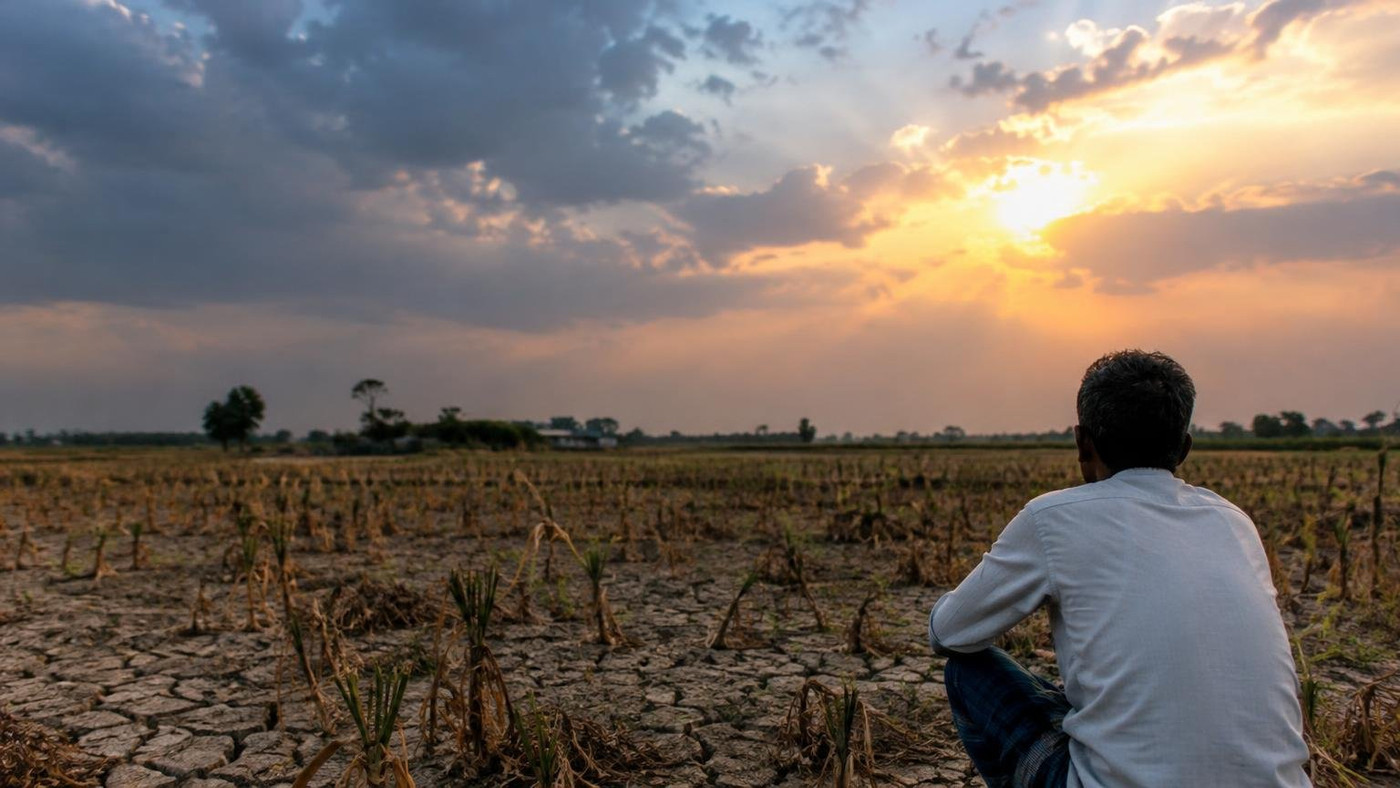
AI-generated representative image
NOAA's 8 October 2026 forecast gives an 83% chance of a record El Niño, and its uneven effects on India and the United States may shape food, trade and climate ties.
What Happened
The US National Oceanic and Atmospheric Administration (NOAA) said on 8 October 2026 that El Niño is still strengthening in the tropical Pacific. Its Climate Prediction Center gives an 83% chance that the event reaches historic strength during October to December. That would exceed every El Niño in NOAA's record, which goes back to 1950. The effects reach beyond the United States, because El Niño shifts rainfall and temperature patterns across continents, including India.
Key Facts
- NOAA's latest outlook lists three probabilities for historic strength: 54% for September to November, 83% for October to December and 70% for November to January.
- An El Niño counts as historic if the three-month Relative Oceanic Niño Index reaches at least 2.5 degrees Celsius above average. This index adjusts for general warming of the oceans.
- NOAA's Climate Prediction Center declared El Niño had developed in early June 2026. On 13 August it said it was highly confident of a very strong event in the Northern Hemisphere fall and winter.
- NOAA's 10 September outlook put the chance of a very strong event above 90% for September to January. Its September outlook gave October to December a 75% chance of historic strength.
- NOAA says a strong to very strong El Niño has an above-83% chance of lasting through January to March 2027. The agency's next update is scheduled for 12 November.
- India's monsoon ended on 30 September as its weakest in over a decade. India Meteorological Department (IMD) data show 759 millimetres of rain against a long-period average of 868.6 millimetres, a shortfall of about 13%.
- East and Northeast India had the largest deficit, at 26%. Drought is active in five states, and the government has cut its 2026-27 foodgrain production target.
- On 1 October 2026, IMD said a strengthening El Niño will keep influencing India's weather through the end of the year. It expects the Indian Ocean Dipole to stay neutral.
Why It Matters
El Niño is a warming of the tropical Pacific that changes weather far away. NOAA warns that a strong event does not guarantee particular weather at any location. It shifts the odds of certain patterns across a whole season. Even so, a possible record event draws wide attention because the effects fall on food, water and energy.
The build-up has been steady. NOAA declared El Niño in early June 2026, and each later forecast moved upward rather than back. That consistent trend makes the October update more significant than a single reading.
Records can also differ by method. A European weather-travel analysis reports the Niño3.4 index reached +2.84 degrees Celsius in September, the highest monthly value since 1982. NOAA uses a different reference period and gives +2.1 degrees Celsius for September. On NOAA's own adjusted index, the historic threshold has not yet been crossed.
For India, the effects have already started. IMD had forecast below-normal monsoon rainfall at 90% of the long-period average, with a 60% chance of a deficient season. The monsoon reached Kerala on 4 June, three days later than normal. The season's final figures bore the forecast out. Nearly half of India's farmland has no irrigation and relies on the June to September rains.
The geopolitical angle lies in how unevenly the event falls. NOAA's guidance favours wetter conditions across much of the southern United States and California, while India faces a rainfall deficit. Disruption to crop regions abroad can affect commodity prices, which influence India's import costs and inflation. Agricultural trade could gain weight in talks with partners such as the US. This is an assessment of likely pressure points, not an announced policy.
Impact
Short-term: The northeast monsoon, which runs from October to December, is the next test. Tamil Nadu, Puducherry and parts of Andhra Pradesh, Kerala and Karnataka depend on it for rain. The government has reportedly directed states to plan rabi, or winter-sown, crops around reduced water availability. It favours crops that need less moisture in the most drought-stressed districts. Winter rains also matter for rabi crops such as wheat.
Long-term: NOAA expects the event to last into early 2027, so its effects could run beyond this year. Reservoir levels and soil moisture in drought-hit states will show how much irrigation sowing needs. They are likely to shape any later policy response. The cut to the 2026-27 foodgrain production target sets the backdrop for the months ahead. If food supply tightens, agricultural trade and commodity access could gain weight in India's discussions with major partners, including the US.
Who is affected: Farmers are most exposed, especially those without irrigation, as the weak monsoon feeds into food prices and rural incomes. Southern and eastern coastal regions depend on the northeast monsoon. It favours drier conditions in parts of the Northwest and northern states, and above-normal temperatures across much of the West, the northern tier and parts of the East.
Key Takeaway
NOAA puts the chance of a record El Niño in October to December at 83%, while India has just ended its weakest monsoon in over a decade, with NOAA's next update due 12 November.
Questions and Answers
What is the chance of a record El Niño in 2026?
NOAA's Climate Prediction Center said on 8 October 2026 that there is an 83% chance El Niño reaches historic strength during October to December. That would exceed every event in NOAA's record since 1950.
How did India's 2026 monsoon perform?
India's monsoon ended on 30 September as its weakest in over a decade. IMD data show 759 millimetres of rain against an average of 868.6 millimetres, a shortfall of about 13%, with a 26% deficit in East and Northeast India.
When is the next NOAA El Niño update?
NOAA's next El Niño update is scheduled for 12 November. It will show whether the event has crossed the historic threshold of 2.5 degrees Celsius on the Relative Oceanic Niño Index.
How could El Niño affect India's economy?
A weak monsoon feeds into food prices and rural incomes, and nearly half of India's farmland has no irrigation. Disruption to crop regions abroad can also affect commodity prices, which influence India's import costs and inflation.
Disclaimer: Prepared by the Peepals newsroom from publicly available sources with AI assistance. Information is accurate to the best of our knowledge at the time of publication and may change. Images may be representative. Not professional advice. Report an error via our contact page.
Sourced and fact-checked by the Peepals Global Editorial Team
Reported, fact-checked and published by the Peepals Global Editorial Team.