
Pentagon and Lockheed Martin agree 10-year F-35 framework for 850 US jets
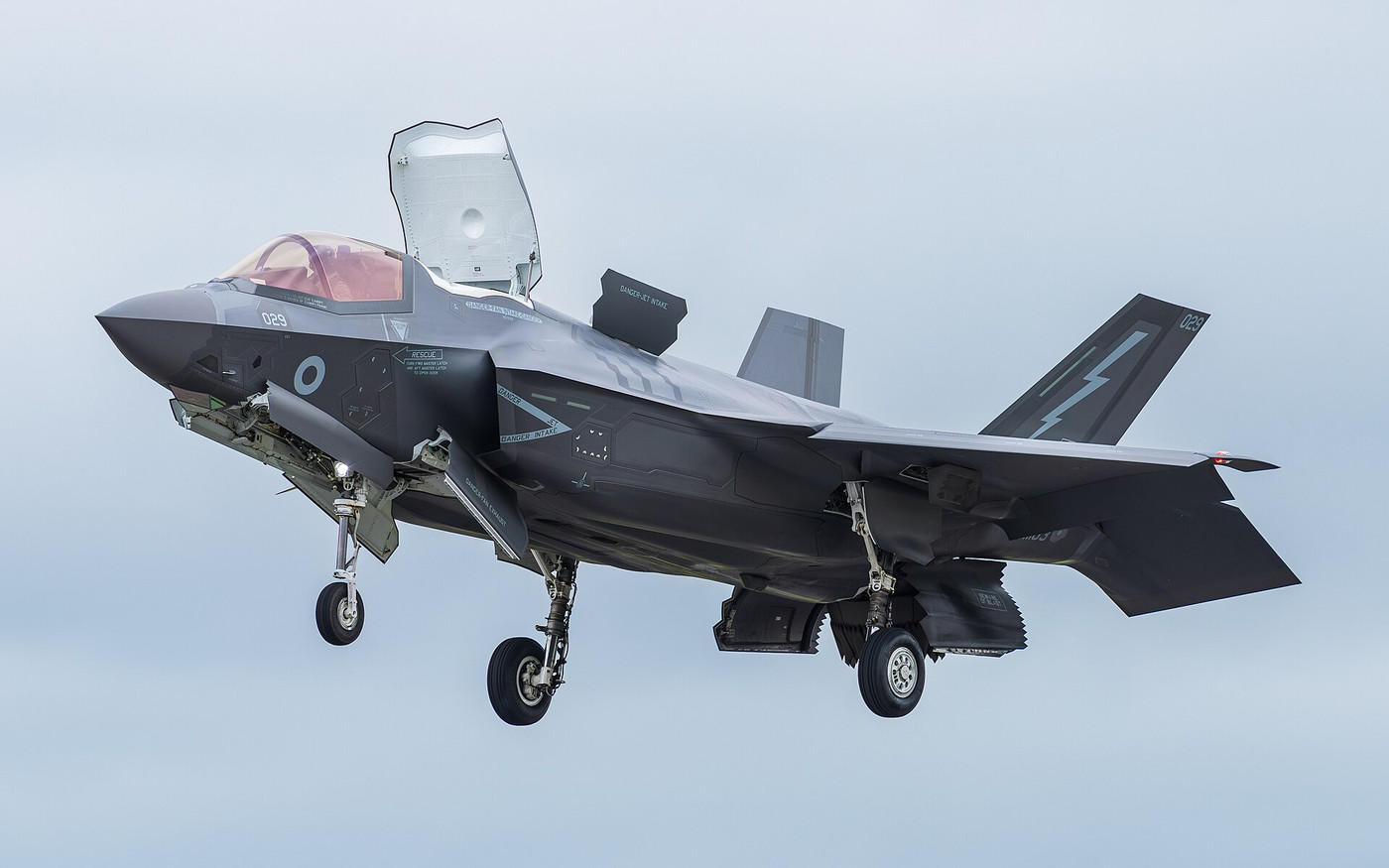
File photo: Julian Herzog ( Website ) (CC BY 4.0), via Wikimedia Commons
The Pentagon and Lockheed Martin announced on 22 October 2026 a 10-year F-35 framework under which the US would buy at least 850 jets, still subject to Congress.
What Happened
The Lockheed Martin F-35 Lightning II will stay in production for at least another decade under a framework agreement announced by the United States Department of Defense and Lockheed Martin on 22 October 2026. Under the deal, the US military plans to buy at least 850 F-35s over ten years, across production lots 21 to 30, while Lockheed keeps building about 156 aircraft a year for the US and international customers. The agreement is not a firm order: it still needs Congress to grant authority for a multiyear contract and to provide the money.
Key Facts
- Scope: at least 850 F-35s for the US military over ten years, covering production lots 21 to 30, with initial spare parts, modification kits and ten years of support (sustainment).
- Production rate: about 156 aircraft a year for all customers, about 1,560 over the decade, so roughly 700 would go to other countries.
- Lockheed Martin will fund at least $7 billion of initiatives for the programme, including a pooled global stock of spare parts that the company says will raise the share of jets ready to fly.
- The total cost of the deal has not been disclosed.
- Congress is considering multiyear purchasing authority for the F-35 and the F-15EX fighter in its work on the 2027 defence policy bill, and has not yet passed a budget for fiscal year 2027, so the agreement is currently unfunded.
- If authority and money come through, the F-35 Joint Program Office and Lockheed will negotiate final terms, prices and schedules for a formal contract award, according to Lockheed.
Why It Matters
The F-35 is a fifth-generation fighter, a term for aircraft designed to be hard to detect on radar and to share sensor data across a network of other planes, ships and ground forces. It is flown or ordered by the US and a number of allied countries in Europe, the Asia-Pacific and the Middle East, which makes the programme a core part of the US alliance system as much as an aircraft purchase.
A multiyear framework changes how the jets are bought. Until now, F-35s have mostly been ordered in yearly or few-year lots, with prices renegotiated each time. Committing to a decade of production lets Lockheed and its thousands of suppliers plan factories, staff and materials further ahead, which both sides say should lower costs and stabilise deliveries. For allied buyers, it signals that the production line will run into the late 2030s, which matters for countries planning to replace older fighters.
The agreement also addresses one of the programme's long-running weak points: the share of aircraft available to fly at any time, known as the mission-capable rate, which has been held back by shortages of spare parts. Lockheed's $7 billion commitment is aimed partly at that problem through a shared global pool of parts.
The deal is announced at a time of heavy demand for air power. The US is engaged in confrontation with Iran in West Asia, and European countries have been raising defence spending since Russia's full-scale invasion of Ukraine. For India, the agreement is mainly a signal of how long the US intends to keep its flagship fighter in production and how widely it will spread among US partners in Asia and the Middle East.
| Item | Detail |
|---|---|
| Announced | 22 October 2026 |
| US jets planned | at least 850 over ten years |
| Total production rate | about 156 a year (lots 21 to 30) |
| Lockheed self-funding | at least $7 billion |
| Still needed | multiyear authority and money from Congress |
Impact
Short-term: The framework gives the Pentagon and Lockheed a basis to negotiate a formal contract, but nothing is final until Congress acts on the 2027 defence policy bill and budget. Lockheed's suppliers gain a clearer view of long-term demand.
Long-term: If funded, the agreement would lock in F-35 production into the late 2030s, shape the air forces of many US allies for decades and set the long-term cost of the programme for the US and its partners. Lockheed projects that the programme will support about 317,000 US jobs over the next decade.
Who is affected: The US Air Force, Navy and Marine Corps; allied air forces that fly or have ordered the F-35; Lockheed Martin, its engine supplier and its supply chain; and US taxpayers.
Key Takeaway
The Pentagon and Lockheed Martin have agreed a ten-year plan under which the US would buy at least 850 F-35s, but Congress must still approve and fund it before any contract is signed.
Questions and Answers
What is the new Lockheed Martin F-35 Lightning II deal?
It is a ten-year framework announced on 22 October 2026 under which the US military plans to buy at least 850 F-35 fighters across production lots 21 to 30, with Lockheed building about 156 jets a year for the US and other countries.
Is the F-35 agreement a confirmed order?
No. It is a framework that needs Congress to grant multiyear contracting authority and to pass funding. Only then will the Pentagon and Lockheed negotiate final terms and award a formal contract.
How much will the deal cost?
The total cost has not been disclosed. Lockheed has said it will fund at least $7 billion of initiatives for the programme, including a shared global stock of spare parts.
Who else will receive F-35s under the plan?
Of the roughly 1,560 jets to be built over the decade at about 156 a year, at least 850 are planned for the US military. The rest are for international customers, whose orders form part of the same production lots.
Disclaimer: Prepared by the Peepals newsroom from publicly available sources with AI assistance. Information is accurate to the best of our knowledge at the time of publication and may change. Images may be representative. Not professional advice. Report an error via our contact page.
Sourced and fact-checked by the Peepals Global Editorial Team
Reported, fact-checked and published by the Peepals Global Editorial Team.