
Pakistan army chief Munir in Tehran; Iran sets Hormuz conditions first
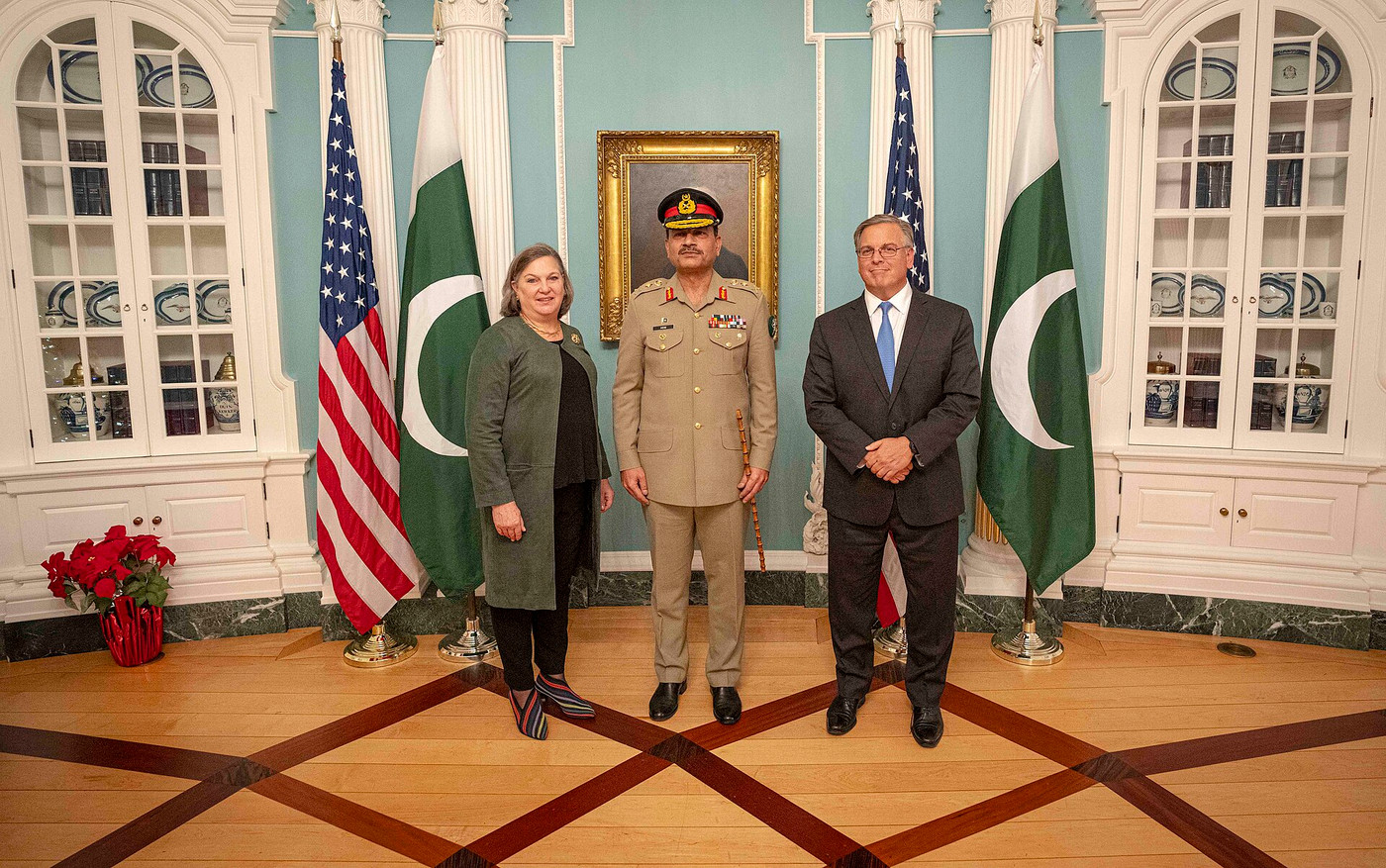
File photo: U.S. Department of State (Public domain), via Wikimedia Commons
Pakistan's army chief Asim Munir met Iran's president in Tehran on October 20, 2026; Iran said the US must first meet its Hormuz conditions before talks resume.
What Happened
Pakistan's army chief, Field Marshal Asim Munir, held talks in Tehran on Tuesday, October 20, 2026, with Iranian President Masoud Pezeshkian and parliament speaker Mohammad Baqer Qalibaf, as Pakistan tries to stop a new round of fighting between Iran and the United States. According to an Iranian readout of the meeting, Tehran told the visitors that Washington cannot earn Iran's trust until it meets seven conditions Iran set last month for reopening the Strait of Hormuz. Pakistan's Interior Minister Mohsin Naqvi travelled with Munir.
Key Facts
- Date and place: Munir arrived in Tehran on the evening of October 20, 2026; Iranian state-linked media reported his meeting with President Pezeshkian on mediation and regional developments.
- Delegation: Interior Minister Mohsin Naqvi accompanied the army chief; a meeting with Foreign Minister Abbas Araghchi was also expected, though no readout of it has been reported.
- Iran's message: Iranian officials said there would be no new negotiations until the United States takes steps to build trust, starting with the conditions Iran set for reopening the Strait of Hormuz.
- Wider demands reported: lifting the US blockade of Iranian ports and US sanctions on Iranian oil exports, and an end to hostilities on all regional fronts.
- Nuclear material: Iranian security official Mohsen Rezaei said Tehran would not allow its nuclear material to leave the country.
- Background: an interim agreement mediated by Pakistan, known as the Islamabad Memorandum, was signed in June but quickly faltered when fighting between Iran and the United States resumed weeks later.
- Other diplomacy: Russian Foreign Minister Sergey Lavrov held talks in Tehran a day before Munir arrived.
Why It Matters
The Strait of Hormuz is the narrow sea passage between Iran and Oman through which a large share of the world's oil and gas exports from the Gulf normally pass. The conflict between Iran and the United States has disrupted shipping there, and both sides have claimed control of the waterway. Any lasting deal to reopen it depends on talks between Tehran and Washington, and Pakistan has positioned itself as the main go-between.
Munir's visit shows that mediation is still alive but stuck. Iran's message, as reported from its own readout, is that it will not return to negotiations on trust alone and wants concrete steps first, including relief from the US blockade and oil sanctions. Its statement that nuclear material will not leave the country also rules out one of the options that has been discussed for settling the dispute over its enriched uranium. On the US side, there has been no public response to the latest Iranian conditions.
The visit also shows that Iran is keeping several channels open. Russia's foreign minister was in Tehran the day before, and Iranian officials have spoken of diplomacy while saying they are prepared to defend themselves. Reports quoting Iranian officials have suggested Tehran is in no hurry to conclude talks before the US midterm elections in November, though that has not been stated publicly by Iran's leadership.
For India, the outcome matters directly. India imports most of the crude oil it uses, and much of it has traditionally come from the Gulf through Hormuz. Disruption there has pushed up oil prices and freight costs, which feed into fuel prices, inflation and the rupee. Pakistan's role as the main mediator between Iran and the United States also gives Islamabad diplomatic weight in Washington and Tehran at a time when India is pursuing its own trade and energy talks with the United States.
| Who | Role in the talks |
|---|---|
| Field Marshal Asim Munir | Pakistan's army chief, leading mediation |
| Masoud Pezeshkian | Iran's president, met Munir on October 20 |
| Mohammad Baqer Qalibaf | Iran's parliament speaker, met Munir |
| Mohsin Naqvi | Pakistan's interior minister, part of delegation |
Impact
Short-term: No breakthrough has been announced. Shipping through Hormuz remains at risk, and oil markets will watch for any sign that Washington is willing to ease the blockade or sanctions in return for a reopening.
Long-term: If Pakistan's mediation produces a new framework, it could lead to the reopening of Hormuz and lower energy prices. If it fails, the risk of renewed US-Iran fighting, which Pakistan's effort is trying to prevent, stays high.
Who is affected: Iran and the United States, Gulf oil exporters, shipping companies and their crews, oil-importing countries such as India, and Pakistan, whose standing as a mediator is at stake.
Key Takeaway
Pakistan's army chief Asim Munir met Iran's president in Tehran on October 20, 2026 to keep US-Iran mediation going, but Iran said Washington must first meet its conditions for reopening the Strait of Hormuz.
Questions and Answers
Why did Asim Munir visit Tehran in October 2026?
Pakistan's army chief went to Tehran on October 20, 2026 to push mediation between Iran and the United States and help prevent a new round of fighting. He met President Masoud Pezeshkian and parliament speaker Mohammad Baqer Qalibaf.
What did Iran tell Pakistan's army chief?
According to an Iranian readout, Tehran said the United States cannot earn its trust until it meets seven conditions Iran set last month for reopening the Strait of Hormuz. Reported demands include lifting the US blockade of Iranian ports and sanctions on oil exports.
What was the Islamabad Memorandum?
It was an interim agreement between Iran and the United States, mediated by Pakistan and signed in June 2026. It faltered within weeks when fighting between the two sides resumed.
Why does the Strait of Hormuz matter to India?
India imports most of its crude oil, much of it from the Gulf via Hormuz. Disruption there raises oil prices and shipping costs, which affect fuel prices, inflation and the rupee in India.
Disclaimer: Prepared by the Peepals newsroom from publicly available sources with AI assistance. Information is accurate to the best of our knowledge at the time of publication and may change. Images may be representative. Not professional advice. Report an error via our contact page.
Sourced and fact-checked by the Peepals Global Editorial Team
Photon Bridge raises €10 million to ease AI's laser bottleneck
Stockholm legal AI firm Legora gets $550 million in Atreides-led round
Reported, fact-checked and published by the Peepals Global Editorial Team.