

Machenta raises record $40 million UK robotics seed for simulation-trained robots
 By Elena D’SouzaStartups & Innovation Correspondent, Peepals Global
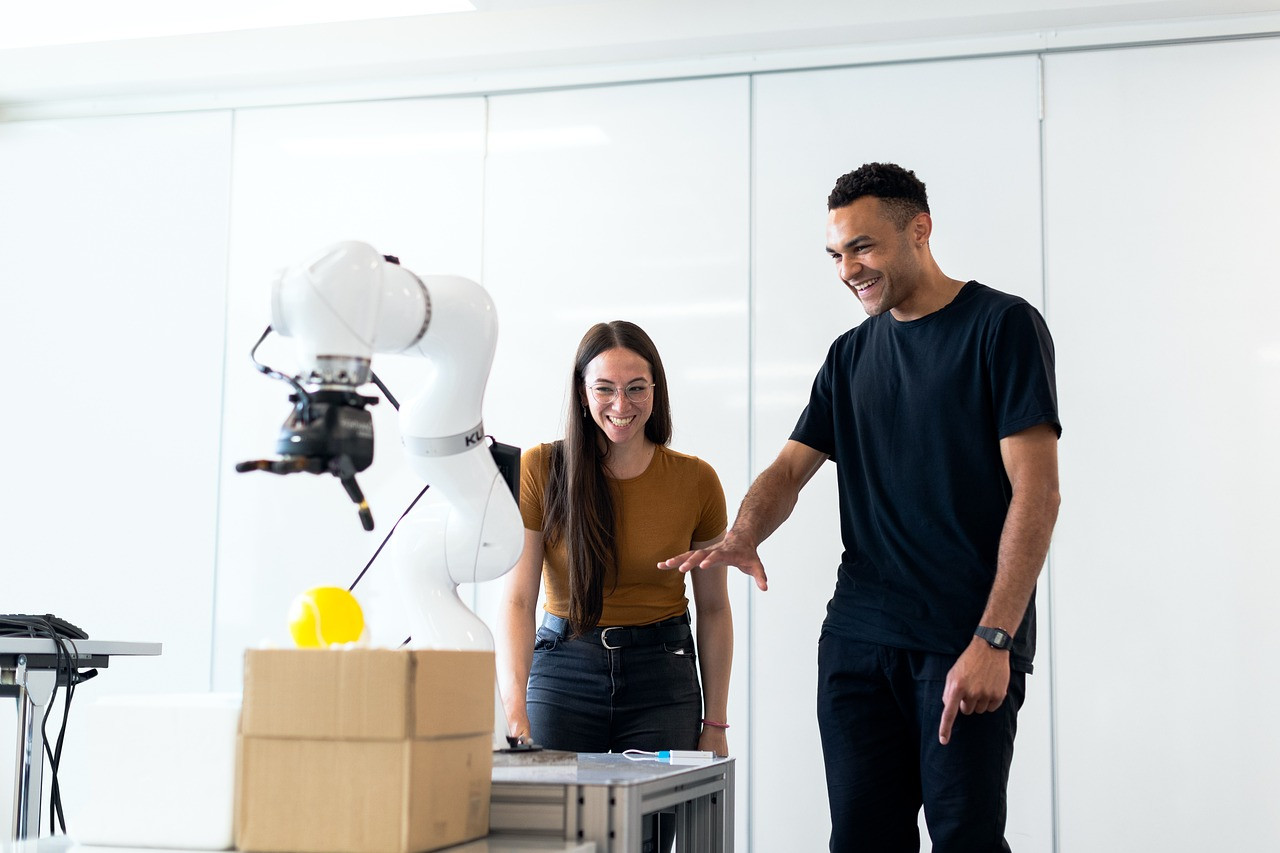
Representative image: This_is_Engineering / Pixabay
London's Machenta, an Imperial College spin-out, raised a $40 million seed round co-led by Creandum and Union Square Ventures on October 27, 2026.
What Happened
Machenta, a London robotics start-up spun out of Imperial College London, has raised $40 million in a seed round co-led by the venture firms Creandum and Union Square Ventures, the company announced on October 27, 2026. Machenta is building an artificial intelligence model that it says will let robots learn a new physical task after seeing it done just once, by training the model in computer-generated simulations instead of on large amounts of real-world data. The company says it is the largest seed round ever raised by a robotics start-up in the United Kingdom.
Key Facts
- Company: Machenta, a robotics start-up based in London and spun out of Imperial College London.
- Funding: $40 million seed round, announced on October 27, 2026.
- Lead investors: Creandum and Union Square Ventures, as co-leads.
- Founders: Edward Johns, a professor of robot learning at Imperial College London, and his PhD student Vitalis Vosylius.
- Research history: the work behind the company began about six years ago at Imperial.
- Team: about a dozen people; the company has been reported as having 11 employees.
- Valuation: not disclosed.
- Use of money: hiring, more computing power and more simulated training data.
Why It Matters
Teaching a robot a new job is still slow and expensive. Robots usually learn from many recorded examples of a task, and gathering that real-world data takes time, people and equipment. Machenta presents this data problem as the main obstacle to general-purpose robots. Machenta's bet is different: it says it can train its model mostly in simulation, a computer-generated world that copies how objects move, fall and collide, so that a robot needs only a single demonstration of a new task.
The company's claim is ambitious and has not yet been shown in a product. Machenta has said it is focused on research and has no near-term plans to sell its technology. Its founders' argument is that what a robot learns from one demonstration depends on how much general understanding of the physical world it has picked up beforehand, and that simulation can supply that understanding far more cheaply than real-world recording. Those are the company's claims; independent tests of the approach have not been published.
The size of the round is the other story. A seed round is normally the first sizeable outside investment in a young company and is usually a few million dollars. A $40 million seed for a team of about a dozen, with no product on sale, shows how much investors are now willing to pay for the chance to own a piece of "physical AI", the effort to give machines the kind of general skills that large language models gave software. It also shows that research from a European university can attract this kind of early money from established venture firms.
For Indian founders, engineers and investors, the round is a marker of where global capital in robotics is flowing and of the scale of money now available at the very first stage for teams with strong research. A model that can learn tasks from little real-world data would, if it works, also lower the cost of automation for smaller factories and warehouses, including smaller units in India.
| Detail | Machenta |
|---|---|
| Round | Seed, $40 million |
| Co-leads | Creandum, Union Square Ventures |
| Founded from | Imperial College London research |
| Team size | About 11 to 12 people |
| Valuation | Not disclosed |
Impact
Short-term: The money will fund hiring, extra computing power and the creation of more simulated data. With no plans to sell its technology soon, Machenta's next milestones are likely to be research results rather than customers.
Long-term: If robots can be taught new tasks from one demonstration, the cost of putting robots into new jobs could fall sharply, from logistics to small-scale manufacturing. If the approach falls short, the round will be one more sign of how far investor money in physical AI has run ahead of proven products.
Who is affected: Robotics researchers and engineers, including Indian students and professionals in the field; manufacturers and warehouse operators that hope to automate; other robotics start-ups competing for talent and funding; and university spin-out programmes in the UK and Europe.
Key Takeaway
Machenta's $40 million seed round, co-led by Creandum and Union Square Ventures, is a large early bet on robots that learn new tasks from simulation and a single demonstration.
Questions and Answers
What does Machenta do?
Machenta is a London start-up, spun out of Imperial College London, that is developing an AI model it says will let robots learn new physical tasks after one demonstration, using training in computer-generated simulations.
How much did Machenta raise and who invested?
It raised $40 million in a seed round announced on October 27, 2026, co-led by Creandum and Union Square Ventures. The valuation was not disclosed.
Who founded Machenta?
Edward Johns, a professor of robot learning at Imperial College London, founded it with his PhD student Vitalis Vosylius, building on about six years of research at Imperial.
Is Machenta's robot technology available to buy?
No. The company has said it is focused on research and has no near-term plans to commercialise its technology.
Disclaimer: Prepared by the Peepals newsroom from publicly available sources with AI assistance. Information is accurate to the best of our knowledge at the time of publication and may change. Images may be representative. Not professional advice. Report an error via our contact page.
By Elena D’Souza, Startups & Innovation CorrespondentCovers Start-ups & Opportunities and more for Peepals Global. All stories by Elena D’Souza
Get the day's stories in your inbox
Peepals Weekly: the week decoded, free. One email a week, unsubscribe in one click.
Elena D’Souza is a pen name of the Peepals Global Editorial Team, which researches, fact-checks and publishes every story. The portrait is an illustration.