
Russian aircraft violate Japan airspace; Tu-95 bombers reach Vietnam
 By Rohan SalujaGeopolitics Editor, Peepals Global
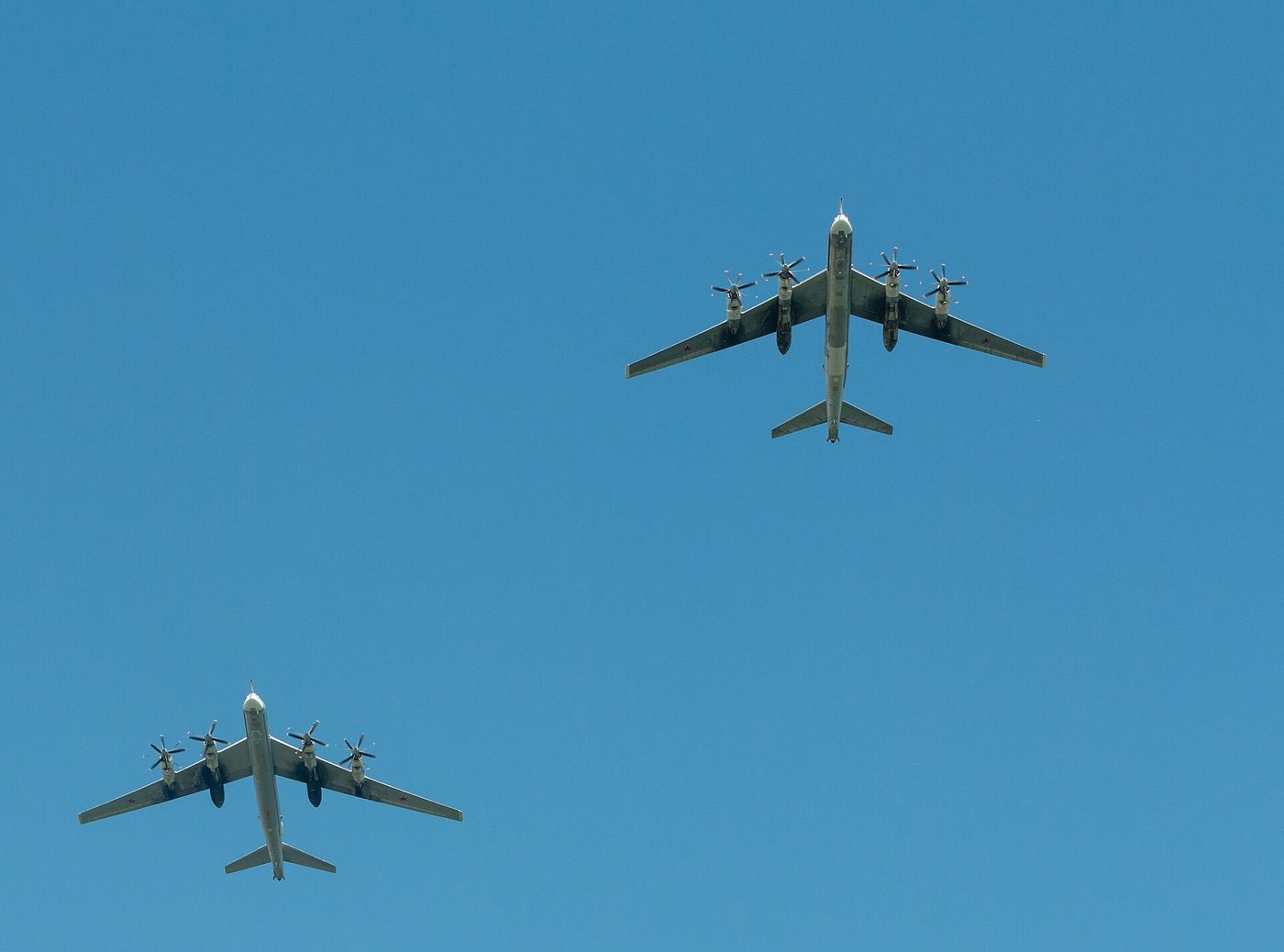
File photo: Роман Дергунов (CC BY-SA 4.0), via Wikimedia Commons
Japan protested after suspected Russian military aircraft entered its airspace near Fukuoka on 17 November 2026, as two Russian Tu-95MS bombers were reported in Vietnam.
What Happened
Japan lodged "an extremely stern protest" with Russia after suspected Russian military aircraft violated Japanese airspace near Fukuoka for about five minutes early on Tuesday, 17 November 2026, Defence Minister Shinjiro Koizumi said. Japan's Air Self-Defense Force scrambled fighter jets and issued radio warnings. The incident came during two days of Russian military flights across Northeast Asia that set off air-defence responses in Japan, South Korea and Taiwan, and on the same day two Russian Tu-95MS strategic bombers were reported on the ground in Vietnam.
Key Facts
- Japan: suspected Russian aircraft entered Japanese airspace near Okinoshima island, off Fukuoka, for about five minutes early on 17 November 2026, according to Defence Minister Shinjiro Koizumi.
- Japan's response: fighters scrambled, radio warnings issued, and a protest lodged demanding preventive measures.
- First such violation by Russian aircraft since September 2024, according to Japanese officials as reported.
- Route: the aircraft then passed through the Tsushima Strait and flew between Taiwan and Japan's westernmost island, Yonaguni, before heading into the Pacific.
- South Korea: its military said several Russian military aircraft briefly entered its air defence identification zone (ADIZ) but did not violate its airspace.
- Taiwan: its defence ministry reported Russian military aircraft entering its ADIZ.
- Vietnam: satellite imagery analysed by AviVector showed two nuclear-capable Tu-95MS bombers and two Il-78M tankers at Da Nang International Airport; the bombers were reported there on 17 November.
Why It Matters
An air defence identification zone is a band of airspace, wider than a country's territorial airspace, in which a country asks aircraft to identify themselves. Entering an ADIZ is common and legal; entering territorial airspace without permission, as Japan says happened near Fukuoka, is a violation. That is why Tokyo protested while Seoul only reported the flights.
The flights put pressure on two fronts at once. Japan and South Korea are close US allies, and Taiwan sits at the centre of China-US tension. A long-range Russian patrol that tests all three, then ends in Vietnam, signals that Moscow wants to be seen as a player in the Indo-Pacific despite the war in Ukraine. The Tu-95MS is a long-range bomber that can carry nuclear weapons, so its arrival in Southeast Asia draws attention even when the visit is described as routine.
Vietnam is the most delicate part. Hanoi has long kept ties with Moscow while also building relations with the United States, Japan and India. Allowing Russian bombers to land at Da Nang shows that this balancing act continues. Neither Hanoi nor Moscow has given details of the visit in the reports reviewed, and the purpose of the deployment has not been officially stated.
For India, which has close partnerships with Japan and Vietnam and a long defence relationship with Russia, the episode is a reminder that its partners can end up on opposite sides of the same flight path. Indian policymakers will watch how Tokyo and Hanoi handle the fallout.
Peepals calculation: Japanese officials said this was the first violation of Japanese airspace by Russian aircraft since September 2024, a gap of about 26 months to November 2026. The incursion near Fukuoka lasted about five minutes. Our calculation from the reported figures.
| Country | What was reported on 16-17 November 2026 |
|---|---|
| Japan | Airspace violated near Fukuoka for about five minutes; protest lodged |
| South Korea | Russian aircraft briefly in its ADIZ; no airspace violation |
| Taiwan | Russian aircraft entered its ADIZ |
| Vietnam | Two Tu-95MS bombers and two Il-78M tankers at Da Nang |
Impact
Short-term: Japan's protest adds friction to Japan-Russia relations at a time when Russian officials had left open the possibility of talks between Prime Minister Sanae Takaichi and President Vladimir Putin at an international meeting in China this week.
Long-term: Repeated Russian patrols in the region may push Japan and South Korea to tighten air defences and coordinate more with the United States, and keep Vietnam's links with Russia under scrutiny.
Who is affected: Japan, South Korea, Taiwan and Vietnam; the United States and its regional allies; and India, which has strategic ties with Japan, Vietnam and Russia.
Key Takeaway
Watch whether a Takaichi-Putin meeting takes place in China this week and whether Moscow or Hanoi explains the bombers' stay in Vietnam.
Questions and Answers
Why are Russian Tu-95MS bombers in Vietnam?
Neither Russia nor Vietnam has officially explained the deployment; satellite imagery showed two Tu-95MS bombers and two Il-78M tankers at Da Nang on 17 November 2026.
What happened in Japan's airspace on 17 November 2026?
Japan says suspected Russian military aircraft entered its airspace near Okinoshima, off Fukuoka, for about five minutes, prompting fighters to scramble and a formal protest.
What is the difference between an ADIZ and airspace?
Airspace is the sky above a country's territory and waters; an ADIZ is a wider zone where a country asks aircraft to identify themselves, and entering it is not a violation.
When did Russian aircraft last violate Japan's airspace?
Japanese officials said the previous violation by Russian aircraft was in September 2024.
Disclaimer: Prepared by the Peepals newsroom from publicly available sources with AI assistance. Information is accurate to the best of our knowledge at the time of publication and may change. Images may be representative. Not professional advice. Report an error via our contact page.
By Rohan Saluja, Geopolitics EditorCovers Geopolitics and more for Peepals Global. All stories by Rohan Saluja
India vs Pakistan SAFF final: Sandip Mandi's 88th-minute header wins 10th title
Varuvaaiy Grammy nomination: first Tamil song in Best Global Music Performance
Your week ahead, every Sunday. Free.
Exam and result dates, IPOs opening, scheme deadlines, government holidays and the RBI decision for the next 7 days, plus the week's top stories. One email a week, unsubscribe in one click.
Rohan Saluja is a pen name of the Peepals Global Editorial Team, which researches, fact-checks and publishes every story. The portrait is an illustration.
Responsible for this story: the Peepals Global Editorial Team, led by editor Prashant Sonar. How we report