
North Korea constitution drops reunification; flag ratio changed to 1:1.65
 By Rohan SalujaGeopolitics Editor, Peepals Global
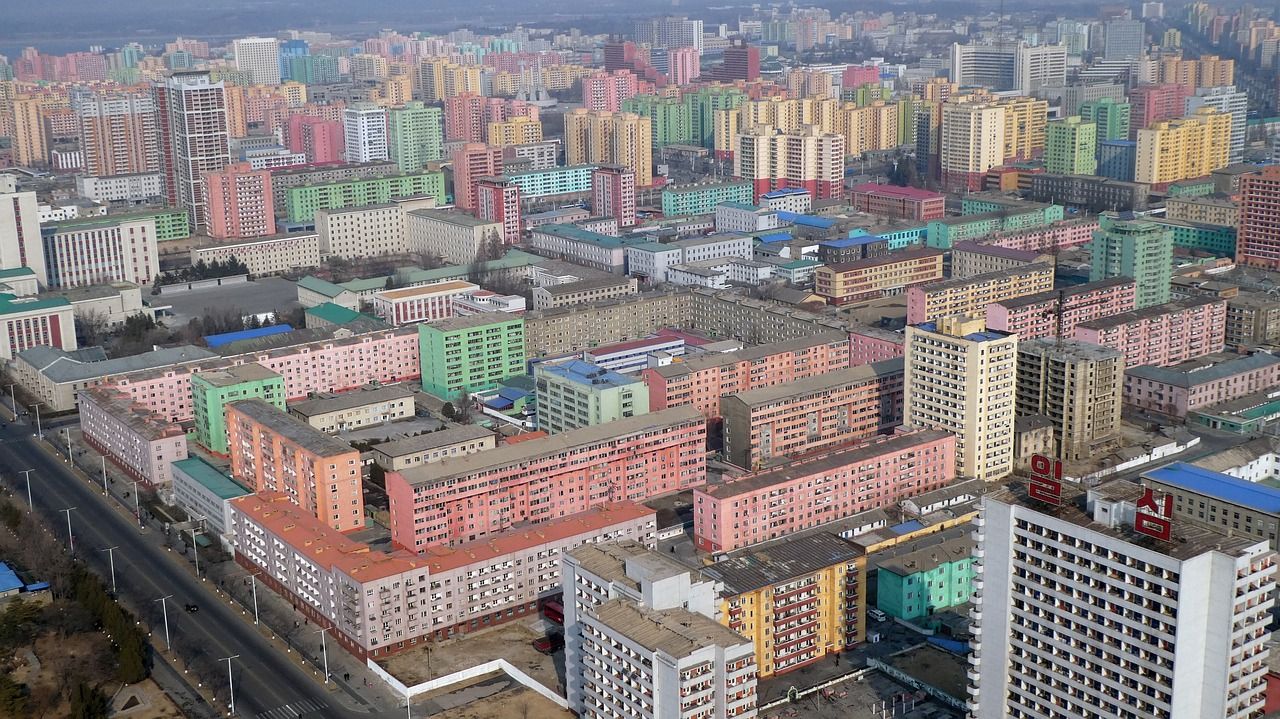
Representative image: peteranta / Pixabay
North Korea's revised constitution, posted on 11 November 2026, drops reunification, treats the South as a border country and changes the flag ratio.
What Happened
North Korea published the full text of its revised constitution on its official Naenara website on Wednesday, 11 November 2026, its first full publication of the document in about two years and eight months. The text removes the goal of reunification with South Korea and defines the country's territory as bordering China and Russia to the north and South Korea to the south. The same revision, under Article 166, changes the proportions of the national flag from 1:2 to 1:1.65, the first change to the flag's ratio since 1948, reports on the text said on 13 November.
Kim Jong Un Flag Redesign: key facts
- Published: full revised constitution posted on the state website Naenara on 11 November 2026.
- Adopted: amended at the First Session of the 15th Supreme People's Assembly on Monday, 23 March 2026, according to the text.
- Territory: Article 2 describes land bordering China and Russia to the north and South Korea to the south, with its waters and airspace.
- Reunification: references to national reunification have been removed.
- Wording on the South: the text does not explicitly call South Korea a hostile state, and earlier phrases such as "principal enemy" are not in it, according to reports.
- Flag: Article 166 sets the flag's height-to-width ratio at 1 to 1.65, replacing 1 to 2; North Korea has given no public reason.
- The published text largely matches a version that South Korea's Unification Ministry obtained and released in May.
Kim Jong Un Flag Redesign: why it matters
For more than seven decades, both Koreas officially treated the peninsula as one nation that would one day be reunited. North Korean leader Kim Jong Un has since broken with that idea, describing the two Koreas as two separate and hostile states, a policy known as the two-states doctrine. The published constitution now writes that view into the country's highest law: South Korea appears as a neighbouring country on the southern border, not as part of one Korean nation.
The choice of wording is also being read carefully. By leaving out the harsher labels that had been discussed, such as calling the South the "No. 1 hostile state", Pyongyang keeps its two-state position while avoiding language that could raise tensions further, according to one analysis in South Korean media.
The flag change is small in design but symbolic. A new ratio of 1:1.65 makes North Korea's flag unlike any other national flag, and observers link it to an effort to build a separate national identity under Kim. The flag had been seen online in its new shape since May, before the constitutional text confirmed it, according to flag researchers. For India, which keeps diplomatic ties with both Koreas and has major trade and defence links with Seoul, the constitution makes formal a division that shapes security in North-East Asia, a region on which India's trade routes depend.
Peepals timeline: On 23 March 2026, the First Session of the 15th Supreme People's Assembly amended the constitution. In May 2026, South Korea's Unification Ministry obtained and released a version of the text, and the redrawn flag was first noticed online. On 11 November 2026, Naenara posted the full text, and on 13 November reports highlighted the change to the flag's proportions.
| Point | Earlier position | Revised constitution |
|---|---|---|
| Reunification | A national goal | Removed |
| South Korea | Part of one Korean nation | Country on the southern border |
| Flag ratio | 1:2 (since 1948) | 1:1.65 |
Impact
Short-term: Seoul and its allies now have the official text to study, clause by clause. The publication confirms the version released by South Korea's Unification Ministry in May and ends uncertainty about the exact wording.
Long-term: With reunification removed from its constitution, North Korea has made it harder for any future leader to return to the old position. Talks between the two Koreas, already frozen, would now have to start from the idea of two states.
Who is affected: People in both Koreas, especially families divided by the border; South Korea's government and its Unification Ministry; the United States, Japan, China and Russia; and countries with interests in North-East Asian security, including India.
Key Takeaway
North Korea's revised constitution, published on 11 November 2026, drops reunification, treats South Korea as a separate country on its southern border and changes the national flag's proportions to 1:1.65.
Questions and Answers
What does North Korea's revised constitution say about South Korea?
It removes the goal of reunification and describes South Korea as the country on North Korea's southern border. Reports note that it does not explicitly label South Korea a hostile state.
How has the North Korea flag changed?
Article 166 of the revised constitution sets the flag's height-to-width ratio at 1 to 1.65 instead of 1 to 2, the first change to its proportions since 1948. North Korea has not explained why.
When was the revised constitution adopted and published?
It was amended at the First Session of the 15th Supreme People's Assembly on 23 March 2026, and the full text was posted on the Naenara website on 11 November 2026.
Why does this matter outside Korea?
It turns North Korea's two-state policy into constitutional law, making a return to reunification talks harder and shaping security in North-East Asia, which matters to the region's partners, including the United States, Japan and India.
Disclaimer: Prepared by the Peepals newsroom from publicly available sources with AI assistance. Information is accurate to the best of our knowledge at the time of publication and may change. Images may be representative. Not professional advice. Report an error via our contact page.
By Rohan Saluja, Geopolitics EditorCovers Geopolitics and more for Peepals Global. All stories by Rohan Saluja
KPop Demon Hunters world tour: 61 shows from June 2027, no India date yet
Women's Asian Champions Trophy: Salima Tete leads India, Savita Punia out
Get the day's stories in your inbox
Peepals Weekly: the week decoded, free. One email a week, unsubscribe in one click.
Rohan Saluja is a pen name of the Peepals Global Editorial Team, which researches, fact-checks and publishes every story. The portrait is an illustration.
Responsible for this story: the Peepals Global Editorial Team, led by editor Prashant Sonar. How we report