
Dibrugarh University puts 53,275 pages of Sanchipat manuscripts online for free
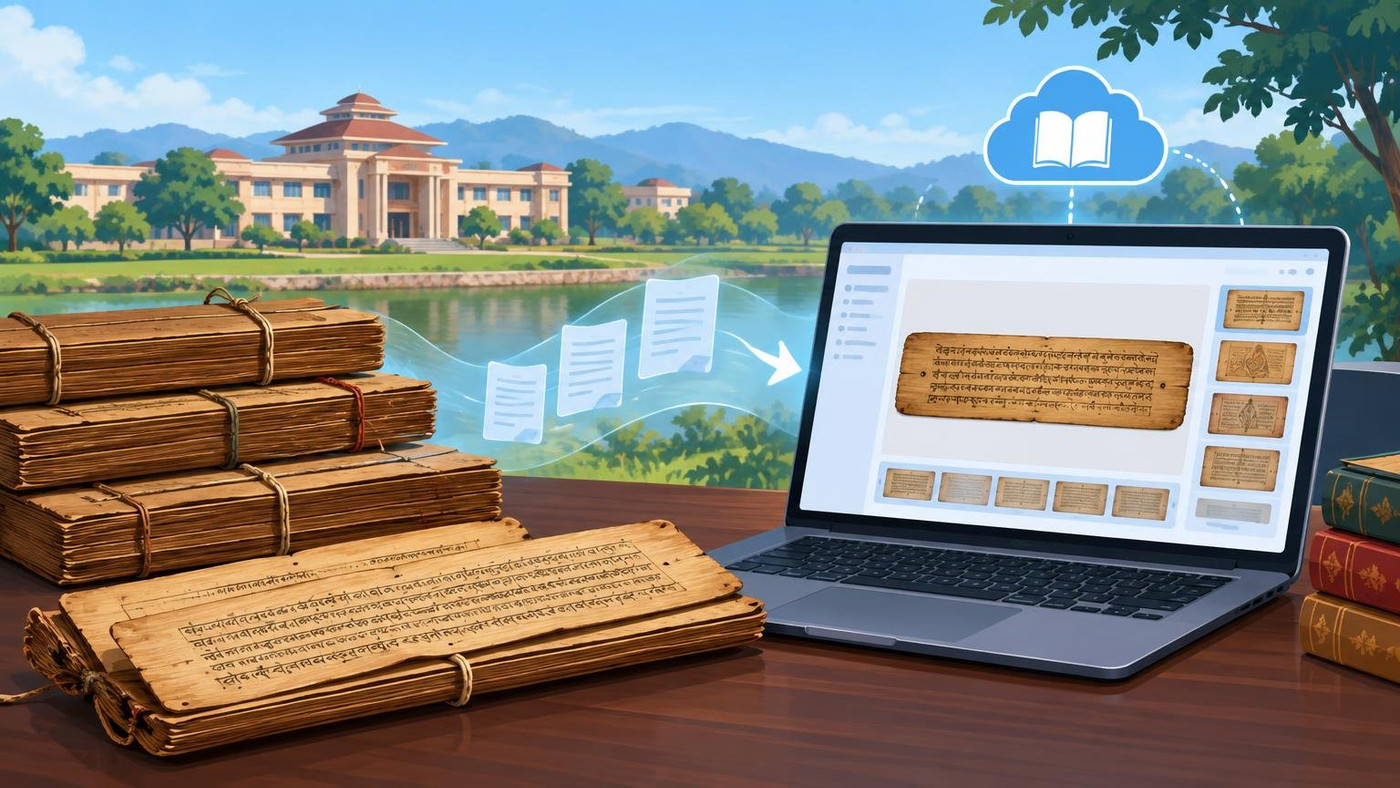
AI-generated representative image
Advertisement
Dibrugarh University opened a free online archive of 53,275 pages of Assamese, Tai and Sanskrit Sanchipat manuscripts on 6 October 2026.
What Happened
Dibrugarh University in Assam has put 53,275 pages of rare Sanchipat manuscripts online in a free digital archive run by its Department of Assamese. The archive was formally opened by Vice Chancellor Professor Jiten Hazarika on 6 October 2026, at a two-day seminar held to mark the birth centenary of the Assamese poet Nabakanta Barua. The manuscripts, held at the department's Leela Gogoi Memorial Manuscript Museum, are written in Assamese, Tai and Sanskrit. The archive was built under an agreement between the university and the Nanda Talukdar Foundation.
Key Facts
- Institution: Department of Assamese, Dibrugarh University, Assam.
- Launch: 6 October 2026, by Vice Chancellor Prof. Jiten Hazarika, at a seminar marking poet Nabakanta Barua's birth centenary.
- Content: 53,275 digitised pages of Sanchipat manuscripts from the Leela Gogoi Memorial Manuscript Museum.
- Languages: Assamese, Tai and Sanskrit.
- Also online: 72,867 pages of books from the personal library of the critic Mahendra Bora.
- Access: free to use.
- Partner: the Nanda Talukdar Foundation, under a memorandum of understanding with the university.
Why It Matters
Sanchipat manuscripts are among Assam's oldest written records, and they are a living part of the state's literary and religious heritage. Many survive outside libraries, in monasteries known as satras and in private homes, where age, damp and floods put fragile pages at risk.
Digitising them does two things at once. It creates a lasting copy of fragile pages that may not survive another generation, and it opens texts that were once seen by only a few scholars or custodians to anyone with an internet connection. For researchers in history, linguistics and traditional sciences, that means they can study a manuscript without travelling to Dibrugarh or handling an original.
The mix of languages is significant too. Assamese, Tai and Sanskrit texts sitting in one archive reflect the several traditions of learning that shaped the region. Keeping them together in one searchable place makes it easier for scholars to compare texts across languages.
The project is part of a wider national push. Under the Gyan Bharatam Mission, the Centre and states have been working to identify, document and digitise manuscripts, most of which are held privately and have never been catalogued. Earlier this year, digitisation also began of the Sanchipat collection at the historic Madhupur Satra in Assam. University-led archives like Dibrugarh's show how this work can move from surveys to collections the public can actually use.
| Item | Detail |
|---|---|
| Manuscript pages online | 53,275 |
| Languages | Assamese, Tai, Sanskrit |
| Library pages online (Mahendra Bora collection) | 72,867 |
| Launched | 6 October 2026 |
| Access | Free |
Impact
Short-term: Students and scholars can now read and cite these Sanchipat texts online, and the university's seminar has drawn attention to the collection.
Long-term: A free, searchable record reduces the risk of losing the texts to decay or floods, and gives future research on Assam's literary, religious and scientific traditions a stable base.
Who is affected: Researchers in Indian knowledge systems and Assamese studies, satras and families that hold manuscripts, language learners, and readers interested in the Northeast's heritage.
Key Takeaway
Dibrugarh University's new free archive puts more than 53,000 pages of fragile Assamese, Tai and Sanskrit manuscripts within reach of any reader online.
Questions and Answers
What are Sanchipat manuscripts?
They are traditional handwritten manuscripts of Assam, among the region's oldest written records. Many are held in satras and private homes, and the Dibrugarh collection includes texts in Assamese, Tai and Sanskrit.
What did Dibrugarh University launch?
On 6 October 2026 its Department of Assamese opened a free online archive with 53,275 digitised manuscript pages from its Leela Gogoi Memorial Manuscript Museum, plus 72,867 pages from critic Mahendra Bora's library.
Which languages are the manuscripts in?
The digitised manuscripts are in Assamese, Tai and Sanskrit.
Who helped build the archive?
The university built it under an agreement with the Nanda Talukdar Foundation. Vice Chancellor Prof. Jiten Hazarika formally opened it at a seminar marking poet Nabakanta Barua's birth centenary.
Sourced and fact-checked by the Peepals Global Editorial Team
Ayush UG counselling: Round 2 results out, Round 3 registration opens October 14
Vice-President urges Sanskrit scholars to edit and publish unpublished manuscripts
Reported, fact-checked and published by the Peepals Global Editorial Team.
Advertisement