

Navratri fasts begin as FSSAI orders checks on festive food, including kuttu atta
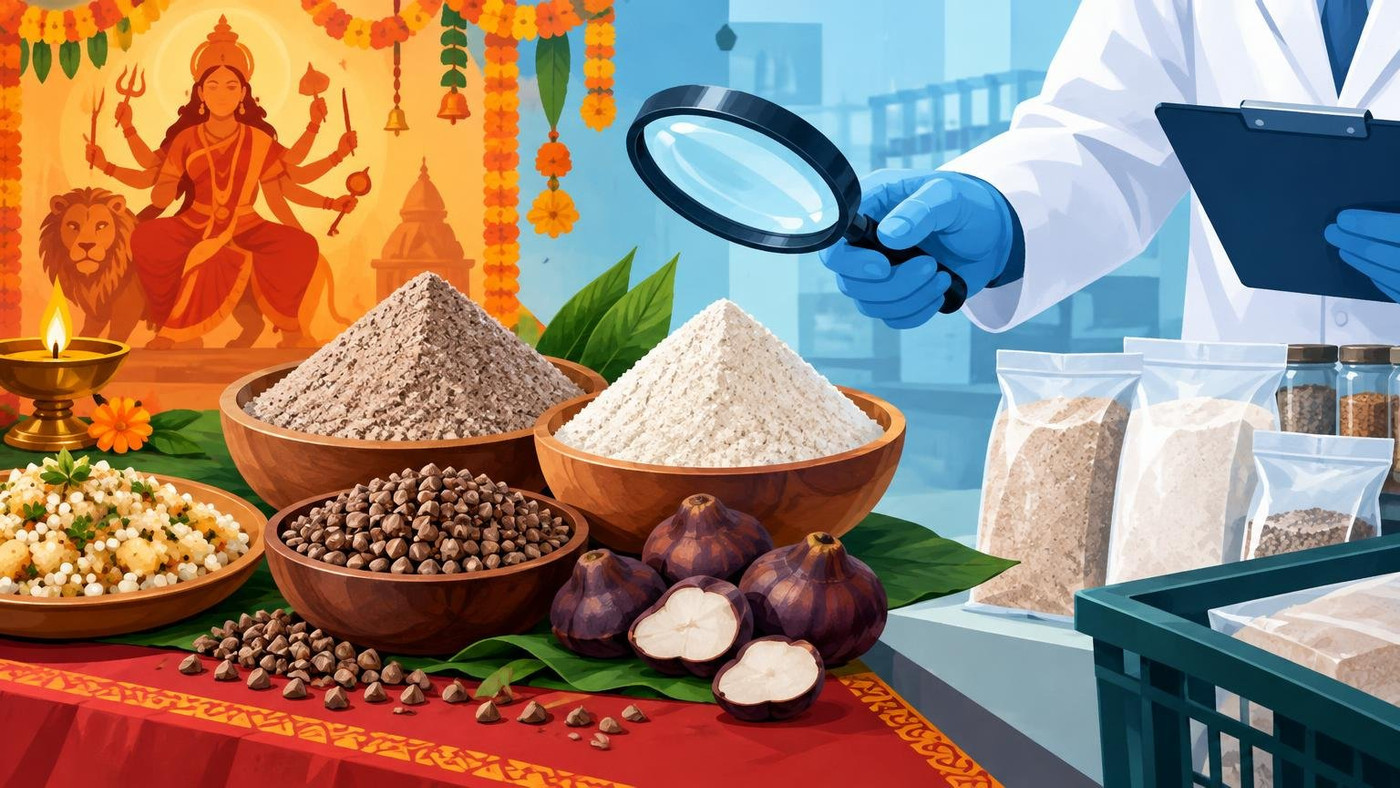
AI-generated illustration
Advertisement
Ahead of Navratri from October 11, 2026, FSSAI told states to step up food checks through Diwali, naming fasting flours like kuttu and singhara atta as possible focus items.
What Happened
As Navratri fasts begin across India on Sunday, October 11, 2026, the Food Safety and Standards Authority of India (FSSAI) has told all states and Union Territories to step up inspections and food sampling for the festive season that runs through Navratri and Diwali. In an advisory dated September 29, 2026, and made public in the first week of October, the regulator asked state food safety commissioners to send officers to markets, sweet shops and other sensitive locations to check for adulterated and unsafe food. It named milk products, sweets, edible oils and other festival staples as priorities, and said states may add regional items, citing kuttu (buckwheat) atta and singhara (water chestnut) atta used during fasts in northern and western India as examples.
Key Facts
- The FSSAI advisory is dated September 29, 2026, and was reported from October 5 and 6.
- It covers the festive period of Navratri and Diwali; Navratri begins on October 11, 2026.
- Priority items include milk and milk products such as ghee, khoa and paneer, sweets, savouries, beverages and edible oils.
- States may add items according to local eating habits; the regulator gave kuttu atta and singhara atta in the north and west as examples.
- Designated Officers, Food Safety Officers and Central Food Safety Officers are to inspect and take samples, especially at hotspots.
- Inspection, sampling and enforcement data must be entered in real time on FSSAI's FoSCOS and FoSCORIS platforms, and mobile Food Safety on Wheels labs are to be used where available.
Why It Matters
Fasting during Navratri is one of India's oldest food traditions. Many households switch for nine days to a simpler diet built around fruit, milk, curd and flours such as kuttu, singhara and samak, cooked with rock salt. Done well, this kind of vrat food is light and nourishing. But the same foods are bought in bulk in a short window, which creates room for stale stock, poor storage and adulteration.
The regulator's mention of kuttu and singhara atta is a quiet reminder of that risk. These flours are bought mostly during fasting periods, often loose and unbranded, and can sit in storage for months between festivals. Flour that has gone stale or been contaminated can make people ill, and illnesses linked to kuttu atta have been reported during past Navratri seasons. Asking states to include such items in their checks puts traditional fasting food on the same footing as sweets and dairy.
For families, the advisory is also practical guidance on what to watch. Milk products such as paneer, khoa and ghee, which the regulator expects to see a sharp rise in demand, feature heavily in both fasting meals and Diwali sweets. Buying from licensed sellers, choosing sealed packs of fasting flours with a clear packing date, and avoiding loose flour of unknown age are simple ways to keep the tradition safe.
The real-time reporting requirement matters too. Entering inspection results on digital platforms as they happen should make it easier for the regulator to see where problems are clustering and to act during the festival rather than after it.
| Fasting staple | What to check before buying |
|---|---|
| Kuttu (buckwheat) atta | Sealed pack, recent packing date, no musty smell |
| Singhara (water chestnut) atta | Licensed seller, clean and dry flour |
| Paneer and khoa | Fresh stock from a licensed shop, proper cooling |
| Ghee | Branded or trusted source, intact seal |
Impact
Short-term: Shoppers may see more food safety officers and mobile testing vans in markets during Navratri and Diwali, and sellers of unsafe food face sampling and enforcement action.
Long-term: Regular festival-time checks on regional foods such as fasting flours could raise standards for items that are often sold loose and largely escape scrutiny for the rest of the year.
Who is affected: Families observing Navratri fasts, sweet shops, dairies and flour sellers, state food safety departments, and consumers buying festive food across India.
Key Takeaway
FSSAI has asked states to intensify food checks through Navratri and Diwali, and said regional fasting flours such as kuttu and singhara atta can be part of those checks.
Questions and Answers
What has FSSAI asked states to do this festive season?
In an advisory dated September 29, 2026, FSSAI asked all states and UTs to step up inspections and sampling of food at markets and sensitive locations during Navratri and Diwali.
Does the advisory cover Navratri fasting flours like kuttu atta?
Yes, as an example. FSSAI said states may add regional items based on local eating habits, citing kuttu atta and singhara atta in northern and western India.
Which foods are the main focus of the checks?
Milk and milk products such as ghee, khoa and paneer, sweets, savouries, beverages and edible oils, which see a sharp rise in demand during festivals.
How can families keep their vrat food safe?
Buy fasting flours in sealed packs with a recent packing date from licensed sellers, avoid loose flour of unknown age, and buy dairy products fresh from trusted shops.
Sourced and fact-checked by the Peepals Global Editorial Team
Vaishno Devi gears up for Navratri rush with RFID checks and tighter security
Mahalaya: Bengal offers tarpan at Hooghly ghats as Durga Puja countdown begins
Reported, fact-checked and published by the Peepals Global Editorial Team.
Advertisement