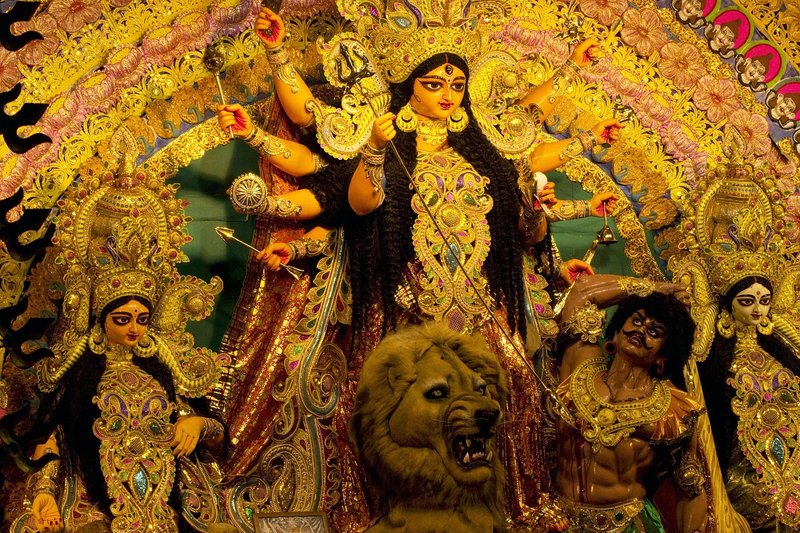
Ashtami, Navami in October 2026: why Sandhi Puja has two times, three hours apart
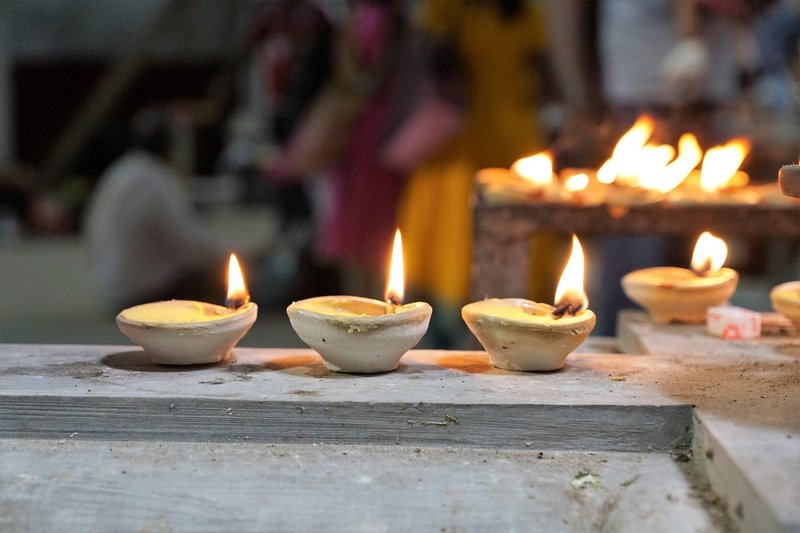
Representative image: dileepp89 / Pixabay
Durga Puja's Ashtami and Navami fall on October 19 and 20, 2026; Sandhi Puja on October 19 has two Kolkata timings, about three hours apart, from two almanac traditions.
What Happened
For people searching for Ashtami and Navami in October 2026, the Bengali almanacs used for Durga Puja put Maha Ashtami on Monday, October 19, 2026, Maha Navami on Tuesday, October 20, and Vijaya Dashami on Wednesday, October 21. The most precisely timed ritual of the festival, Sandhi Puja, falls on the morning of October 19, but it has two different timings in Kolkata depending on which almanac a puja committee follows. The Vishuddha Siddhanta almanac gives 10:29 am to 11:17 am, with the exact junction at 10:53 am, while the older Surya Siddhanta-based tradition followed by the Gupta Press almanac gives 7:25 am to 8:13 am, with the junction at 7:49 am. The gap of about three hours comes from two different ways of calculating the positions of the Sun, Moon and planets.
Key Facts
- Maha Ashtami: Monday, October 19, 2026; Maha Navami: Tuesday, October 20; Vijaya Dashami: Wednesday, October 21.
- Sandhi Puja lasts about 48 minutes: the last 24 minutes of the Ashtami tithi and the first 24 minutes of the Navami tithi.
- Kolkata timing by Vishuddha Siddhanta: 10:29 am to 11:17 am, junction at 10:53 am.
- Kolkata timing by the Surya Siddhanta-based (Gupta Press) method: 7:25 am to 8:13 am, junction at 7:49 am.
- In Dhaka, published schedules give 7:55 am to 8:43 am by Gupta Press and 10:58 am to 11:46 am by Vishuddha Siddhanta.
- Almanacs also differ on whether Maha Shashthi, the start of the main puja days, is counted on October 16 or October 17.
Why It Matters
Sandhi Puja is performed at the meeting point of two lunar days, so its timing depends entirely on when the eighth tithi of the waxing Moon ends and the ninth begins. A tithi is a lunar day, and the published timings show it does not begin or end at midnight: this year the junction falls in the middle of the morning. Getting that moment right needs an accurate model of the heavens, and Bengal's almanac makers have been split on that model for more than a century.
One school, represented by the Gupta Press almanac and others such as P. M. Bagchi, follows the older method. Its calculations rest on the Surya Siddhanta, an astronomical treatise about 1,500 years old, as applied in the 16th-century work of the scholar Raghunandan. The other school, the Vishuddha Siddhanta Panjika, began in 1890 with an amendment of the planetary positions, after astronomers and scholars found discrepancies in the older system. Its first editor was the mathematician Madhab Chandra Chattopadhyay, and it is described as the observation-based, or drik, school.
The split is not only academic. In 2005 the two systems produced two different sets of dates for Durga Puja itself. Belur Math follows the Vishuddha Siddhanta almanac, while many community pujas have stayed with the Gupta Press almanac because of its popularity. This year the dates agree, but the Sandhi Puja timings still differ by about three hours.
| Almanac tradition | Basis | Sandhi Puja junction in Kolkata, Oct 19 |
|---|---|---|
| Vishuddha Siddhanta | Revised, observation-based calculation (from 1890) | 10:53 am |
| Gupta Press (Surya Siddhanta-based) | Classical treatise, about 1,500 years old | 7:49 am |
Impact
Short-term: Puja committees, priests and families will hold Sandhi Puja at the time given by the almanac they follow, so neighbouring pandals in Kolkata and Dhaka may perform it hours apart on the same morning. Devotees planning to attend should check which almanac their local puja uses.
Long-term: The two timings are a living example of how India's traditional astronomy has been revised over time. The Surya Siddhanta tradition preserves an old method; the 1890 reform shows Indian scholars correcting it against observation. Both remain in use, which makes the Bengali almanac one of the few places where the history of Indian astronomy shapes a public ritual every year.
Who is affected: Durga Puja organisers, priests and devotees in West Bengal, Bangladesh and the wider Bengali diaspora, and anyone who relies on a panjika for festival timings.
Key Takeaway
Ashtami falls on October 19 and Navami on October 20, 2026, and Sandhi Puja's two Kolkata timings, 7:49 am and 10:53 am, reflect two almanac traditions that calculate planetary positions differently.
Questions and Answers
When are Ashtami and Navami in October 2026?
In the Bengali almanacs used for Durga Puja, Maha Ashtami is on Monday, October 19, 2026, and Maha Navami on Tuesday, October 20. Vijaya Dashami follows on Wednesday, October 21.
What is the Sandhi Puja time in 2026?
In Kolkata, the Vishuddha Siddhanta almanac gives 10:29 am to 11:17 am on October 19, with the junction at 10:53 am. The Gupta Press almanac, which follows the Surya Siddhanta method, gives 7:25 am to 8:13 am, with the junction at 7:49 am.
Why do the two almanacs give different times?
They use different models to calculate when a lunar day ends. The Gupta Press almanac relies on the roughly 1,500-year-old Surya Siddhanta, while the Vishuddha Siddhanta almanac, started in 1890, revised the planetary positions to match observation.
How long does Sandhi Puja last?
About 48 minutes: the last 24 minutes of Ashtami and the first 24 minutes of Navami.
Disclaimer: Prepared by the Peepals newsroom from publicly available sources with AI assistance. Information is accurate to the best of our knowledge at the time of publication and may change. Images may be representative. Not professional advice. Report an error via our contact page.
Sourced and fact-checked by the Peepals Global Editorial Team
AIIA treated 37.74 lakh patients in 10 years; yearly visits up from 1.23 to 5.4 lakh
Gita Mahotsav 2026: ISRO, Air Force, Navy to exhibit at Kurukshetra, Dec 5-25
Reported, fact-checked and published by the Peepals Global Editorial Team.