Navratri Ashtami 2026: why the panchang puts it on October 18 and 19
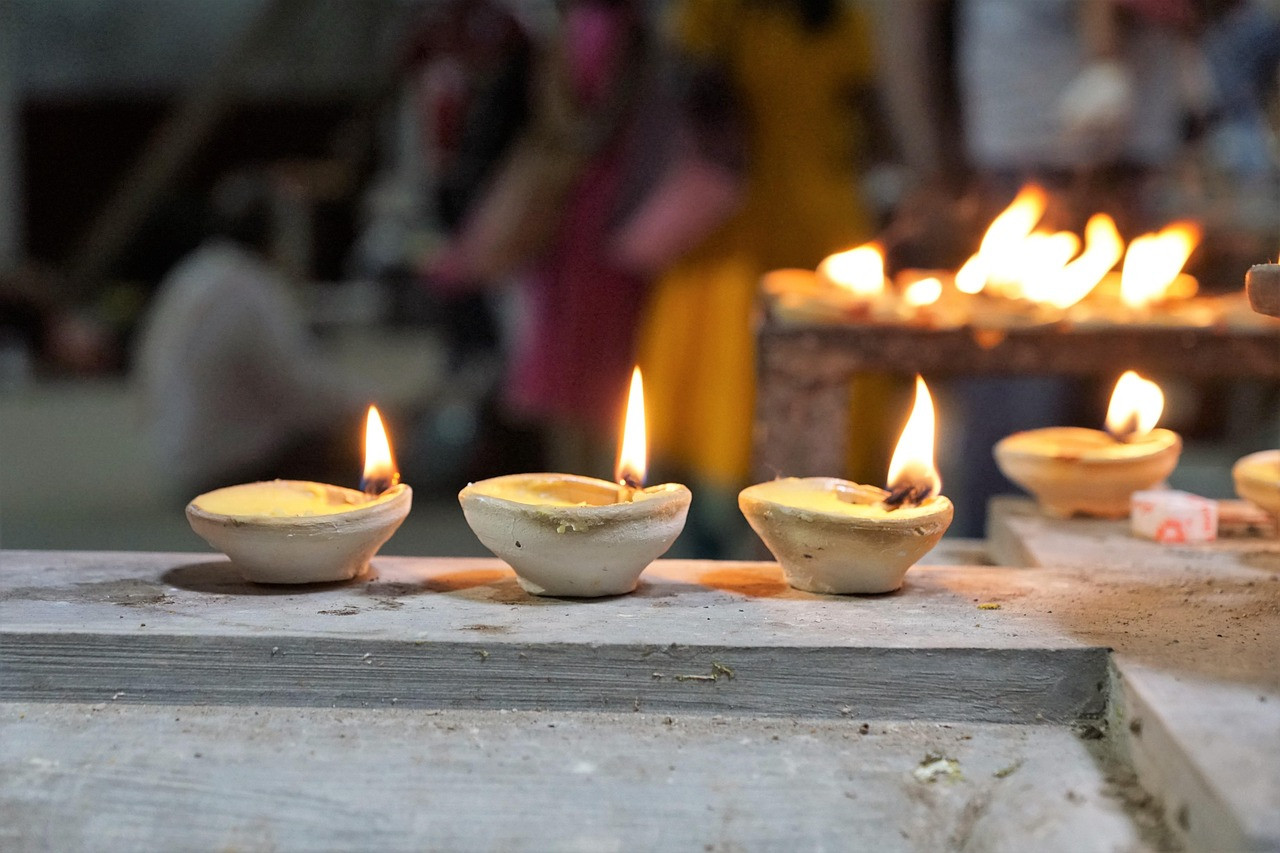
Representative image: photosforyou / Pixabay
Ashtami tithi runs from 8:27 am on Oct 18 to 10:51 am on Oct 19, 2026; panchangs using the sunrise rule mark Ashtami and Navami together on Oct 19.
What Happened
Families planning Kanya Pujan for Sharadiya Navratri in 2026 have been asking whether Durga Ashtami falls on Sunday, 18 October or Monday, 19 October, and the answer depends on how the panchang, the traditional Hindu almanac, counts a lunar day. According to panchang timings for Delhi published this week, the Ashtami tithi (eighth lunar day) begins at about 8:27 am on 18 October and ends at about 10:51 am on 19 October, when Navami begins. Navami then runs until about 12:50 pm on 20 October. Because one lunar day stretches across parts of three calendar days, almanacs following different rules list the festival days differently: some mark Durga Ashtami on 18 October, while others place both Maha Ashtami and Maha Navami on 19 October.
Key Facts
- Ashtami tithi: from about 8:27 am on Sunday, 18 October to about 10:51 am on Monday, 19 October 2026 (Delhi timings).
- Navami tithi: from about 10:51 am on 19 October to about 12:50 pm on Tuesday, 20 October.
- Panchangs that follow the tithi present at sunrise mark both Maha Ashtami and Maha Navami on 19 October.
- Drik Panchang's Delhi calendar lists Durga Ashtami on 18 October.
- In Bengal, Maha Navami is observed on 20 October.
- Vijayadashami (Dussehra) falls on 20 October across the calendars cited.
- Timings vary slightly by city: for Ujjain, Ashtami is given as 8:28 am on 18 October to 10:52 am on 19 October.
Why It Matters
The confusion comes from a simple fact of Indian calendar science: a tithi is not a 24-hour day. A tithi is the time the Moon takes to move 12 degrees further ahead of the Sun in the sky, as seen from Earth. There are 30 tithis in a lunar month, 15 in the bright half (Shukla Paksha) and 15 in the dark half (Krishna Paksha). Because the Moon's speed changes along its elliptical orbit, a tithi can last anywhere from roughly 20 hours to almost 27 hours. This year's Ashtami runs for about 26 hours and 24 minutes, which is why it touches three different mornings.
The concept is among the oldest in Indian astronomy and appears in the Vedanga Jyotisha, the early text that set out rules for timing Vedic rituals. Modern panchangs still compute tithis from the positions of the Sun and Moon, so their tithi start and end times agree closely. Where they differ is in the rule used to assign a festival to a civil date.
The most widely used rule takes the tithi in force at sunrise (udaya tithi) as the tithi of the whole day. At sunrise on 18 October, the running tithi is still Saptami; Ashtami starts only later that morning. At sunrise on 19 October, Ashtami is still in force, so panchangs following this rule mark 19 October as Durga Ashtami. Because Navami begins later that same morning, the published guides following this approach also observe Maha Navami on 19 October, with Vijayadashami on 20 October. Other almanacs apply different rules and list Ashtami on 18 October. Regional traditions, such as Bengal's Durga Puja calendar, apply their own rules, which is why Maha Navami there falls on 20 October.
| Day (2026) | Tithi at sunrise | What happens during the day |
|---|---|---|
| Sunday, 18 October | Saptami | Ashtami begins about 8:27 am |
| Monday, 19 October | Ashtami | Navami begins about 10:51 am |
| Tuesday, 20 October | Navami | Navami ends about 12:50 pm; Vijayadashami |
Impact
Short-term: Households doing Kanya Pujan on Ashtami under the sunrise rule would complete it on the morning of 19 October, before Navami begins at about 10:51 am. Those who observe Navami can do so after that time on 19 October or, under some traditions, on the morning of 20 October before about 12:50 pm. Temples and community pandals will follow the panchang of their own tradition.
Long-term: Such overlaps recur whenever a tithi is long or short relative to the solar day, and they show why panchangs remain a living calculation rather than a fixed printed list. As digital almanacs spread, readers can see the exact tithi times for their own city instead of relying on a single national date.
Who is affected: Families observing Navratri fasts and Kanya Pujan, temple priests and puja committees, people planning travel or holidays around Dussehra, and anyone trying to reconcile dates shown by different calendar apps.
Key Takeaway
Durga Ashtami 2026 appears on two dates because the Ashtami tithi runs from the morning of 18 October to the morning of 19 October; panchangs that follow the sunrise rule mark Ashtami and Navami together on 19 October.
Questions and Answers
Is Navratri Ashtami 2026 on 18 or 19 October?
The Ashtami tithi runs from about 8:27 am on 18 October to about 10:51 am on 19 October (Delhi timings). Panchangs that use the tithi present at sunrise mark Durga Ashtami on Monday, 19 October; some others, including Drik Panchang's Delhi calendar, list it on Sunday, 18 October. Follow the panchang used by your family or local temple.
Why are Ashtami and Navami on the same day in 2026?
Under the sunrise rule, 19 October counts as Ashtami because Ashtami is in force at sunrise. Navami begins at about 10:51 am the same morning, so panchangs following this approach observe Maha Navami on 19 October as well. In Bengal, Maha Navami is observed on 20 October.
What is a tithi and why is it not the same as a calendar day?
A tithi is a lunar day: the time the Moon takes to gain 12 degrees on the Sun. Because the Moon's speed varies, a tithi lasts from about 20 to almost 27 hours, so it rarely lines up with a midnight-to-midnight calendar day.
When is Dussehra 2026?
Vijayadashami, or Dussehra, falls on Tuesday, 20 October 2026, according to the panchangs cited.
Disclaimer: Prepared by the Peepals newsroom from publicly available sources with AI assistance. Information is accurate to the best of our knowledge at the time of publication and may change. Images may be representative. Not professional advice. Report an error via our contact page.
Sourced and fact-checked by the Peepals Global Editorial Team
World Food Day 2026: FAO theme pairs innovation with traditional food knowledge
UP Sanskrit scholarship 2026-27: first instalment due October 23 for 6th to Acharya
Reported, fact-checked and published by the Peepals Global Editorial Team.