Child DNA test plea to shame wife costs father Rs 50,000: Madras High Court

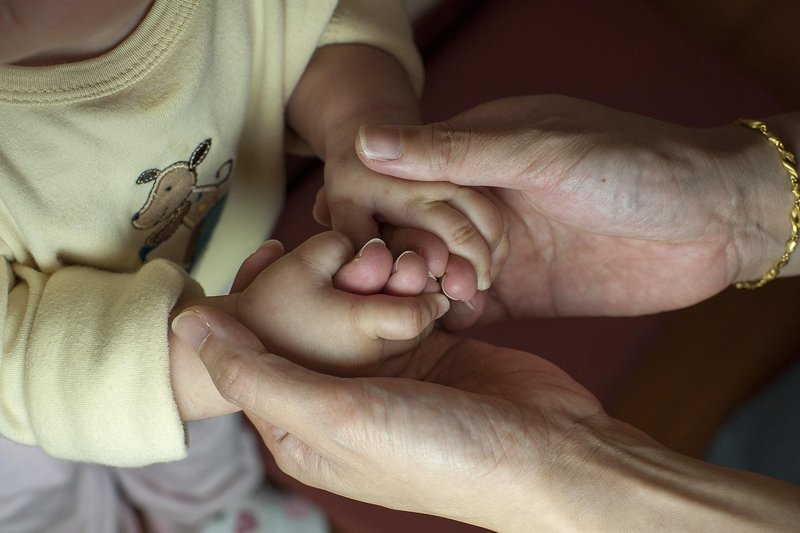
File photo: Yercaud-elango (CC BY 4.0), via Wikimedia Commons
The Madras HC Madurai Bench made a husband pay Rs 50,000 to his wife after finding he sought their son's DNA test to humiliate her and delay maintenance.
What Happened
The Madurai Bench of the Madras High Court has ordered a man to pay Rs 50,000 in costs to his wife after finding that he sought a DNA test of their minor son to humiliate her and to drag out her maintenance case, according to reports of the order published on October 15, 2026. Justice Shamim Ahmed dismissed the husband's revision petition against a magistrate's order that had already rejected his request for the test in a pending domestic violence case. The court held that a DNA test cannot be ordered as a routine step or used as a shortcut to try to prove that a wife was unfaithful, and noted that the husband had asked for the test about ten years after the domestic violence proceedings began.
Key Facts
- Court: Madras High Court, Madurai Bench; judge: Justice Shamim Ahmed.
- The husband challenged a District Munsif cum Judicial Magistrate's order that refused his application for a DNA test of the couple's minor son.
- The request was made in a domestic violence case in which the wife is also seeking maintenance.
- The court dismissed the revision petition and imposed costs of Rs 50,000, payable to the wife.
- It found the test was sought to humiliate and defame the wife and to prolong the maintenance case.
- The court relied on the legal presumption that a child born during a valid marriage is legitimate, now in Section 116 of the Bharatiya Sakshya Adhiniyam, 2023, which corresponds to Section 112 of the old Indian Evidence Act. The presumption holds unless it is shown that the spouses had no access to each other.
- The husband waited about ten years after the proceedings began before seeking the test, a delay the court found unexplained.
Why It Matters
DNA tests have become cheap and easy, and in family disputes they are sometimes demanded as a weapon rather than as a search for the truth. When a husband asks a court to test whether a child is his, the request does not only target the wife. It puts a question mark over the child's identity, can mark the child socially, and can affect the child's right to support from the father. Courts have therefore been careful about when such tests should be ordered.
Indian law starts from a strong presumption. A child born while the parents were validly married is treated as the husband's child, and this can be displaced only by proof that the husband and wife had no access to each other when the child could have been conceived. The rule exists to protect children from being declared illegitimate on suspicion alone. This ruling applies that principle and adds a cost for misusing the court's process, which is a signal to litigants that such applications can carry a price.
The timing also mattered to the court. A maintenance claim is meant to secure money for a wife and child to live on while a dispute is decided. A fresh demand for a DNA test, a decade into the case, can delay that support for months or years. By treating the request as an attempt to stretch out the case, the court put the focus back on the speed of maintenance proceedings. The same judge, in a separate order in 2025, had also refused a husband's DNA plea in a maintenance case, saying a child cannot be used as a pawn to prove a mother's adultery.
| Point | What the court held |
|---|---|
| DNA test | Not to be ordered routinely or as a shortcut to prove infidelity |
| Presumption of legitimacy | Child born in a valid marriage is the husband's, unless non-access is proved |
| Delay | A request made about ten years into the case was unexplained |
| Costs | Rs 50,000, payable to the wife |
Impact
Short-term: The domestic violence and maintenance case returns to the trial court without the DNA question, and the wife is to receive Rs 50,000 in costs. The child is spared a test that the court found was meant to shame the mother.
Long-term: The order adds to a line of rulings that discourage DNA demands used as pressure tactics in matrimonial cases. Lawyers advising husbands may be more cautious about filing such applications late in a case, and trial courts have a clear reference when weighing similar requests.
Who is affected: Women seeking maintenance or protection under domestic violence law, children whose paternity is questioned in their parents' disputes, husbands who raise such doubts, and family courts and magistrates who decide these applications.
Key Takeaway
The Madras High Court has made a husband pay Rs 50,000 for seeking his son's DNA test to humiliate his wife and delay her maintenance, holding that such tests are not a routine tool to prove infidelity.
Questions and Answers
Why did the Madras High Court fine a father Rs 50,000 over a DNA test?
The Madurai Bench found that the husband sought a DNA test of his minor son to humiliate and defame his wife and to delay her maintenance case, so it dismissed his petition and ordered him to pay Rs 50,000 in costs to her.
Can a husband demand a DNA test of his child in India?
He can apply, but courts do not order it as a matter of routine. The law presumes that a child born during a valid marriage is the husband's, and that presumption can be displaced only by proof that the spouses had no access to each other.
Which law sets out the presumption of legitimacy?
Section 116 of the Bharatiya Sakshya Adhiniyam, 2023, which replaced Section 112 of the Indian Evidence Act, 1872. The court relied on it in this case.
What happens to the wife's case now?
The domestic violence and maintenance proceedings continue in the trial court without the DNA test, and the husband must pay the Rs 50,000 in costs to his wife.
Disclaimer: Prepared by the Peepals newsroom from publicly available sources with AI assistance. Information is accurate to the best of our knowledge at the time of publication and may change. Images may be representative. Not professional advice. Report an error via our contact page.
Sourced and fact-checked by the Peepals Global Editorial Team
Michele Tafoya gets Trump's backing in Minnesota Senate race between two women
Sudha Yadav sworn in as Karnataka's second woman Governor after V.S. Ramadevi
Reported, fact-checked and published by the Peepals Global Editorial Team.