
Sundar Pichai: Google Cloud is giving up revenue to feed AI research
 By Pooja MehraIndustry Trends Analyst, Peepals Tech
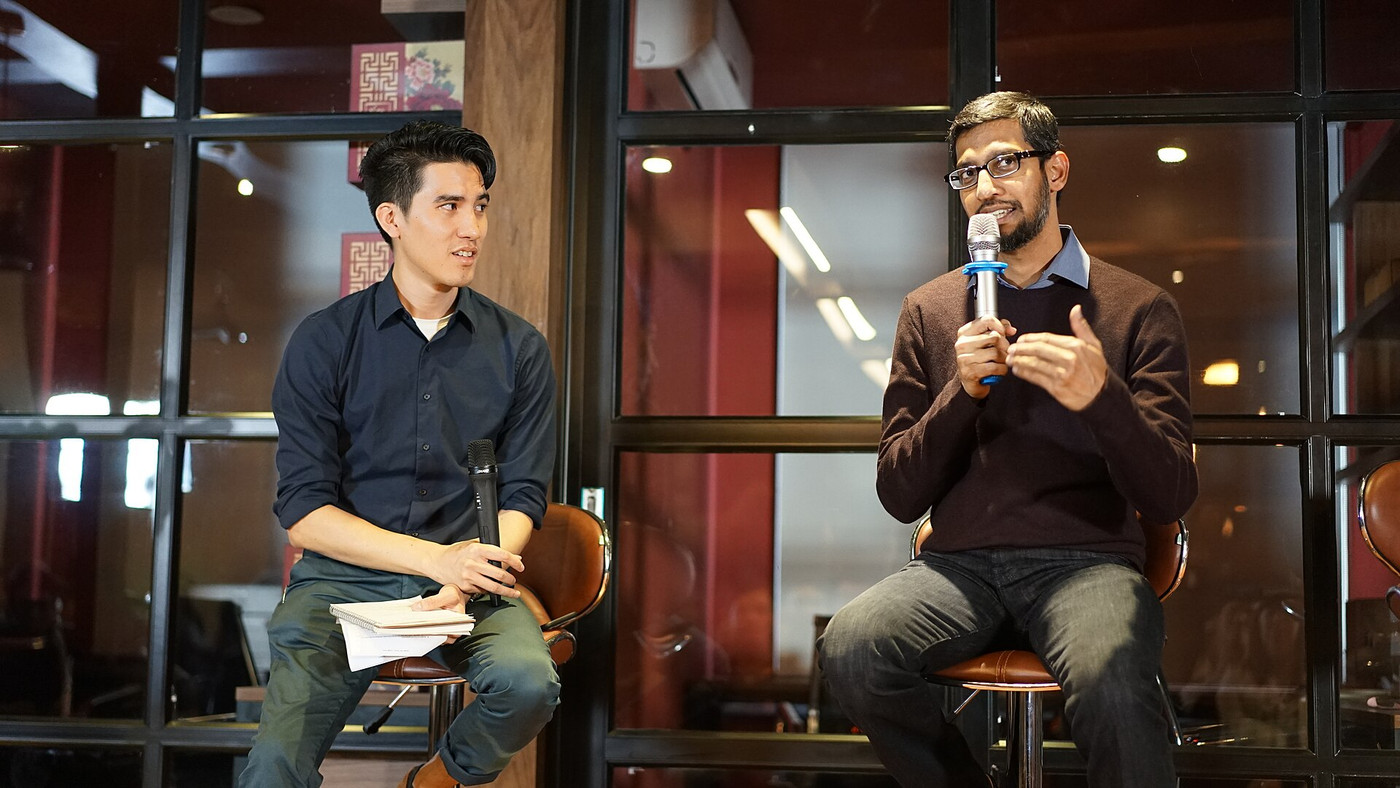
File photo: Nguyen Hung Vu from Hanoi, Vietnam (CC BY 2.0), via Wikimedia Commons
Sundar Pichai said on 20 October 2026 that Google Cloud is forgoing short-term revenue so DeepMind's AI work gets first call on scarce computing power.
What Happened
Sundar Pichai, chief executive of Google and its parent company Alphabet, has said that Google Cloud is giving up some short-term revenue so that the company's own frontier AI research gets first call on scarce computing power. He made the remarks in a podcast interview recorded on 20 October 2026, and they were widely reported over the following days. In a separate podcast conversation released the same week, Pichai described how software "agents" now summarise the company's daily activity for him. Alphabet shares fell about 2% on 21 October as investors weighed the cloud comments.
Key Facts
- Pichai said the computing needs of Google DeepMind, the company's AI research lab, are "non-negotiable", and that other parts of Google plan around that commitment.
- He said taking on new cloud customers who want computing capacity in 2027 would be "incredibly difficult to do".
- He described the shortage as industry-wide, saying everyone wishes they had about twice the capacity they had planned for.
- He did not say how much cloud revenue Google expects to forgo.
- In its second-quarter 2026 results, Alphabet reported Google Cloud revenue up 82% to $24.8 billion.
- Alphabet has guided full-year 2026 capital spending, mostly on data centres and chips, at $195 billion to $205 billion; second-quarter capital spending alone was about $44.9 billion.
- Pichai said the computing capacity Google has today reflects decisions he made in 2024, because data centres are planned two to three years ahead.
Why It Matters
Cloud computing means renting out servers, storage and software over the internet instead of companies buying their own machines. For Google, Amazon and Microsoft, cloud has become one of the fastest-growing businesses, and much of the new demand comes from companies that want to train or run AI models. Those workloads need specialised chips, such as Google's own tensor processing units (TPUs) and graphics processors (GPUs), which are in short supply worldwide.
Pichai's comments are unusual because a chief executive rarely says openly that his company is turning away paying customers. His point is that when chips and data-centre space run short, Google gives its own AI research, including its Gemini models, first priority over extra rent from cloud clients.
The remarks also explain why the big technology companies keep raising their spending plans. Building a large data centre, connecting it to power and filling it with chips takes years. Pichai's statement that today's capacity was decided in 2024 shows how long the planning cycle is, and why a sudden jump in AI demand cannot be met quickly.
In the second interview, Pichai said agents running in Google's cloud now summarise the previous 24 hours of developments for him, a task he said could otherwise take about an hour a day. According to the reported remarks, the agents follow AI model progress, track how much computing each product area uses and monitor internal discussion groups. He said people, including himself, still make the important decisions about how computing resources are shared out. An AI agent here means software that can carry out a series of tasks on its own, such as reading, sorting and summarising information, rather than only answering one question at a time.
| Google Cloud at a glance | Figure |
|---|---|
| Q2 2026 Google Cloud revenue | $24.8 billion, up 82% |
| 2026 capital spending guidance | $195 billion to $205 billion |
| Q2 2026 capital spending | about $44.9 billion |
| Planning horizon for compute | two to three years ahead |
| Revenue Google expects to forgo | not disclosed |
Impact
Short-term: Businesses hoping to rent large amounts of AI computing from Google for 2027 may find capacity harder to get and may spread their orders across other cloud providers. Investors will look for more detail when Alphabet next reports its quarterly results, since the size of the trade-off has not been given.
Long-term: If the bet pays off, Google's AI models and products could become stronger, which would in turn draw more customers to its cloud. If demand for AI computing slows, the heavy spending could weigh on profits.
Who is affected: Cloud customers, including start-ups and large companies in India that build AI products on rented computing; Google's cloud sales teams and partners; rival cloud providers, who may win business Google cannot serve; and chipmakers and data-centre builders, who stand to gain from the continued spending.
Key Takeaway
Sundar Pichai has said Google Cloud is giving up some near-term revenue so that its own frontier AI research gets priority on scarce computing power, without saying how much revenue is involved.
Questions and Answers
What did Sundar Pichai say about Google Cloud revenue?
In an interview recorded on 20 October 2026, Sundar Pichai said Google Cloud is forgoing some short-term revenue because the computing needs of Google DeepMind, its AI research lab, come first. He did not give a figure for the revenue being given up.
Why is Google short of computing capacity?
Pichai said demand for AI computing is higher than the industry planned for, and that data centres take two to three years to plan and build. He said the capacity Google has today reflects decisions made in 2024, and that every company in the field is short.
Does this affect Indian businesses that use Google Cloud?
Possibly. Pichai said serving new customers who want capacity in 2027 would be very difficult, so any company, in India or elsewhere, planning large new AI workloads on Google Cloud may face limits and may look at other providers as well.
How does Sundar Pichai use AI agents in his own work?
Pichai said agents summarise the previous 24 hours of activity at Google for him, follow AI model progress, track computing use by product area and monitor internal discussion groups. He said humans, including himself, still make the major decisions.
Disclaimer: Prepared by the Peepals newsroom from publicly available sources with AI assistance. Information is accurate to the best of our knowledge at the time of publication and may change. Images may be representative. Not professional advice. Report an error via our contact page.
By Pooja Mehra, Industry Trends AnalystCovers Industry News & Trends and more for Peepals Tech. All stories by Pooja Mehra
Anthropic says Claude got past paywall to pull Georgia vote counts
Unitree Robotics' new H2-X humanoid falls, loses leg part at live demo
Pooja Mehra is a pen name of the Peepals Global Editorial Team, which researches, fact-checks and publishes every story. The portrait is an illustration.