
Goa AI Policy 2026: Rs 250 crore, GPU access and start-up support
 By Aditi KulkarniStaff Writer, Peepals Bharat
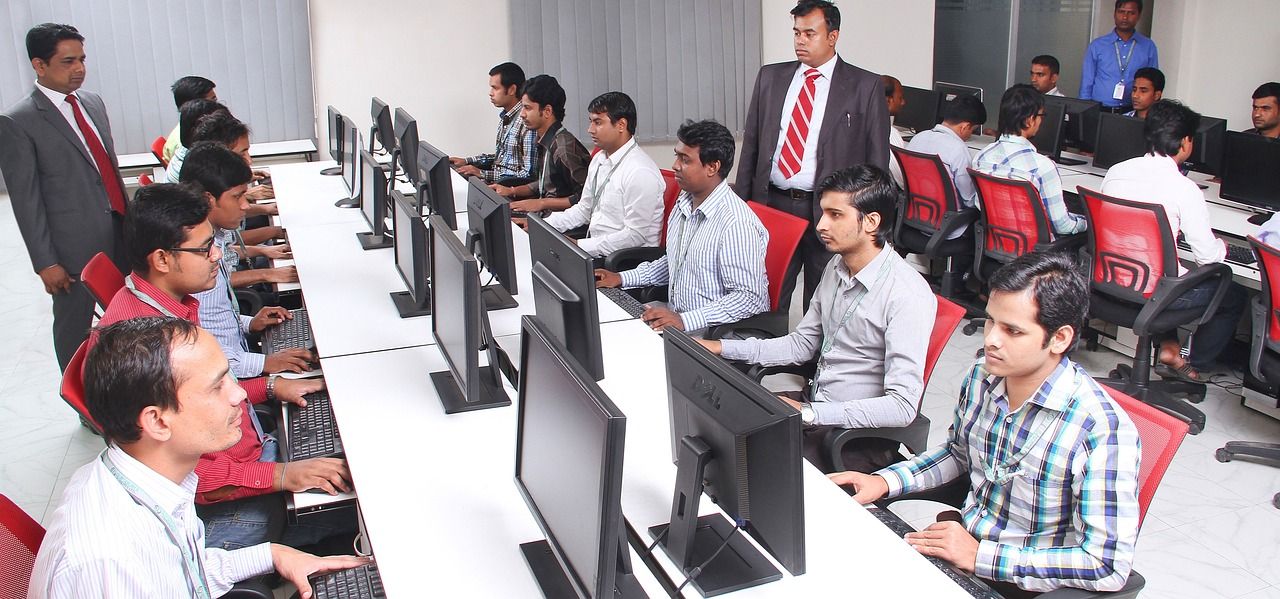
Representative image: selenajain / Pixabay
Goa's Cabinet approved the Goa AI Policy 2026 on 20 November with Rs 250 crore under its Innovation Fund, five schemes and a 50,000 AI graduates target.
Goa AI Policy 2026: what happened
The Goa Cabinet approved the Goa AI Policy 2026 and five flagship schemes on Friday, 20 November 2026, setting aside Rs 250 crore under the state's Innovation Fund, with an initial Rs 10 crore earmarked to start. The policy splits its outlay three ways: 60% for artificial intelligence (AI) skilling, 20% for AI start-ups and 20% for AI infrastructure. IT Minister Rohan Khaunte said the government aims to produce 50,000 AI-skilled graduates by 2030 under its Goa AI Mission 2027.
Goa AI Policy 2026: key facts
- Approved: Goa AI Policy 2026 and five schemes, by the state Cabinet on 20 November 2026.
- Money: Rs 250 crore under the Innovation Fund, with an initial Rs 10 crore earmarked.
- Split: 60% skilling and capacity building, 20% start-up promotion, 20% infrastructure.
- Start-ups: the Goa AI Startup and Innovation Promotion Scheme offers incubation, help to build prototypes, hackathons and government "challenge" problems to start-ups, MSMEs and research-led firms; the Goa AI Lab is to become a co-working and innovation hub.
- Schools: under "AI Ready Goa", AI basics will be taught in schools, with AI labs in up to 50 government schools, 500 teachers trained and a network of 100 AI experts.
- Language: the Konkani AI and Research Excellence Scheme plans a Konkani large language model and speech and translation tools.
- Computing: the infrastructure scheme plans access to computing power equal to around 100 GPUs (graphics processing units, the chips used to train AI), through partners such as CDAC and the IndiaAI compute programme, with up to 10% kept for priority public-sector uses.
Goa AI Policy 2026: why it matters
For founders outside India's big start-up hubs, two things usually hold them back in AI: access to expensive computing power and a first paying customer. Goa's scheme addresses both. Shared access to around 100 GPUs means a small team can test and train models without buying hardware, and government "challenge" problems give start-ups a chance to solve a real department's problem and potentially win it as a client.
The policy's biggest share goes to skills. AI labs in government schools and training for teachers aim to bring young people into the field early, while the graduate target is meant to give local and outside companies a reason to hire in Goa. For students, this means more state-supported courses and certification routes; for start-ups, a growing pool of trained local talent.
The Konkani language project is a niche but meaningful piece. Most AI tools work best in English and a few major Indian languages. A Konkani language model and translation tools would help government services and local businesses reach people in their own language, and could create work for start-ups building on top of it.
Goa released a draft of the policy on 29 April 2026, so the Cabinet approval turns a consultation document into a funded programme.
Peepals calculation: Reaching 50,000 AI-skilled graduates by 2030 means about 12,500 a year if spread over the four years from 2027 to 2030 (50,000 ÷ 4). Training 500 teachers for labs in up to 50 schools works out to about 10 teachers per school (500 ÷ 50). Reserving up to 10% of compute equal to around 100 GPUs keeps roughly 10 GPUs' worth for priority public uses (100 × 0.10), leaving about 90 for others. Our calculation from the reported figures.
| Part of the policy | Share or target |
|---|---|
| AI skilling and capacity building | 60% of outlay |
| AI start-up promotion | 20% of outlay |
| AI infrastructure | 20% of outlay |
| AI-skilled graduates by 2030 | 50,000 |
| Shared compute | about 100 GPUs equivalent |
Goa AI Policy 2026: impact
Short-term: The state will notify scheme details and start with the first Rs 10 crore. Start-ups and schools in Goa can watch for calls for applications under each scheme.
Long-term: If the skilling and compute schemes work, Goa could build a small AI start-up cluster and a local talent pool, and its Konkani tools could serve as an example for other smaller languages.
Who is affected: Goa's students, teachers and graduates; AI start-ups and MSMEs in the state; and government departments that will set innovation challenges.
What to watch next: notification of scheme guidelines and the first calls for applications under the Goa AI Startup and Innovation Promotion Scheme.
Goa AI Policy 2026: key takeaway
Founders and students in Goa should watch for the scheme guidelines: shared GPU access and government challenge problems are the most direct openings in the new AI policy.
Goa AI Policy 2026: questions and answers
What is the Goa AI Policy 2026?
It is a state policy approved by the Goa Cabinet on 20 November 2026, with Rs 250 crore under the Innovation Fund and five schemes for AI skilling, start-ups, infrastructure and the Konkani language.
What support will AI start-ups get in Goa?
Incubation, help with prototypes, hackathons and government innovation challenges, plus access to shared computing power and a co-working hub at the Goa AI Lab.
How many people does Goa plan to train in AI?
The government aims for 50,000 AI-skilled graduates by 2030, and plans to train 500 teachers and set up AI labs in up to 50 government schools.
What is the Konkani AI scheme?
It aims to develop a Konkani large language model and speech and translation tools, so AI services can work in the state's language.
Disclaimer: Prepared by the Peepals newsroom from publicly available sources with AI assistance. Information is accurate to the best of our knowledge at the time of publication and may change. Images may be representative. Not professional advice. Report an error via our contact page.
By Aditi Kulkarni, Staff WriterCovers Education and more for Peepals Bharat. All stories by Aditi Kulkarni
UGC advisory: check a university's approval before paying, after Supreme Court order
The Vvaan OTT: Sidharth Malhotra film now free on Prime Video after rental
Your week ahead, every Sunday. Free.
Exam and result dates, IPOs opening, scheme deadlines, government holidays and the RBI decision for the next 7 days, plus the week's top stories. One email a week, unsubscribe in one click.
Aditi Kulkarni is a pen name of the Peepals Global Editorial Team, which researches, fact-checks and publishes every story. The portrait is an illustration.
Responsible for this story: the Peepals Global Editorial Team, led by editor Prashant Sonar. How we report