

Widow's limited right in Delhi farmland became full ownership in 1956, SC rules
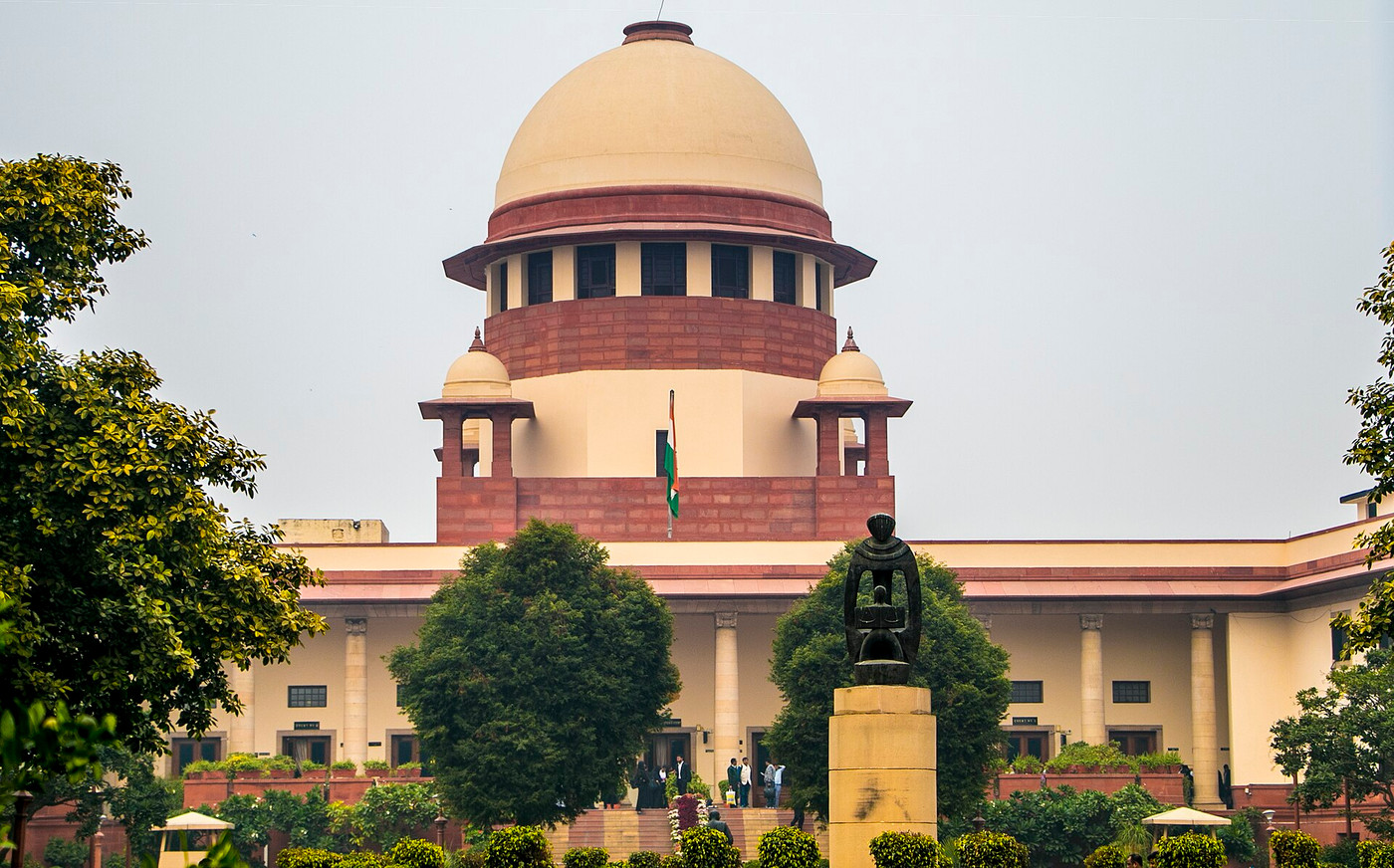
File photo: Subhashish Panigrahi (CC BY-SA 4.0), via Wikimedia Commons
The Supreme Court ruled on 9 October 2026 that a Hindu widow's limited estate in Delhi farmland became absolute in 1956, so it passed to her sons, not her in-laws.
What Happened
The Supreme Court ruled on Friday, 9 October 2026, that a Hindu widow's limited right over farmland in Delhi grew into full ownership when the Hindu Succession Act, 1956 came into force, so the land passed to her own sons after her death rather than to relatives on the other side of the family. A bench of Justices S.V.N. Bhatti and N.V. Anjaria dismissed an appeal in Sultan Singh v. The Financial Commissioner, Government of NCT of Delhi, and upheld a 2012 Delhi High Court judgment in favour of the widow's two sons. The dispute concerned about 45 bighas of agricultural land held by a woman named Khajano, who died in 1973.
Key Facts
- Judgment date: 9 October 2026; neutral citation 2026 INSC 1107; Civil Appeal No. 9146 of 2012. Justice Bhatti wrote the judgment, which is marked reportable.
- Khajano held the land as a bhumidhar under the Delhi Land Reforms Act, 1954, with only a limited estate at first.
- Because she was alive when the 1956 Act took effect, Section 14(1) of that Act turned her limited estate into absolute ownership, the court held.
- Her land therefore passed under Section 53 of the Delhi Land Reforms Act, not Section 50, and went to her sons.
- The court said the words "personal law applicable to her" in the Delhi law are not frozen at 1954; what matters is the law in force on the date of her death.
- Section 14(1) only enlarges a right a woman already holds; it cannot create a right where she had no legal interest at all.
- The enlarged right applies unless a case falls squarely within the exception in Section 14(2) of the 1956 Act.
Why It Matters
Before 1956, a Hindu widow usually held inherited property as a "limited owner". She could use it and live off it during her lifetime, but on her death it went back to the heirs of the family she had married into, known as reversioners. Section 14(1) of the Hindu Succession Act was written to end that. It says property a Hindu woman possesses, however she came by it, is held by her as full owner. The long fight in this case was over whether a special land law for Delhi's farmland could override that rule.
The Delhi Land Reforms Act, 1954 has its own rules on who inherits agricultural land. The reversioners argued that because Khajano took the holding as a widow under the 1954 regime, the older, narrower rules should decide who got it after she died. The Supreme Court rejected that reading. It held that the Delhi law points to the woman's personal law, and that personal law changed in 1956. By the time she died in 1973, she was a full owner, and her heirs inherit as they would from any owner.
The ruling is narrow in one important way: it only helps women who actually held some legal right in the land before 1956. Section 14(1) cannot be used to manufacture ownership out of nothing. But for many old inheritance disputes still running in Delhi's revenue courts and elsewhere, often between a widow's children and her husband's relatives, it gives a clear rule: if she held the land when the 1956 Act came in, her estate became absolute.
| Question | Court's answer |
|---|---|
| Did the widow own the land fully? | Yes, from 1956 under Section 14(1) |
| Which Delhi provision decides heirs? | Section 53, not Section 50 |
| Who inherits? | Her two sons |
| Can Section 14(1) create a new right? | No, it only enlarges an existing one |
Impact
Short-term: The widow's sons keep the 45 bighas, ending a dispute that reached the Supreme Court in 2012, and lower courts and revenue officers in Delhi now have a reportable precedent to follow in similar cases.
Long-term: The judgment strengthens the reading of Section 14(1) as a broad reform of women's property rights, making it harder to use older special land laws to send a widow's land back to her in-laws' side of the family.
Who is affected: Families in Delhi and other regions with old inheritance disputes over farmland, women who inherited land as widows before 1956 and their heirs, lawyers and revenue authorities handling succession under land reform laws.
Key Takeaway
The Supreme Court has held that a Hindu widow's limited right over Delhi farmland became full ownership in 1956, so the land passes to her own heirs, not back to her husband's family.
Questions and Answers
What did the Supreme Court decide on 9 October 2026?
It held that a Hindu widow who held Delhi farmland with a limited right became its full owner when the Hindu Succession Act, 1956 came into force, so on her death in 1973 the land passed to her two sons.
What is a "limited estate"?
It was the older form of ownership many Hindu widows had: they could enjoy the property for life, but could not pass it on freely, and it went back to the husband's family after their death.
Does this mean any woman connected to family land now owns it?
No. The court said Section 14(1) only enlarges a right a woman already has. It cannot create ownership where she held no legal interest, and the exception in Section 14(2) still applies.
Which Delhi law was involved?
The Delhi Land Reforms Act, 1954. The court ruled that succession to the widow's holding is governed by its Section 53, not Section 50.
Disclaimer: Prepared by the Peepals newsroom from publicly available sources with AI assistance. Information is accurate to the best of our knowledge at the time of publication and may change. Images may be representative. Not professional advice. Report an error via our contact page.
Sourced and fact-checked by the Peepals Global Editorial Team
Assam launches Nameri Wild Classroom, taking students into a tiger reserve
Amitabh Bachchan turns 84, greets fans at Jalsa as birthday meets Sunday darshan
Reported, fact-checked and published by the Peepals Global Editorial Team.