
US gives driverless trucks five-year waiver to use beacons instead of warning triangles
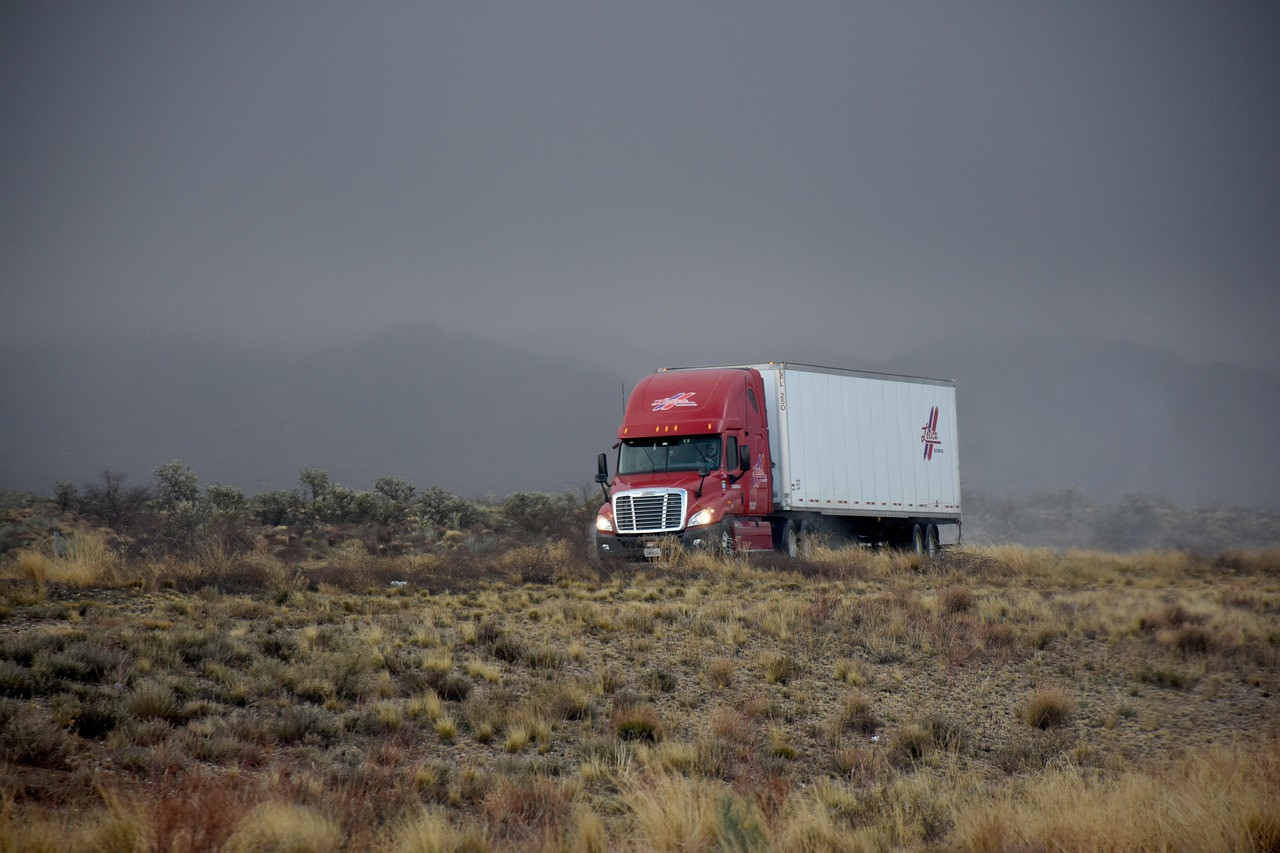
Representative image: chabotphoto / Pixabay
The US FMCSA on 9 October 2026 granted driverless trucks a five-year exemption to use cab-mounted beacons instead of roadside warning triangles, until 2031.
What Happened
The US Federal Motor Carrier Safety Administration (FMCSA) has granted driverless truck operators a five-year exemption that lets them use warning beacons mounted on the truck's cab instead of placing reflective triangles on the road when a truck stops on a highway. The agency's notice, signed by Administrator Derek Barrs, was published in the Federal Register on Friday, 9 October 2026. It covers Aurora Operations, which applied for it, and any other Level 4 autonomous trucking company that informs the agency in advance, and it runs until 7 October 2031.
Key Facts
- Regulator: the Federal Motor Carrier Safety Administration, part of the US Department of Transportation.
- Who benefits: Aurora Operations and other Level 4 autonomous truck carriers that opt in by notifying the agency in writing.
- What changes: approved cab-mounted beacons can replace the warning triangles that federal rules require a driver to set out behind a stopped truck.
- Duration: five years, to 7 October 2031.
- Conditions: carriers must follow reporting rules, including reporting crashes that occur while the beacons are in use.
- The agency weighed 402 public comments; the owner-operator truckers' group OOIDA and highway safety groups opposed the request.
- FMCSA had rejected a similar request in December 2024, saying it lacked monitoring controls, and since October 2025 had issued a series of short three-month waivers instead.
Why It Matters
The rule sounds small, but it was a real barrier to running trucks with nobody on board. US safety rules say that when a heavy truck breaks down or stops on the shoulder, the driver must quickly place warning triangles at set distances behind it. A truck with no driver cannot do that. Without relief, every driverless truck would either need a human on board or break the law the first time it stopped on a highway.
Short three-month waivers allowed testing to continue, but they left companies unsure whether they could plan commercial routes for years ahead. A five-year exemption that any qualifying operator can join gives the industry the regulatory certainty that investors and freight customers look for. Trade outlets covering the industry described the decision as a green light for driverless trucks.
Opponents are not convinced. Truck drivers' groups and road-safety campaigners argue that a light on the cab is less visible than triangles placed well behind a stopped vehicle, especially on curves or hills, and that the public is being asked to accept a risk so companies can save on labour. A separate legal challenge to the earlier waivers, brought by an Illinois van operator in a federal appeals court, has not stopped the agency; the court refused to pause the waivers while the case continues.
For Indian readers, the decision is a reference point. India's freight runs mostly on trucks driven by people, and driverless lorries are not close to Indian highways. But how the US handles practical questions like this one is likely to be studied by other countries, including India, when they eventually write rules for automated freight vehicles.
| Point | Detail |
|---|---|
| Published | Federal Register, 9 October 2026 |
| Expires | 7 October 2031 |
| Covers | Aurora and any Level 4 truck carrier that opts in |
| Replaces | Warning triangles with cab-mounted beacons |
| Public comments | 402 |
Impact
Short-term: Aurora and rivals can plan driverless freight routes on US highways without renewing a waiver every three months, as long as they meet reporting conditions.
Long-term: The exemption removes one of the last practical rule barriers to trucks with no one on board, and its crash reports will feed into future permanent rules for autonomous vehicles.
Who is affected: Autonomous trucking companies and their investors, freight shippers, US truck drivers and their unions, other road users on the highways where the trucks run, and regulators in other countries watching the US approach.
Key Takeaway
The US truck safety regulator has given driverless trucks five years to use cab-mounted beacons instead of roadside triangles, removing a key legal obstacle to running trucks with no one on board.
Questions and Answers
What did the FMCSA decide?
In a notice published on 9 October 2026, it granted a five-year exemption, until 7 October 2031, allowing Level 4 autonomous trucks to use cab-mounted warning beacons instead of placing warning triangles behind a stopped truck.
Why did driverless trucks need this exemption?
Federal rules require the driver of a stopped truck to set out warning triangles. A truck with no driver cannot do that, so without the exemption it could not legally operate driverless on highways.
Who opposed it?
The Owner-Operator Independent Drivers Association and highway safety groups opposed it, arguing that cab beacons are less effective than triangles placed behind a vehicle.
Can any company use it?
Aurora and any other Level 4 autonomous truck carrier can, provided it notifies the FMCSA in writing first and meets the reporting conditions, including crash reports.
Disclaimer: Prepared by the Peepals newsroom from publicly available sources with AI assistance. Information is accurate to the best of our knowledge at the time of publication and may change. Images may be representative. Not professional advice. Report an error via our contact page.
Sourced and fact-checked by the Peepals Global Editorial Team
Bonfiglioli Transmissions sets Rs 558-586 band for Rs 2,534 crore IPO opening Oct 15
Rain soaks paddy in Punjab mandis; 7-8 lakh bags hit in flooded Fazilka yard
Reported, fact-checked and published by the Peepals Global Editorial Team.