

Nvidia opens Vera Rubin rack designs to OCP; Meta adopts its Spectrum-6 switches
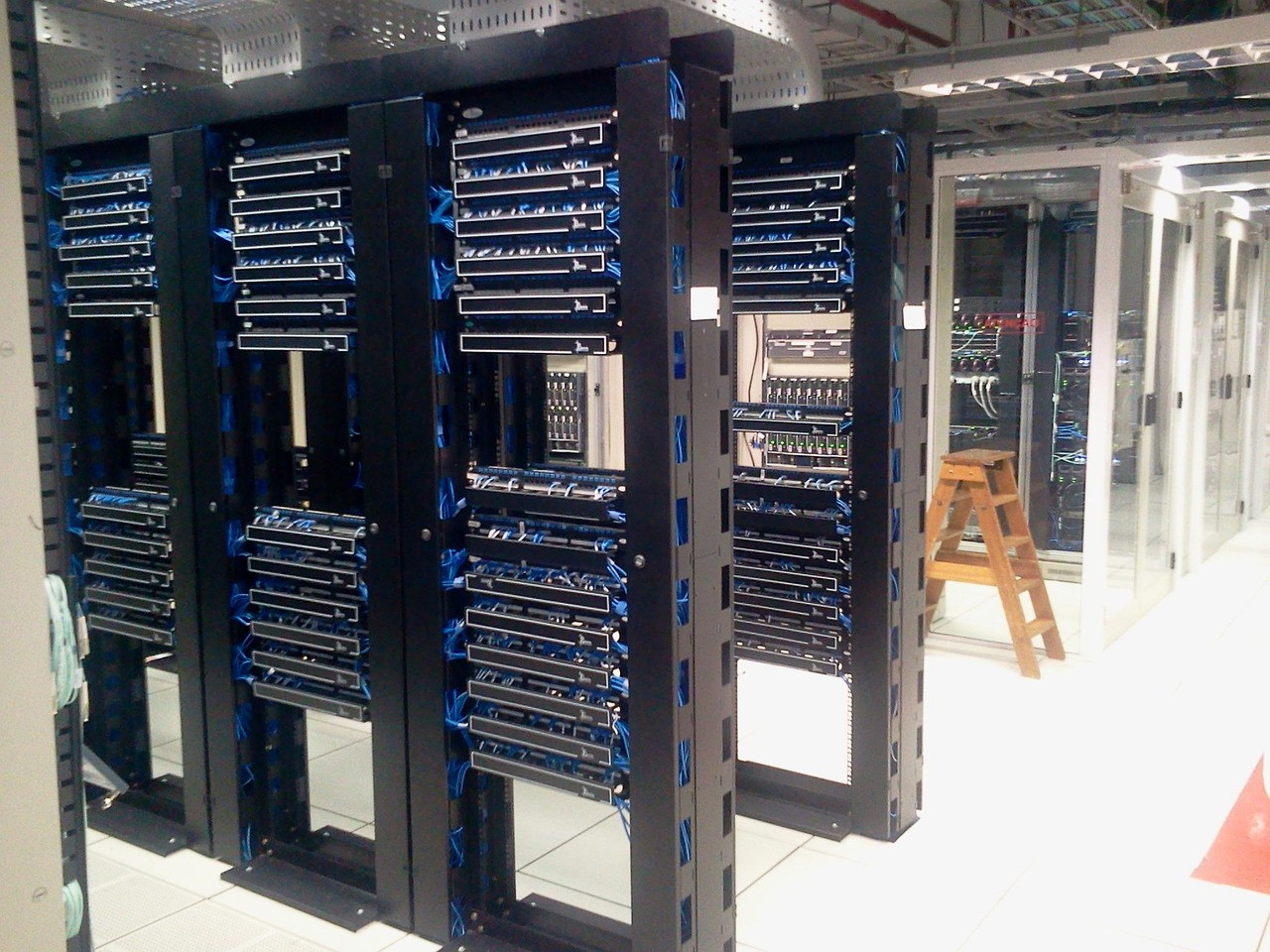
Representative image: evertonpestana / Pixabay
At the OCP Global Summit on 12 October 2026, Nvidia contributed its Vera Rubin rack designs to the Open Compute Project and said Meta will use Spectrum-6 switches.
What Happened
Nvidia has contributed the rack and compute-tray designs of its Vera Rubin AI computing platform to the Open Compute Project (OCP), the company announced at the OCP Global Summit in San Jose, California, on Monday, 12 October 2026. At the same event, Nvidia said Meta will use its Spectrum-6 Ethernet switches in Meta's Vera Rubin-based AI data centres, and that Google's Falcon data transport technology will be supported on future Nvidia network cards. Together, the moves extend Nvidia's reach beyond chips into the shared blueprints and networking gear that the largest data centre operators buy.
Key Facts
- Nvidia contributed Vera Rubin rack and compute-tray designs to OCP through its MGX modular architecture.
- The updated MGX 1.2 specification adds blind-mate liquid cooling at rack scale, a liquid-cooled 5,000-amp busbar and support for racks of up to 250 kilowatts.
- Meta is adopting Nvidia's Spectrum-6 Ethernet switches, rated at 102.4 terabits per second, for its Vera Rubin AI clusters.
- Google's Falcon transport protocol is to be supported on future Nvidia ConnectX-10 SuperNICs and BlueField data processing units, a roadmap item rather than a shipping product.
- Nvidia and Cisco proposed a new optical module standard, USFP, for 400-gigabit-per-lane networking.
- The OCP Global Summit runs in San Jose from 12 to 15 October 2026.
Why It Matters
For businesses building or renting AI computing, the cost and speed of setting up a data centre now depend as much on racks, cooling, power and networks as on the chips themselves. By publishing its Vera Rubin rack designs through the OCP, Nvidia makes it easier for server makers and contract manufacturers to build compatible systems without starting from scratch. That can shorten the time from order to working capacity, which matters when cloud companies are racing to add AI capacity.
The specification details point to where data centre engineering is heading. A rack that draws up to 250 kilowatts needs liquid cooling and heavy-duty power distribution, which is why the MGX update focuses on liquid-cooled connectors and a large busbar. Companies supplying cooling systems, power equipment and data centre construction are likely to see demand shaped by these designs.
The networking agreements are also significant. Meta also uses switch chips from other suppliers in its own network designs, and Google has its own Falcon transport technology. Their decision to adopt or support Nvidia networking alongside that work shows how central Nvidia has become to large AI clusters. The same week, AMD used the summit to present its own rack designs, underlining that the battle for AI infrastructure is now being fought at the level of whole systems.
Caution is warranted on some claims. Most details come from Nvidia's own announcements and same-day coverage of them, and features such as Falcon support on ConnectX-10 cards are planned rather than available.
| Item | Detail |
|---|---|
| Contribution | Vera Rubin rack and compute-tray designs to OCP |
| Specification | NVIDIA MGX 1.2, racks up to 250 kW |
| Meta | Adopting Spectrum-6 Ethernet switches |
| Falcon transport on future ConnectX-10 and BlueField | |
| Optics | USFP standard proposed with Cisco |
Impact
Short-term: Server makers can start designing Vera Rubin-compatible racks from the published specifications, and suppliers of liquid cooling and power equipment gain a clearer target.
Long-term: Open, standardised AI rack designs could lower building costs for data centre operators, but they may also deepen the industry's reliance on Nvidia's platform for the largest AI systems.
Who is affected: Cloud providers and AI data centre operators, server and component makers, cooling and power equipment suppliers, network equipment makers such as Cisco, and rival chipmakers competing for AI infrastructure spending.
Key Takeaway
Nvidia has opened its Vera Rubin rack designs to the Open Compute Project and won networking adoption from Meta and support plans with Google, extending its influence from AI chips to the whole data centre.
Questions and Answers
What did Nvidia announce at the OCP Global Summit 2026?
On 12 October 2026 it contributed Vera Rubin rack and compute-tray designs to the Open Compute Project through its MGX architecture, announced Meta's adoption of its Spectrum-6 switches, and said Google's Falcon transport will be supported on future ConnectX-10 network cards.
What is the Open Compute Project?
It is an industry group through which companies share hardware designs for data centres, so that operators can source compatible equipment from multiple suppliers.
Why does liquid cooling feature so heavily?
The MGX 1.2 specification supports racks drawing up to 250 kilowatts. Racks at that power level generate too much heat for air cooling alone, so the design adds liquid-cooled connectors and a liquid-cooled busbar.
Is Google's Falcon support available now?
No. Nvidia described it as support on future ConnectX-10 SuperNICs and BlueField processors.
Disclaimer: Prepared by the Peepals newsroom from publicly available sources with AI assistance. Information is accurate to the best of our knowledge at the time of publication and may change. Images may be representative. Not professional advice. Report an error via our contact page.
Sourced and fact-checked by the Peepals Global Editorial Team
Hackers heat fridges in hundreds of French supermarkets via old Danfoss controllers
World Bank sees India's poverty rate falling to 12.1% by 2028, but slowing
Reported, fact-checked and published by the Peepals Global Editorial Team.