
IMF-World Bank Annual Meetings Open in Bangkok: What They Mean for India

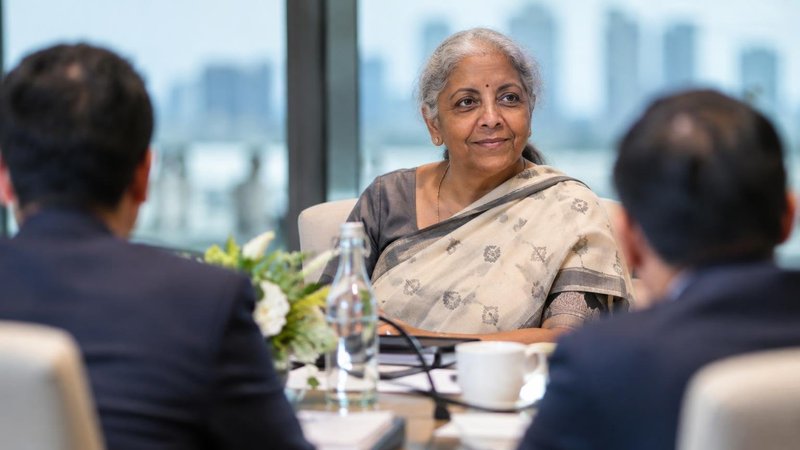
AI-generated representative image
The 2026 IMF-World Bank Annual Meetings opened in Bangkok on 12 October 2026, and talks on energy, debt and AI could shape the global economic backdrop for India.
What Happened
The 2026 Annual Meetings of the International Monetary Fund (IMF) and the World Bank Group opened in Bangkok, Thailand, on 12 October 2026. They run until 18 October at the Queen Sirikit National Convention Center. Central bankers, finance ministers, business leaders and civil society are attending to discuss the global economy, financial stability and poverty reduction. Energy, debt and artificial intelligence (AI) are the main themes, and they also shape relations between states.
Key Facts
- Thailand is hosting the IMF-World Bank Annual Meetings for the first time since 1991, a gap of 35 years. The host government's theme is "Thailand's New Horizons: Empowering People, Building Resilience."
- The Boards of Governors of both institutions voted on 19 April 2023 to hold the 2026 meetings in Bangkok. Morocco hosted the 2023 edition.
- IMF Managing Director Kristalina Georgieva gave a curtain-raiser speech in Singapore on 7 October 2026, titled "Navigating the Crosscurrents of a Changing World Economy."
- Georgieva named three forces shaping the global economy: the rapid rise of AI, persistently high energy prices and record levels of public debt. She called for decisive policy action, stronger growth and international cooperation.
- The IMF's July 2026 World Economic Outlook update projects global growth of 3.0 percent in 2026 and 3.4 percent in 2027. Both compare with an average of 3.5 percent in 2024 and 2025.
- The Civil Society Policy Forum runs from 13 to 16 October with hybrid components. It is described as the largest platform for civil society groups to engage with the Bank and the Fund.
- The IMF's July 2026 update projects India's growth at 6.4 percent, supported by private consumption and services. On a calendar-year basis, it projects 7.0 percent for 2026 and 6.4 percent for 2027.
- In January 2026, the IMF raised its estimate for India's fiscal 2025-26 growth to 7.3 percent. The host government also plans to present a "Bangkok Blueprint", a framework to make digital economies safer.
Why It Matters
The IMF-World Bank Annual Meetings do not sign treaties or settle disputes. Their influence works through communiqués from the International Monetary and Financial Committee and the Development Committee, which usually close the week, and through the forecasts and policy advice that follow.
Governments, lenders and investors read these signals when they plan budgets, borrowing and trade strategy. Corridor meetings between ministers and central bankers add a channel for informal diplomacy. The three forces named by Georgieva affect countries differently, which gives them geopolitical weight.
The IMF's forecasts frame the debate. A forecast is not a result, but slower growth tends to sharpen disputes over trade, borrowing and who bears the cost of adjustment.
| Period | Global growth |
|---|---|
| 2024 and 2025 (average) | 3.5% |
| 2026 (projected) | 3.0% |
| 2027 (projected) | 3.4% |
For India, high energy prices are the most direct link. India imports most of its crude oil, so a sustained rise in prices can widen the import bill and push up inflation. Any signal from Bangkok on energy markets will be read closely in New Delhi and by the Reserve Bank of India.
Public debt is the second theme with Indian relevance. The IMF says debt has reached record levels globally, which raises borrowing costs for emerging economies and limits room for government spending. Indian finance ministry and central bank officials usually use these meetings to meet counterparts and investors. They also argue for a bigger voice for emerging markets and cheaper development finance.
AI is the third theme. The World Bank's focus on AI and jobs touches India's large services and technology workforce. Strong growth also gives New Delhi more weight when it argues for changes in global economic governance.
Impact
Short-term: The week brings committee meetings, policy forums and press conferences. The plenary session, the Development Committee and the International Monetary and Financial Committee are where member countries negotiate shared positions. The World Bank is livestreaming events on job creation, AI, private investment and the future of development, with no registration needed. A session on 13 October covers finance for micro, small and medium enterprises. Thailand plans to present its Bangkok Blueprint during the week.
Long-term: The communiqués due on 18 October will set the tone for the next round of forecasts. Rules for digital economies are an area where countries hold different views, so a shared framework from a neutral host could influence later international talks. The debate on whether AI lifts growth broadly or leaves developing countries behind may shape skills policy and how global institutions advise on digital public infrastructure. Demands for a bigger emerging-market voice touch on how power is shared in institutions created in an earlier era.
Who is affected: Finance ministries, central banks, lenders and investors worldwide use the signals from the meetings to plan budgets, borrowing and trade strategy. Emerging economies are most exposed to record public debt and the resulting borrowing costs. India is affected through its crude oil imports, its inflation outlook and its large services and technology workforce. Small firms are also in focus, with a session on finance for micro, small and medium enterprises. Civil society groups take part through the Civil Society Policy Forum and the Civil Society Townhall.
Key Takeaway
The Bangkok meetings, running 12 to 18 October 2026, set no binding rules, but their communiqués and forecasts on energy, debt and AI will guide policy choices that matter to India.
Questions and Answers
When and where are the 2026 IMF-World Bank Annual Meetings?
The 2026 IMF-World Bank Annual Meetings opened in Bangkok, Thailand, on 12 October 2026. They run until 18 October at the Queen Sirikit National Convention Center. Thailand last hosted them in 1991.
What are the main themes of the IMF-World Bank Annual Meetings 2026?
The main themes are energy prices, record public debt and the rapid rise of artificial intelligence. IMF Managing Director Kristalina Georgieva named these three forces in a speech in Singapore on 7 October 2026.
What does the IMF project for global and Indian growth?
The IMF's July 2026 update projects global growth of 3.0 percent in 2026 and 3.4 percent in 2027. It projects India's growth at 7.0 percent for 2026 and 6.4 percent for 2027 on a calendar-year basis.
Why do the IMF-World Bank meetings matter for India?
High energy prices can widen India's crude oil import bill and raise inflation. Record global debt raises borrowing costs for emerging economies, and the AI discussion touches India's services and technology workforce.
Disclaimer: Prepared by the Peepals newsroom from publicly available sources with AI assistance. Information is accurate to the best of our knowledge at the time of publication and may change. Images may be representative. Not professional advice. Report an error via our contact page.
Sourced and fact-checked by the Peepals Global Editorial Team
Taylor Swift reaches 100 weeks at No. 1 on Billboard 200, second only to Beatles
Israel election on Oct 27 too close to call as poll shows blocs tied at 52 seats
Reported, fact-checked and published by the Peepals Global Editorial Team.