
Luminal raises $25 million to run AI models faster beyond Nvidia chips
 By Elena D’SouzaStartups & Innovation Correspondent, Peepals Global

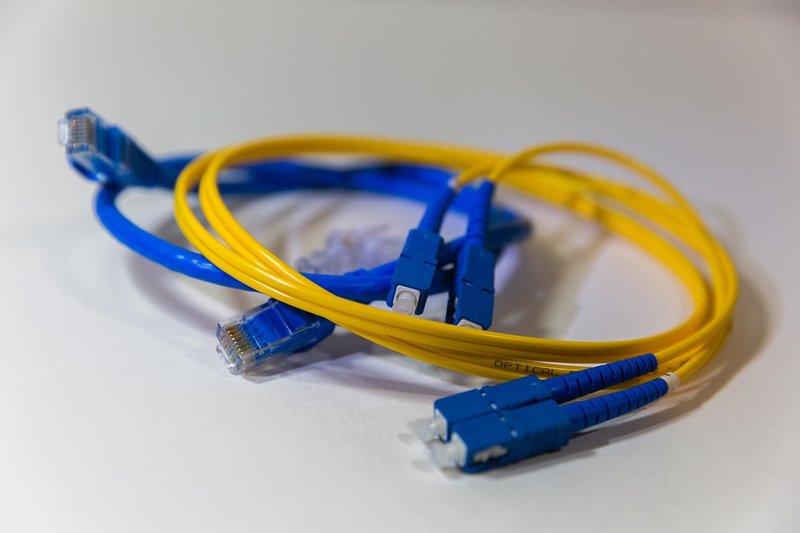
Representative image: StockSnap / Pixabay
San Francisco start-up Luminal raised $25 million in a Series A led by Standard Capital on 12 November 2026 to run AI models faster on many kinds of chips.
What Happened
Luminal, a San Francisco start-up that builds software to run artificial intelligence (AI) models faster on many kinds of chips, has raised USD 25 million in a Series A funding round led by Standard Capital, the company said on Thursday, 12 November 2026. Its earlier investors, including Y Combinator, Felicis, SagaVC and Liquid 2, put in more money in the round. Co-founder and chief executive Joe Fioti said the money will go into developing its compiler, supporting more AI models and chips, and expanding sales.
Luminal: key facts
- Company: Luminal, San Francisco; co-founders Joe Fioti, Jake Stevens and Matthew Gunton.
- Round: USD 25 million Series A, led by Standard Capital; existing seed investors Y Combinator, Felicis, SagaVC and Liquid 2 also invested.
- Earlier funding: a USD 5.3 million seed round in November 2025, according to reports; one report puts total funding at about USD 30.3 million.
- Product: a "search compiler" and a hosted inference cloud that runs AI models for customers.
- What the compiler does: it tests different, mathematically equivalent ways of running a model on a given chip and picks the fastest, for graphics processors (GPUs) and custom chips (ASICs).
- Company claim: it reached 90 trillion tokens processed a month within four months of launching its public cloud.
- Use of funds: compiler development, broader model and hardware support, and go-to-market expansion.
Luminal: why it matters
Training an AI model is a one-time cost, but "inference", the work of running the model every time someone asks it a question, is a cost that never stops. As AI tools spread, inference is becoming the biggest computing bill for many companies. Much of that work runs on Nvidia's graphics processors, and getting models to run well on other chips takes specialised engineering.
Luminal's pitch is to do that engineering automatically. A compiler is software that translates a program into instructions a particular chip can run. Luminal's compiler searches through many equivalent ways of arranging an AI model's calculations and keeps the fastest one for each chip, so that customers are not tied to a single chip supplier. Standard Capital's Dalton Caldwell said publicly that accelerating inference on all kinds of chips, not just Nvidia's, is a massive opportunity.
The company's usage figure of 90 trillion tokens a month is its own claim and has not been independently verified. A token is a small piece of text, roughly a part of a word, that AI models read and write.
For founders and engineers in India and elsewhere, the round is a sign of where investor money in AI is flowing: towards the infrastructure layer that lowers the cost of running models, not only towards the models themselves. Cheaper inference also matters for any company building AI products on tight budgets.
Peepals calculation: The USD 25 million Series A is about 4.7 times the USD 5.3 million seed round (25 ÷ 5.3 ≈ 4.7), and together they come to about USD 30.3 million. The claimed 90 trillion tokens a month works out to roughly 3 trillion tokens a day (90 ÷ 30). Our calculation from the reported figures.
| Round | Amount | Lead or notes |
|---|---|---|
| Seed (November 2025, reported) | USD 5.3 million | Earlier round |
| Series A (November 2026) | USD 25 million | Led by Standard Capital |
| Total (reported) | About USD 30.3 million | Seed plus Series A |
Impact
Short-term: Luminal can hire more engineers and support more chips and AI models, and expand sales of its inference cloud.
Long-term: If tools like Luminal's work at scale, companies could switch more easily between chip suppliers for AI inference, adding price competition to a market Nvidia dominates.
Who is affected: Companies that pay to run AI models, chipmakers competing with Nvidia, cloud providers, and AI engineers who tune models for different hardware.
Key Takeaway
San Francisco start-up Luminal raised USD 25 million in a Series A led by Standard Capital on 12 November 2026 to expand its compiler and cloud that run AI models faster on many kinds of chips, not only Nvidia's.
Questions and Answers
How much did Luminal raise?
Luminal raised USD 25 million in a Series A round led by Standard Capital, announced on 12 November 2026, with its seed investors also taking part.
What does Luminal do?
It builds a compiler and a hosted inference cloud. Its compiler tests equivalent ways of running an AI model on a chip and picks the fastest, for both GPUs and custom chips.
Who founded Luminal?
Joe Fioti, who is chief executive, Jake Stevens and Matthew Gunton.
What is AI inference?
Inference is the work of running a trained AI model each time it answers a request. It is an ongoing cost, unlike training, which happens once.
Disclaimer: Prepared by the Peepals newsroom from publicly available sources with AI assistance. Information is accurate to the best of our knowledge at the time of publication and may change. Images may be representative. Not professional advice. Report an error via our contact page.
By Elena D’Souza, Startups & Innovation CorrespondentCovers Start-ups & Opportunities and more for Peepals Global. All stories by Elena D’Souza
Get the day's stories in your inbox
Peepals Weekly: the week decoded, free. One email a week, unsubscribe in one click.
Elena D’Souza is a pen name of the Peepals Global Editorial Team, which researches, fact-checks and publishes every story. The portrait is an illustration.
Editor: Prashant Sonar. How we report