
Madras High Court puts Chidambaram Nataraja temple under judge-led board
 By Ishita SenCulture & Heritage Editor, Peepals Sanskriti
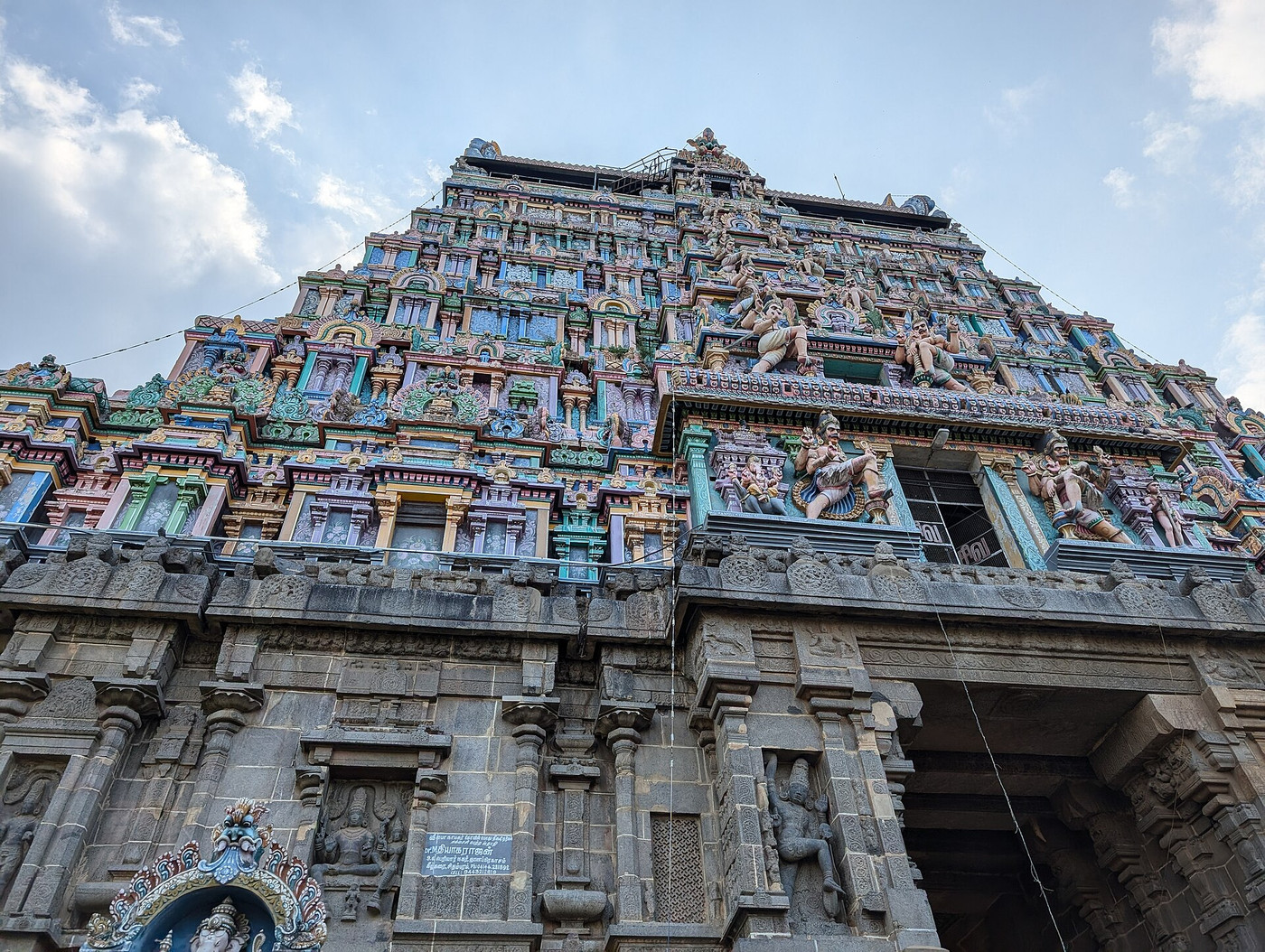
File photo: Anonymous0006 (CC0), via Wikimedia Commons
On October 30, 2026, the Madras High Court set up a five-member board led by two retired judges to run the Chidambaram temple; Dikshitars keep the rituals.
What Happened
The Madras High Court on Friday, October 30, 2026, placed the administration of the Sri Sabanayagar (Nataraja) Temple at Chidambaram in Tamil Nadu under a five-member Board of Management, after finding maladministration by the Podhu Dikshitars, the hereditary priestly community that has run the temple since a 2014 Supreme Court judgment. A Division Bench of Justices G. Jayachandran and E. Manoharan named retired High Court judge V. Bharathidasan as chairman and retired judge R. Suresh Kumar as co-chairman. The Dikshitars keep sole charge of the daily rituals and the temple's periodic festivals.
Key Facts
- Court: Madras High Court, Division Bench of Justices G. Jayachandran and E. Manoharan; order dated October 30, 2026.
- Board chairman: retired High Court judge V. Bharathidasan; co-chairman: retired judge R. Suresh Kumar.
- Other members: retired IAS officer C. Rajendran, the secretary of the Podhu Dikshitars, and the secretary of the Hindu Religious and Charitable Endowments (HR&CE) Department as an ex-officio member.
- The court found damage to heritage structures, properties that were not properly accounted for or audited, and commercial use of temple premises, according to reports of the judgment.
- The board must account for temple income every month, by the fifth of each calendar month, and work with the district administration to recover encroached temple property.
- It is also to work with the Tamil Nadu Heritage Commission on removing unauthorised constructions inside the temple complex.
- The HR&CE Department will bear the board's expenses; rituals and festivals stay with the Dikshitars.
Why It Matters
The Chidambaram temple is one of the most important Shaiva shrines in India. It is the temple of Nataraja, Shiva as the cosmic dancer, and both a major pilgrimage centre and a protected piece of living heritage. Who manages such a temple, and how, is therefore a question of faith, heritage and public accountability together.
The temple also has an unusual legal history. Most large Hindu temples in Tamil Nadu are administered by the state's HR&CE Department. Chidambaram has long been the exception: the Podhu Dikshitars, a closed community of hereditary priests, have claimed the right to manage it as a religious denomination. In 2014 the Supreme Court set aside an earlier state takeover and restored management to the Dikshitars, holding that the state's intervention to cure mismanagement could not become permanent. Since then the temple has been run without the state's direct control.
The October 30 order changes that balance again, but in a narrower way. The court did not hand the temple to the government. It created a board led by two former judges, with a retired civil servant, a Dikshitar representative and the HR&CE secretary as members, and it left the religious side of temple life, the rituals and festivals, with the priests. According to reports of the judgment, the case reached this point through petitions linked to a government order that let devotees climb a raised platform inside the temple for darshan, a long-running point of dispute at the shrine.
The ruling has its critics. Some commentators have argued publicly that it sits uneasily with the 2014 Supreme Court judgment, which said that intervention to remedy maladministration cannot be permanent. Reports so far do not say whether the Dikshitars will appeal; that is the next point to watch.
| Old arrangement | New arrangement under the October 30 order |
|---|---|
| Administration by the Podhu Dikshitars (since 2014) | Five-member Board of Management headed by two retired judges |
| No regular public account of income, as found by the court | Monthly account of income, due by the fifth of each month |
| Encroached properties not recovered | Board to recover them with the district administration |
| Rituals and festivals by the Dikshitars | Unchanged: rituals and festivals stay with the Dikshitars |
Impact
Short-term: The board must be formally constituted and begin taking stock of the temple's accounts, properties and structures. Devotees should see no change in worship, since the order keeps rituals and festivals with the Dikshitars. Any appeal to the Supreme Court could pause or reshape the arrangement.
Long-term: If the order stands, Chidambaram could get, for the first time in years, a regular and documented record of income and property, and a structured plan for protecting its old buildings with the heritage commission. The judgment may also be cited in other disputes where hereditary trustees run major temples and questions are raised about their accounts.
Who is affected: The Podhu Dikshitars, whose administrative control is now shared with and supervised by the board; the HR&CE Department, which pays for the board and sits on it; devotees and pilgrims; and heritage bodies concerned with the temple's centuries-old structures.
Key Takeaway
The Madras High Court has put Chidambaram's Nataraja temple under a judge-led board to fix its administration and accounts, while leaving its worship in the hands of the hereditary Podhu Dikshitars.
Questions and Answers
What did the Madras High Court decide about the Chidambaram Nataraja temple?
On October 30, 2026, a Division Bench of the Madras High Court found maladministration by the Podhu Dikshitars and set up a five-member Board of Management, chaired by retired judge V. Bharathidasan with retired judge R. Suresh Kumar as co-chairman, to run the temple's administration.
Will the daily rituals at Chidambaram change?
No. The order leaves the daily rituals and periodic festivals entirely with the Podhu Dikshitars. The board deals with administration, accounts, properties and heritage protection.
Has the Tamil Nadu government taken over the temple?
No. The board is led by two retired judges and includes a retired IAS officer and a Dikshitar representative. The HR&CE Department secretary is an ex-officio member and the department pays the board's expenses, but the temple has not been placed under the department.
How does this relate to the 2014 Supreme Court judgment?
In 2014 the Supreme Court restored the temple's management to the Dikshitars after a state takeover and said intervention to cure mismanagement could not be permanent. Critics say the new order sits uneasily with that ruling; whether the Dikshitars will appeal has not yet been reported.
Disclaimer: Prepared by the Peepals newsroom from publicly available sources with AI assistance. Information is accurate to the best of our knowledge at the time of publication and may change. Images may be representative. Not professional advice. Report an error via our contact page.
By Ishita Sen, Culture & Heritage EditorCovers Culture & Heritage and more for Peepals Sanskriti. All stories by Ishita Sen
Andhra Pradesh bans analogue paneer for one year
Kerala Piravi at 70: Keralam marks first formation day under new name
Get the day's stories in your inbox
Peepals Weekly: the week decoded, free. One email a week, unsubscribe in one click.
Ishita Sen is a pen name of the Peepals Global Editorial Team, which researches, fact-checks and publishes every story. The portrait is an illustration.