
Assam CM proposes three-month spoken Sanskrit course at Nalbari university
 By Devansh TiwariKnowledge Systems Writer, Peepals Sanskriti
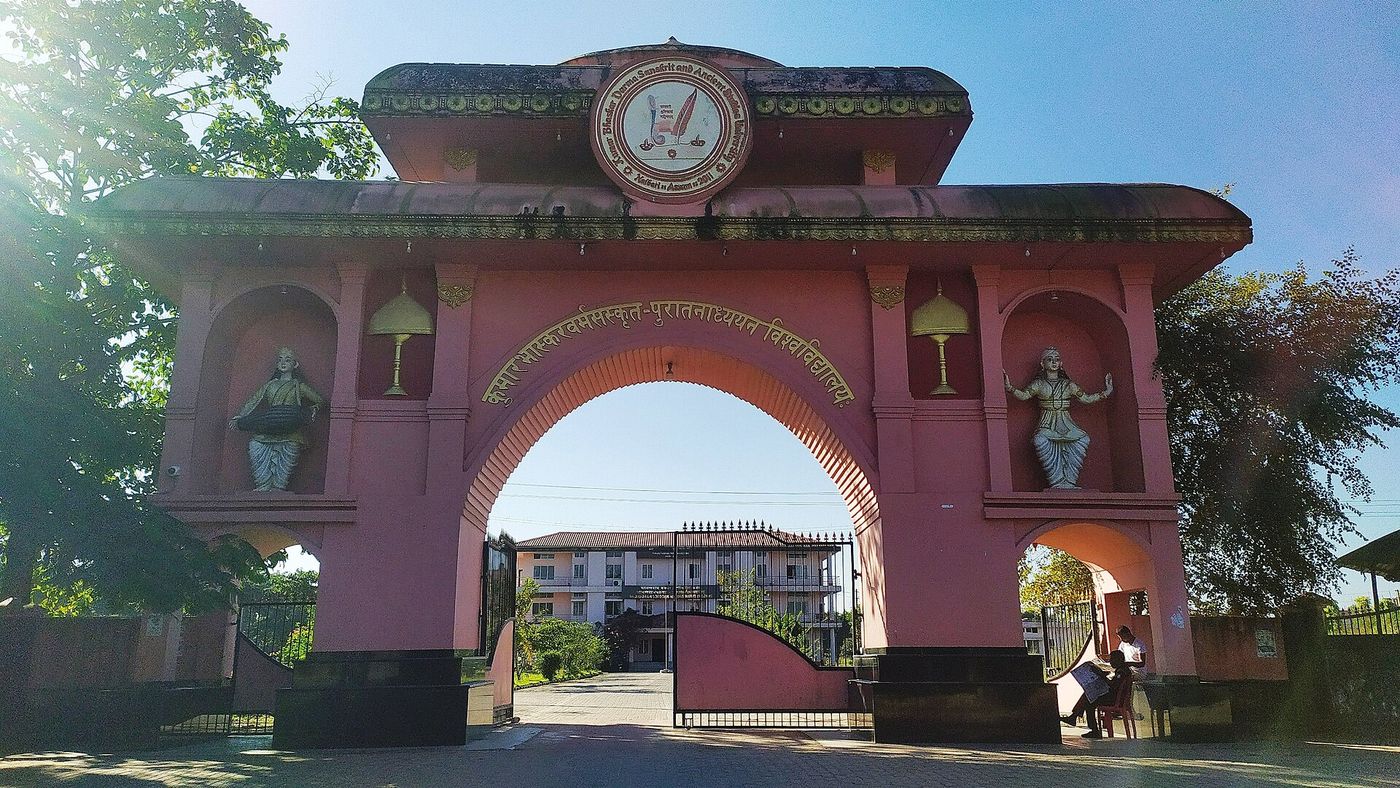
File photo: BhuyanBhaskar (CC0), via Wikimedia Commons
At the Nalbari Sanskrit university's third convocation on 15 November 2026, Himanta Biswa Sarma proposed a three-month spoken Sanskrit course.
What Happened
Assam Chief Minister Himanta Biswa Sarma has proposed a three-month spoken Sanskrit course at Kumar Bhaskar Varma Sanskrit and Ancient Studies University in Nalbari. He made the suggestion as chief guest at the university's third convocation on Sunday, 15 November 2026, where about 1,870 graduates received degrees and certificates. He also asked the university to adopt five villages and teach their residents to speak Sanskrit, and said the state would back a rise in enrolment to 3,000 students.
Spoken Sanskrit course: key facts
- Reports of the ceremony put the number of students who received degrees and certificates at 1,873 (one report gives 1,874), and 40 students received gold medals.
- Buddhadeb Purkayastha of Silchar became the first scholar to receive a PhD in Sanskrit from the university, handed over by the Chief Minister.
- The state government has proposed short-term spoken Sanskrit courses at the university; Mr Sarma suggested a three-month course for conversational skills.
- The university has 1,753 students in the 2026-27 session and 215 research scholars, according to reports; Mr Sarma said the government would support a target of 3,000 students.
- A grant of Rs 50 crore for the university's infrastructure was set aside in the current year's state budget.
- Departments of Ayurveda, Naturopathy and Archaeology are planned for the future; no timeline was given.
Spoken Sanskrit course: why it matters
A short course aimed at everyday conversation would be a different kind of offering from the university's degree programmes. Mr Sarma argued that the language is easier to pick up than many people assume. "Spoken Sanskrit is not so tough. One can learn it within a month," he said at the ceremony.
According to reports of his speech, he asked the university to take on five villages and to teach the residents of one village to speak Sanskrit each year, and described such work as the highest form of social responsibility a university could carry out. These remain suggestions from the Chief Minister. The university has not yet issued a notice on the course, its fees, its start date or the villages it would choose.
The university is named after Bhaskar Varman, a king of ancient Kamarupa, the early kingdom that covered much of present-day Assam. As its full name says, it covers ancient studies as well as the language. Mr Sarma said he saw the potential for growth on the scale of the ancient centres of learning at Nalanda and Takshashila. He also urged short-term courses in Vedic mathematics, naturopathy, astrology and Ayurveda. These are traditional disciplines; no claim about their scientific or medical value was reported from the event.
The convocation also brought institutional changes into view. Krishna Kanta Handique Sanskrit College in Guwahati is to be brought under the university. Reports differ on whether it will be a constituent or an affiliated college. Finance Minister Jayanta Mallabaruah, who is also the MLA for Nalbari, attended the ceremony as a guest.
On enrolment, Mr Sarma tied the larger target to the university's own view. "If the principal thinks that with government support the student strength can rise to 3,000, we can do it," he said, according to reports.
Peepals calculation: moving from 1,753 students to 3,000 would mean 1,247 more students, a rise of about 71% (1,247 / 1,753 = 0.711). If one village a year is taught to speak Sanskrit, covering all five adopted villages would take five years. Our calculation from the reported figures.
| Measure | Reported figure |
|---|---|
| Students in the 2026-27 session | 1,753 |
| Research scholars | 215 |
| Enrolment the state says it would support | 3,000 |
| Graduates at the 2026 convocation | 1,873 |
| Gold medals awarded | 40 |
Impact
Short-term: The spoken Sanskrit course moves from a speech to the planning stage. Students and residents will have to wait for the university to set out its design, fees and who can join.
Long-term: If the proposed departments of Ayurveda, Naturopathy and Archaeology and the Rs 50 crore infrastructure grant are put into effect, the Nalbari university could widen from a language-focused institution into a broader centre for the study of ancient Indian knowledge in the Northeast.
Who is affected: Sanskrit students and research scholars in Assam, the staff of Krishna Kanta Handique Sanskrit College in Guwahati, residents of any villages the university adopts, and learners who want a short introduction to spoken Sanskrit.
What to watch next: whether the university issues a formal notice for the three-month spoken Sanskrit course, and the official order on how Krishna Kanta Handique Sanskrit College joins the university.
Key Takeaway
At its third convocation on 15 November 2026, the Nalbari Sanskrit university awarded its first Sanskrit PhD, and the Assam Chief Minister proposed a three-month spoken Sanskrit course, village outreach and state support for 3,000 students.
Questions and Answers
What spoken Sanskrit course has the Assam CM proposed?
At the third convocation of Kumar Bhaskar Varma Sanskrit and Ancient Studies University in Nalbari on 15 November 2026, Chief Minister Himanta Biswa Sarma suggested a three-month course to help students speak Sanskrit. It is a proposal; the university has not yet announced dates or fees.
How many students graduated at the Nalbari Sanskrit university convocation?
Reports of the ceremony put the number at 1,873 degrees and certificates (one report says 1,874). Forty students received gold medals, and Buddhadeb Purkayastha of Silchar received the university's first PhD in Sanskrit.
What did the Chief Minister ask the university to do in villages?
He asked it to adopt five villages and to teach the residents of one village to speak Sanskrit each year, calling this the highest form of social responsibility for a university.
What new departments are planned at the university?
Reports say departments of Ayurveda, Naturopathy and Archaeology will be added in future, and a Rs 50 crore budget grant has been set aside for infrastructure. No timeline was given for the new departments.
Disclaimer: Prepared by the Peepals newsroom from publicly available sources with AI assistance. Information is accurate to the best of our knowledge at the time of publication and may change. Images may be representative. Not professional advice. Report an error via our contact page.
By Devansh Tiwari, Knowledge Systems WriterCovers Knowledge Systems and more for Peepals Sanskriti. All stories by Devansh Tiwari
Sabarimala opens today: new melsanthi, Mandala Pooja December 27
Tiruvannamalai Karthigai Deepam 2026: flag up, no hill climb on November 24
Get the day's stories in your inbox
Peepals Weekly: the week decoded, free. One email a week, unsubscribe in one click.
Devansh Tiwari is a pen name of the Peepals Global Editorial Team, which researches, fact-checks and publishes every story. The portrait is an illustration.
Responsible for this story: the Peepals Global Editorial Team, led by editor Prashant Sonar. How we report