
Goddess Shakti and Women's Strength
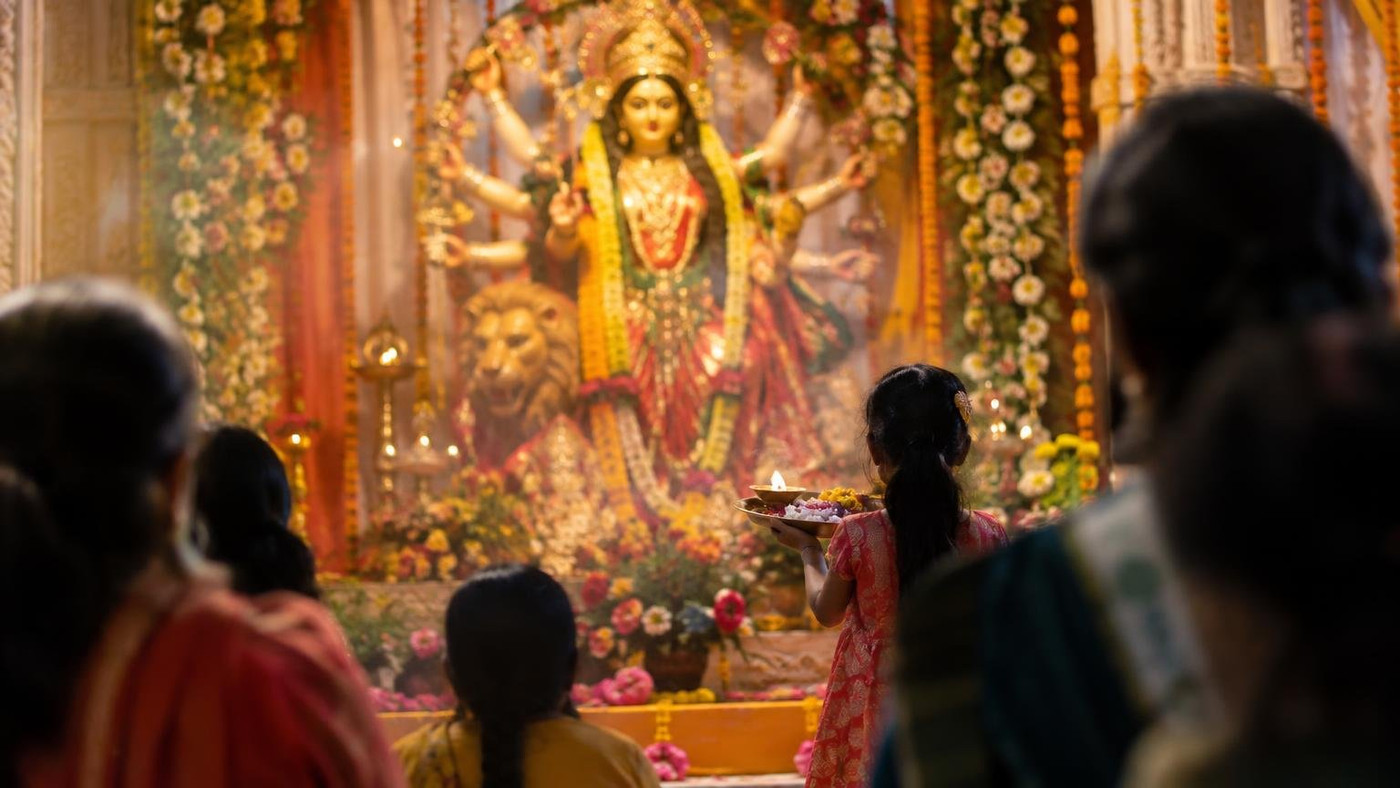
AI-generated representative image
Shardiya Navratri 2026, the festival of Goddess Shakti, began on 11 October and runs to Vijayadashami on 20 October, with Kanya Puja honouring girls.
What Happened
Shardiya Navratri 2026, the nine-night Hindu festival honouring Goddess Shakti, began across India on Sunday, 11 October 2026. Devotees open the festival with Kalash Sthapana, also called Ghatasthapana. The nine days end on 19 October. Vijayadashami, also known as Dussehra, follows on 20 October.
Key Facts
- Shardiya Navratri begins on Ashwin Shukla Pratipada, the first day of the bright fortnight in the Hindu lunar month of Ashwin. Its date shifts each year on the Gregorian calendar.
- Pratipada tithi, the lunar day that opens the festival, begins on the night of 10 October and is present at sunrise on 11 October. Hindu festivals follow the tithi at sunrise.
- The morning Ghatasthapana muhurat on 11 October runs from 6:19 AM to 10:12 AM, according to New Delhi Panchang timings. An alternative Abhijit Muhurat runs from 11:44 AM to 12:31 PM.
- Each day honours one of nine forms of Goddess Durga, together called Navdurga. Day 1, 11 October, is for Maa Shailputri, and Day 2, 12 October, is for Maa Brahmacharini.
- Maa Chandraghanta is worshipped on 13 October and Maa Kushmanda on 14 October. Maa Skandamata is honoured on 15 October and Maa Katyayani on 16 October.
- Maa Kalaratri is worshipped on 17 October, which is Maha Saptami. Maa Mahagauri is honoured on Ashtami, 18 October, and Maa Siddhidatri on Navami, 19 October.
- The colour sequence listed in 2026 guides is orange, white, red, royal blue, yellow, green, grey, purple and peacock green. Many women wear the day's colour, and fasting with satvik food is common.
- Kanya Puja honours young girls as symbols of the goddess's divine energy. One festival guide places it on Ashtami, 18 October, while a Hindi festival report places Kanya Pujan and havan on 19 October.
Why It Matters
Shakti is described as the Divine Mother. According to a festival guide published by AstroVed, Shakti represents the power to protect, create, nourish, learn and act. Navratri turns those qualities into nine nights of prayer, fasting and regional traditions in homes, temples and community pandals.
The festival's dates follow the lunar calendar, so confusion is common. Some social media posts suggested a 12 October start for 2026. The Vedaangam almanac guide says the tithi at sunrise decides the date, so the correct start is 11 October. The day before, 10 October, was Mahalaya, which closes Pitru Paksha.
The length also varies. One almanac guide says a tithi increases during the period, so Navratri 2026 stretches over ten days and ends on 20 October. Most listings give nine days, from 11 to 19 October. In 2025, Maharashtra marked an eleven-day Navratri because Dussehra fell on the eleventh day.
Navratri has a public and institutional side too. All India Radio's news service has noted that four Navratris are observed each year, with Chaitra and Shardiya the most widely celebrated. In 2025, the Shri Mata Vaishno Devi Shrine Board opened new registration counters at Katra Railway Station as more than 45,000 pilgrims a day visited the shrine.
Shakti is worshipped as strength, learning and creation. The qualities attached to the nine forms include courage, discipline, fearlessness and accomplishment. These are also qualities that define women's leadership in business, public life and communities. The rituals are religious, and no measured social effect is claimed. The festival shows how the culture frames the feminine as a source of power.
Impact
Short-term: Families are now observing fasts, daily prayers, bhajans and aarti. Devotees are advised to check the panchang for their own city or follow their local priest, since almanacs list slightly different midday windows. Garba and dandiya nights, temple fairs and community pandals bring neighbourhoods together. Pilgrim traffic can be heavy at major shrines, and temples and organisers usually publish their own schedules. Families planning Kanya Puja should confirm whether to observe it on 18 or 19 October, because Ashtami tithi spreads over both days.
Long-term: The festival repeats each year on a shifting lunar calendar, which means dates, lengths and ritual timings need checking every season. Its framing of the divine feminine as strength, learning and creation continues to give communities a shared language for valuing women and girls. Kanya Puja, in particular, places girls at the centre of a ritual each year. Institutions such as shrine boards have already adapted facilities for large pilgrim numbers, as seen in 2025, and such planning is likely to remain part of the festival season.
Who is affected: Devotees across India are affected, especially women who observe fasts, choose the day's colour and take leading roles in organising events. Many women manage fasts at home or run neighbourhood committees for pandals and Garba nights. Young girls are honoured during Kanya Puja. Pilgrims visiting shrines are also affected, including the Maharashtra Shakti Peethas of Tuljapur, Kolhapur, Mahur and Vani, which draw crowds each year. Customs vary by state and community. No official figure for 2026 spending or attendance has been released.
Key Takeaway
Shardiya Navratri 2026 began on 11 October, Kanya Puja honouring girls falls on Ashtami or Navami, and the festival ends with Vijayadashami on 20 October.
Questions and Answers
When did Shardiya Navratri 2026 begin?
Shardiya Navratri 2026 began on Sunday, 11 October 2026. Pratipada tithi is present at sunrise that day, and Hindu festivals follow the tithi at sunrise. Most listings give nine days, ending on 19 October.
When is Vijayadashami in 2026?
Vijayadashami, also known as Dussehra, falls on 20 October 2026. In the festival's tradition it marks the victory of good over evil.
When is Kanya Puja in Navratri 2026?
Kanya Puja honours young girls as symbols of the goddess's divine energy. One festival guide places it on Ashtami, 18 October, while a Hindi festival report places it on 19 October, since Ashtami tithi spans two days.
What is the Ghatasthapana muhurat on 11 October 2026?
According to New Delhi Panchang timings, the morning Ghatasthapana muhurat runs from 6:19 AM to 10:12 AM on 11 October. An alternative Abhijit Muhurat runs from 11:44 AM to 12:31 PM.
Disclaimer: Prepared by the Peepals newsroom from publicly available sources with AI assistance. Information is accurate to the best of our knowledge at the time of publication and may change. Images may be representative. Not professional advice. Report an error via our contact page.
Sourced and fact-checked by the Peepals Global Editorial Team
Pregnancy emotion training cut postpartum depression risk only in second-time mothers
World Menopause Day 2026 puts chronic pain at midlife in focus
Reported, fact-checked and published by the Peepals Global Editorial Team.