
Kashmir water study: women fetch water in 9 of 10 rural homes
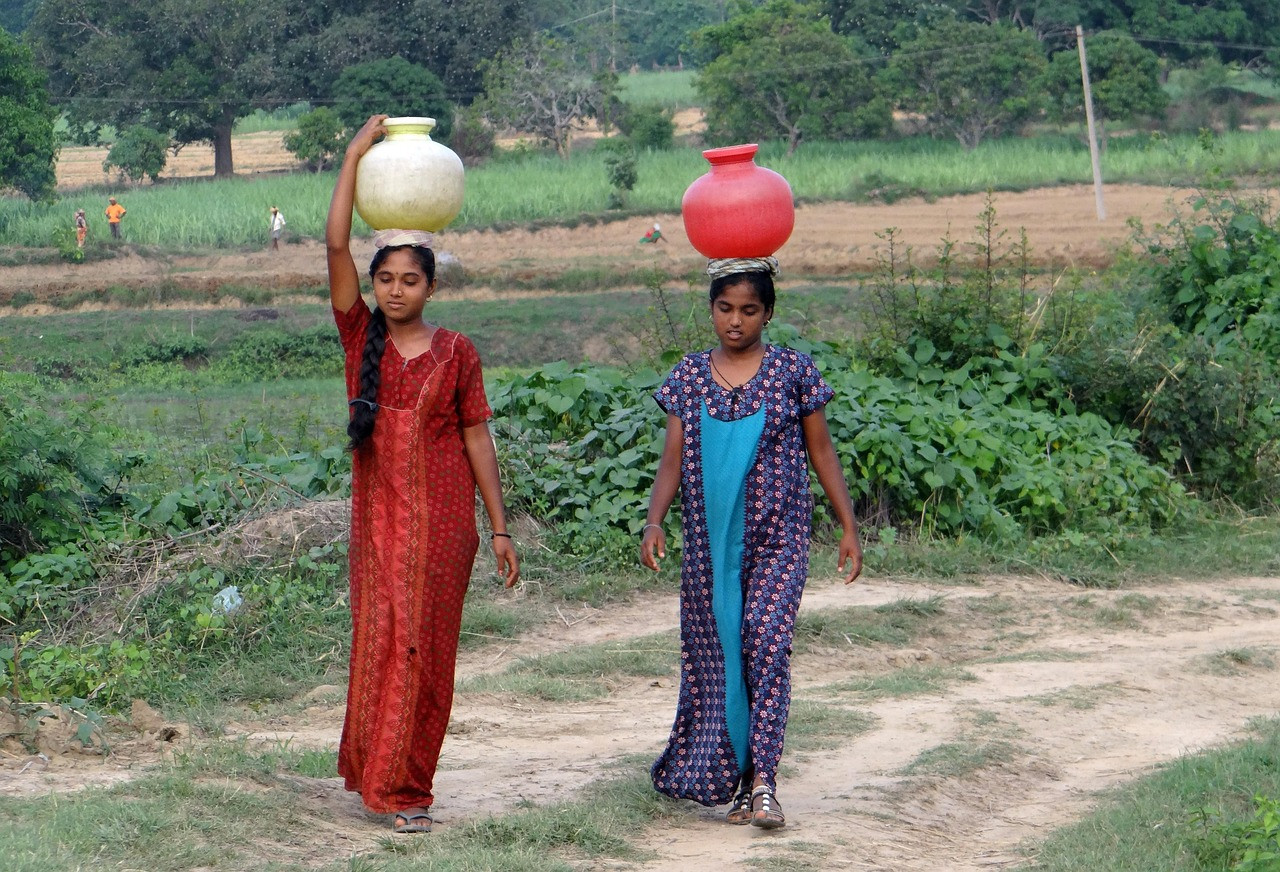
Representative image: sarangib / Pixabay
A University of Kashmir survey of 600 respondents in three districts, reported on 20-21 October 2026, found women fetch water in 91.7% of households and 95% report exhaustion.
What Happened
Fetching water is costing rural women in Kashmir their working hours, their energy and, in many cases, their menstrual hygiene, according to a University of Kashmir study whose findings were reported on 20 and 21 October 2026. The survey of 600 respondents across more than 70 villages in Budgam, Pulwama and Kupwara districts found that women fetched water in 550 households, and 95 per cent of respondents reported physical and mental exhaustion linked to water-related work. The study was led by Dr Shazia Malik, senior assistant professor at the university's Centre for Women Studies and Research, under a project funded by the Indian Council of Social Science Research (ICSSR).
Key Facts
- Study: "Nari Shakti and Water Governance: A Gendered Approach to Water Security in Kashmir", listed among ICSSR's major research projects for 2024-25.
- Coverage: 600 respondents, 200 in each of Budgam, Pulwama and Kupwara districts, from more than 70 villages.
- Who carries the water: women in 550 of 600 households (91.7 per cent); men in 45 households (7.5 per cent).
- Time and energy: 568 respondents (94.7 per cent) said water duties reduced their working hours, and 95 per cent reported physical and mental exhaustion from the work.
- Shortages: 497 households had faced water scarcity, and in 122 households the nearest water source was more than 500 metres away.
- Wider effects: about 91 per cent said scarcity affected their menstrual hygiene, and about 87 per cent said it affected girls' education.
- Infrastructure and awareness: 98.2 per cent rated water infrastructure inadequate, while only 22.3 per cent knew about government water schemes, including the Jal Jeevan Mission.
Why It Matters
Conversations about work-life balance usually focus on offices, commutes and screen time. This study is a reminder that for millions of rural women, the first "shift" of the day is often unpaid and physical: walking to a spring, tap or tank, waiting, and carrying heavy containers home. When that work takes hours, it competes directly with paid work, farm work, rest, childcare and the woman's own health. Nearly every respondent in the survey said water duties cut into their working hours, which means the burden is not only tiring but also limits what women can earn.
The finding that 95 per cent of respondents reported physical and mental exhaustion matters for wellbeing. Repeated lifting and long walks strain the body. The researchers' figures do not measure clinical conditions such as depression or injury, and the survey covers only three districts, so the results should not be read as a picture of rural India as a whole.
The link to menstrual hygiene is one that often goes unspoken. Managing periods safely needs enough clean water for washing, bathing and cleaning reusable cloth or products. When water is scarce or must be carried from far away, women and girls may cut back on what they use for themselves. About nine in ten respondents said scarcity affected their menstrual hygiene, which ties the water question to women's health and dignity, not just to household chores.
The study also points to a gap between building infrastructure and easing daily life. The Jal Jeevan Mission is the Union government's programme to bring tap connections to rural homes. The survey found that only about one in five respondents knew about government water schemes, and nearly all judged local water infrastructure inadequate. According to the findings as reported, a connection on paper does not always mean a reliable flow, and where supply is irregular, the work of collecting water still falls on women.
| District | Respondents | Reported inadequate infrastructure |
|---|---|---|
| Budgam | 200 | 200 |
| Pulwama | 200 | 200 |
| Kupwara | 200 | 189 |
Impact
Short-term: The findings give local administrations and water departments in the three districts specific numbers to act on, such as households whose nearest source is more than 500 metres away, and they highlight low awareness of schemes that women could use or hold officials accountable to.
Long-term: If supply becomes reliable at the household level, women could regain time for paid work, rest and family, and girls could lose fewer school hours. The study also supports the case for including women in local water committees and planning, since they are the ones who carry the load and know where the system fails.
Who is affected: Rural women and girls in Budgam, Pulwama and Kupwara, and more broadly women in hilly and rural areas where water must be collected by hand; panchayats, water departments and planners working on rural supply.
Key Takeaway
A University of Kashmir survey of 600 respondents found women fetch water in nine of ten households and that 95 per cent reported exhaustion, showing that unreliable water supply still eats into rural women's time, health and menstrual hygiene.
Questions and Answers
What did the University of Kashmir water study find about rural women?
The survey of 600 respondents in Budgam, Pulwama and Kupwara found that women fetched water in 550 households, 94.7 per cent said water duties reduced their working hours, and 95 per cent reported physical and mental exhaustion from the work.
Who conducted the study and who funded it?
It was led by Dr Shazia Malik of the Centre for Women Studies and Research at the University of Kashmir, under a project funded by the Indian Council of Social Science Research titled "Nari Shakti and Water Governance".
How does water scarcity affect menstrual hygiene?
Safe period care needs enough clean water for washing and bathing. In the study, about 91 per cent of respondents said water scarcity affected their menstrual hygiene, because limited or distant water makes it harder to stay clean during periods.
Do the findings apply to all of rural India?
No. The survey covered three districts of Kashmir, so its numbers describe those areas. They point to issues that may exist elsewhere, but other regions would need their own data.
Disclaimer: Prepared by the Peepals newsroom from publicly available sources with AI assistance. Information is accurate to the best of our knowledge at the time of publication and may change. Images may be representative. Not professional advice. Report an error via our contact page.
Sourced and fact-checked by the Peepals Global Editorial Team
Maasi launches on-demand nanny service in Bengaluru after 1,200-family beta
Pew: 67% of US working mothers can't give their all at home
Reported, fact-checked and published by the Peepals Global Editorial Team.