
Santhal daughter's inheritance upheld: Jharkhand HC says unproven custom can't bar her
 By Priya NairStaff Writer, Peepals Shakti
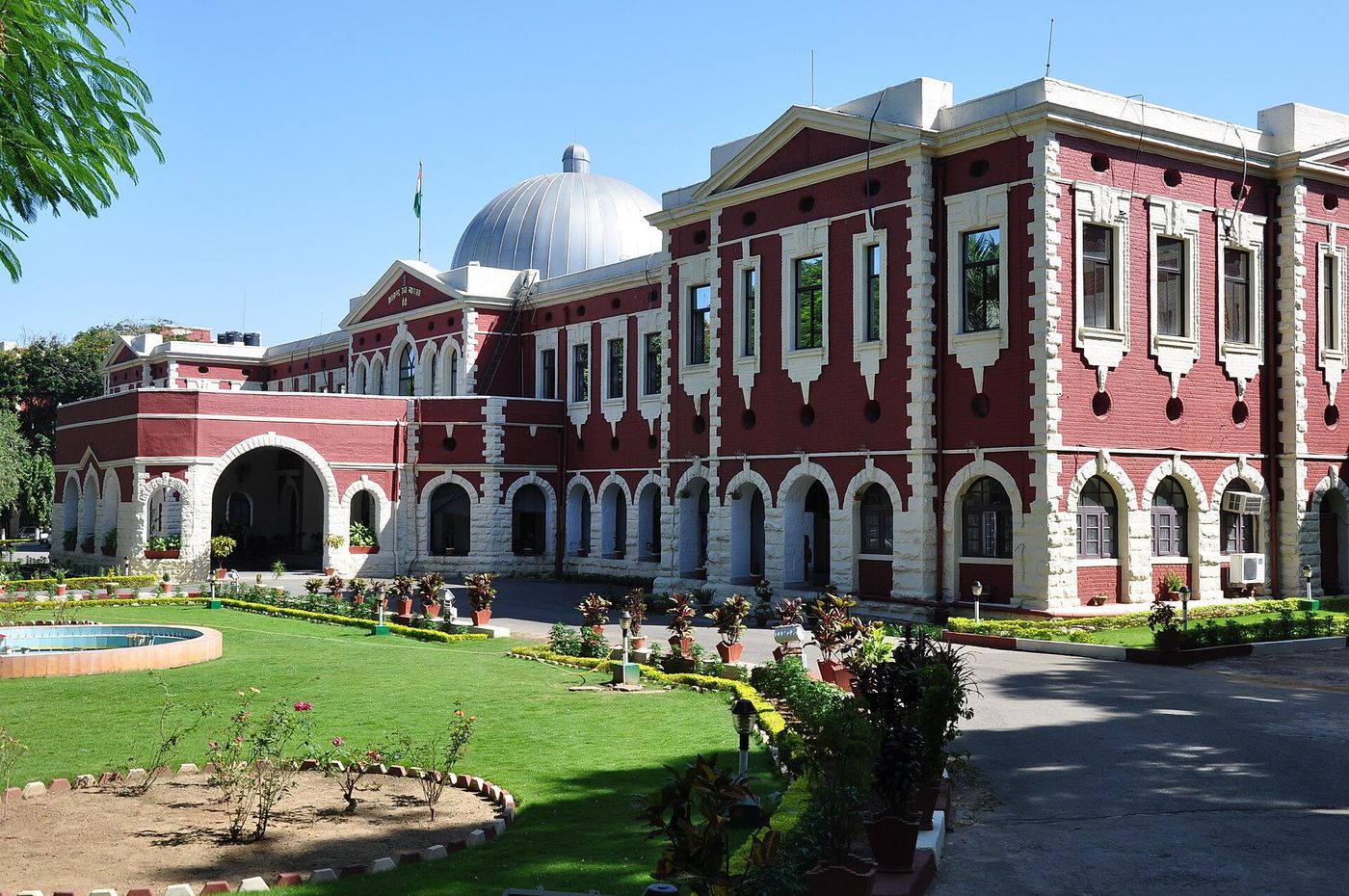
File photo: Nipunj Niket (CC BY-SA 4.0), via Wikimedia Commons
Jharkhand High Court on 23 November 2026 upheld a Santhal woman's title to her father's land in Jamtara, ruling that a custom barring daughters must be proved.
Santhal daughter inheritance: what happened
A Santhal daughter's right to inherit her father's land cannot be denied on the strength of a custom that nobody has proved, the Jharkhand High Court has ruled. A Division Bench of Chief Justice M.S. Sonak and Justice Rajesh Shankar, in a judgment delivered on Monday, 23 November 2026, dismissed a second appeal by the woman's relatives and upheld a lower court decree recognising her title to the whole of the disputed ancestral land in Turka village, Jamtara district. The dispute had been in the courts since 1985.
Santhal daughter inheritance: key facts
- Court and bench: Jharkhand High Court, Chief Justice M.S. Sonak and Justice Rajesh Shankar; judgment of 23 November 2026.
- The land: ancestral property in Turka village, Jamtara district, in the Santhal Pargana region.
- The suit was filed in 1985; the trial court in 1996 gave the woman one-third of the property, and the first appellate court in 2006 allowed her claim in full.
- The relatives argued that, by Santhal custom, a daughter could inherit only through a Gharjamai arrangement, in which the son-in-law lives with and is treated as an adopted son of her father. The court held that this custom was not proved.
- The bench held there is no established, uniform custom among Santhals that bars daughters from inheriting their father's property.
- A custom used to deny a woman inheritance must be proved to be ancient, certain, reasonable and consistently followed, the court said, and the burden lies on the person relying on it.
- The bench declined to treat an earlier ruling of the Santhal Pargana Commissioner, known as Karan Murmu, as an authoritative finding that such a bar exists and continues.
Santhal daughter inheritance: why it matters
In this case, as in many disputes over Santhal land, the side opposing the daughter did not rely on a written law but on custom: the claim that, among Santhals, land goes to sons, or to a daughter only through a Gharjamai husband. This judgment does not strike down Santhal custom. What it does is put the burden of proof in the right place: a relative who says custom shuts a daughter out must prove that the custom exists and is still followed, with evidence, rather than simply assert it.
That shift matters for women across Santhal Pargana, the region whose customs the relatives invoked. The court also refused to let the Karan Murmu ruling settle the question for all cases. A daughter in a similar dispute can now point to a High Court Division Bench judgment that says an unproven custom is not enough to defeat her claim. Each case will still turn on its own evidence, and the relatives may seek to appeal to the Supreme Court; nothing in the reports of the judgment says whether they will.
The case also shows how slowly such claims move. The woman first went to court in 1985. She won a part share in 1996 and the whole property on first appeal in 2006, and the second appeal then stayed in the High Court for two decades before this judgment.
Peepals calculation: From the filing of the suit in 1985 to the High Court's judgment in 2026 is 41 years (2026 − 1985). Of that, 20 years (2026 − 2006) were spent on the relatives' second appeal alone, about half the life of the case (20 ÷ 41 ≈ 0.49). Her share also grew from one-third under the 1996 decree to the whole property under the 2006 decree, which the High Court has now upheld. Our calculation from the reported figures.
| Stage | Year | Outcome for the daughter |
|---|---|---|
| Suit filed | 1985 | Claim to father's land in Turka village |
| Trial court | 1996 | Owner of one-third of the property |
| First appellate court | 2006 | Claim allowed in full |
| Jharkhand High Court | 2026 | Second appeal dismissed; title to whole property upheld |
Santhal daughter inheritance: impact
Short-term: The first appellate court's 2006 decree stands, and the woman's title to the entire property is confirmed unless a higher court rules otherwise.
Long-term: Courts in Jharkhand hearing similar disputes are likely to ask relatives who rely on custom to prove it strictly. Santhal women who have been kept out of their fathers' land may find it easier to bring and win such claims.
Who is affected: Santhal women and girls, especially in Jamtara and the rest of Santhal Pargana; families in land disputes under customary law; lawyers, revenue officials and lower courts in Jharkhand who decide such cases.
Santhal daughter inheritance: key takeaway
A Santhal daughter claiming her father's land in Jharkhand no longer has to disprove a custom; those who want to exclude her must prove it.
Santhal daughter inheritance: questions and answers
Does this judgment give every Santhal daughter a share in her father's land?
Not automatically. It says that a custom barring daughters must be proved by the person relying on it, and that no uniform custom of that kind among Santhals was shown in this case. Each dispute still depends on its own evidence.
What is a Gharjamai arrangement?
It is a practice in which a son-in-law comes to live in his wife's father's home and is treated as his adopted son and male heir. The relatives argued a daughter could inherit only this way; the court held that this custom was not proved.
What was the Karan Murmu ruling, and why does it matter here?
It is an earlier decision of the Santhal Pargana Commissioner that had been cited for the view that Santhal women do not inherit their father's property. The High Court bench declined to treat it as an authoritative finding that such a custom exists and continues.
Who decided the case?
A Division Bench of the Jharkhand High Court made up of Chief Justice M.S. Sonak and Justice Rajesh Shankar, in a judgment delivered on 23 November 2026.
Disclaimer: Prepared by the Peepals newsroom from publicly available sources with AI assistance. Information is accurate to the best of our knowledge at the time of publication and may change. Images may be representative. Not professional advice. Report an error via our contact page.
By Priya Nair, Staff WriterCovers Leadership & Growth and more for Peepals Shakti. All stories by Priya Nair
Princess of Wales's Heal documentary on cancer recovery airs November 29
Helena Foulkes starts listening tour with 1,200+ ideas before taking office
Your week ahead, every Sunday. Free.
Exam and result dates, IPOs opening, scheme deadlines, government holidays and the RBI decision for the next 7 days, plus the week's top stories. One email a week, unsubscribe in one click.
Priya Nair is a pen name of the Peepals Global Editorial Team, which researches, fact-checks and publishes every story. The portrait is an illustration.
Responsible for this story: the Peepals Global Editorial Team. How we report