
Child custody: father's guardian status not decisive, Supreme Court rules
 By Priya NairStaff Writer, Peepals Shakti

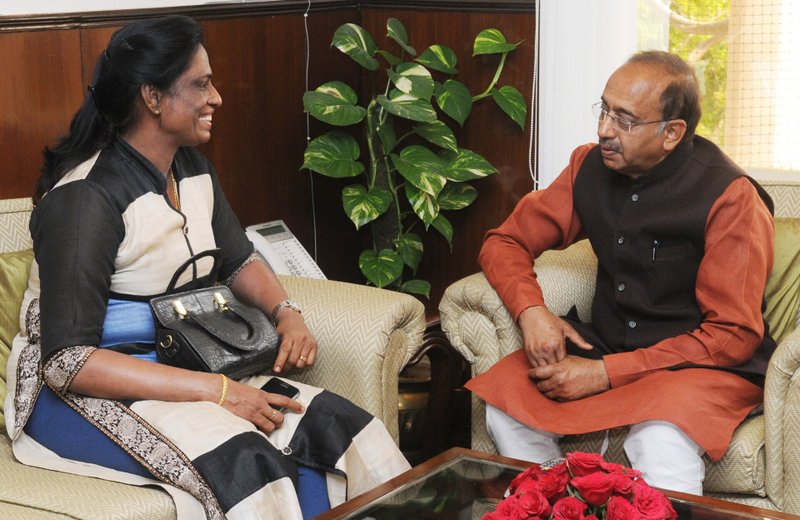
File photo: Pinakpani (CC BY-SA 4.0), via Wikimedia Commons
The Supreme Court on 23 November 2026 let a mother keep custody of her two sons, aged 16 and 14, overturning orders that had handed them to their father.
Child custody Supreme Court: what happened
The Supreme Court on Monday, 23 November 2026, allowed a mother to keep custody of her two sons, now aged 16 and 14, setting aside orders of a Madurai family court and the Madras High Court that had given custody to the father. A bench of Justices Vikram Nath and Aparesh Kumar Singh held that the rule that a father should get custody of his child is always subject to exceptions, and that the welfare of the children, not the legal rights of either parent, decides such cases. The father was given visiting rights.
Child custody Supreme Court: key facts
- Case: decided on 23 November 2026 and reported as 2026 INSC 1260.
- Earlier orders: the family court at Madurai granted custody to the father under the Guardians and Wards Act, 1890, and the Madras High Court upheld it.
- Bench: Justices Vikram Nath and Aparesh Kumar Singh.
- Holding: a father's position as natural guardian does not by itself decide custody; the rule favouring the father has exceptions.
- Welfare test: the court treated the children's welfare as the paramount consideration, as the Act requires, and noted that a child old enough to form an intelligent preference may be heard.
- Facts weighed: the boys had been raised by their mother with her parents since 2014 and had lived with their father for only about two years of their childhood.
- The mother did not have to prove the father unfit; the court said moving the boys could disrupt the settled home in which they had grown up.
Child custody Supreme Court: why it matters
Custody fights in India often start from the idea that the father is the "natural guardian" and so has a stronger claim, especially for sons. This ruling makes clear that such a label is a starting point, not the answer. Courts must ask a practical question: where will these children be safe, settled and cared for? In this case, the answer was the home where the boys had grown up with their mother and grandparents for more than a decade.
The judgment also matters for how courts treat older children. At 16 and 14, the boys were old enough to have clear views about where they wanted to live. Under the Guardians and Wards Act, a court may take into account the preference of a child who is old enough to form an intelligent one. The court weighed the risk that moving teenagers from a long-settled home would disrupt their lives.
For families, the ruling recognises the real role grandparents and the wider family often play in raising children. It does not create a rule that grandparents can displace a parent; rather, it treats a stable home with the mother and her parents as part of what makes up a child's welfare. Fathers keep their rights to meet and stay connected with their children through visitation.
Peepals calculation: The boys have lived with their mother and maternal grandparents since 2014, which is about 12 years by 2026. Against that, they spent about two years of their childhood with their father, roughly one-sixth of the time they spent in their mother's home (2 ÷ 12). The court refused to reverse a home arrangement that covers most of both boys' lives. Our calculation from the reported figures.
Peepals timeline: From 2014 the boys lived with their mother and her parents. The Madurai family court later granted custody to the father, and the Madras High Court upheld that order. On 23 November 2026 the Supreme Court set both orders aside and left the boys with their mother, with visitation for the father.
Child custody Supreme Court: impact
Short-term: The two boys stay with their mother, and the father receives visiting rights instead of custody.
Long-term: Family courts handling similar cases may cite this ruling to look past a father's natural-guardian status and focus on the child's settled home, age and wishes.
Who is affected: Separated parents in custody disputes, especially mothers raising children with the help of their own parents; older children whose preferences may now carry more weight; and family courts across the country.
Child custody Supreme Court: key takeaway
Parents in a custody dispute should expect courts to judge the child's settled home, age and wishes first, so the record of who has actually raised the child day to day matters more than titles like "natural guardian".
Child custody Supreme Court: questions and answers
What did the Supreme Court decide in this custody case?
It allowed a mother to keep custody of her two sons, aged 16 and 14, and set aside earlier orders that had given custody to the father. The father was granted visiting rights.
Does a father automatically get custody as the natural guardian?
No. The court said the rule favouring the father is always subject to exceptions, and that the welfare of the child is the paramount consideration in deciding custody.
Can children choose which parent to live with?
Under the Guardians and Wards Act, a court may consider the preference of a child old enough to form an intelligent one. It is a factor, not the only one.
Did the mother have to prove the father was unfit?
No. The court kept the children with their mother even though she had not shown any disqualifying factor against the father, because moving them would disrupt the home where they had grown up.
Disclaimer: Prepared by the Peepals newsroom from publicly available sources with AI assistance. Information is accurate to the best of our knowledge at the time of publication and may change. Images may be representative. Not professional advice. Report an error via our contact page.
By Priya Nair, Staff WriterCovers Leadership & Growth and more for Peepals Shakti. All stories by Priya Nair
Femicide report: 47,000 women killed by partners, relatives in 2025, UN says
Medical dismissal in pregnancy: nearly 80% of mothers report it, UCSB study
Your week ahead, every Sunday. Free.
Exam and result dates, IPOs opening, scheme deadlines, government holidays and the RBI decision for the next 7 days, plus the week's top stories. One email a week, unsubscribe in one click.
Priya Nair is a pen name of the Peepals Global Editorial Team, which researches, fact-checks and publishes every story. The portrait is an illustration.
Responsible for this story: the Peepals Global Editorial Team. How we report