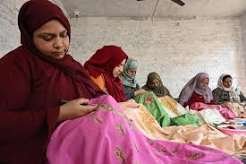

Women make up about 80% of India's nearly five lakh Khadi artisans
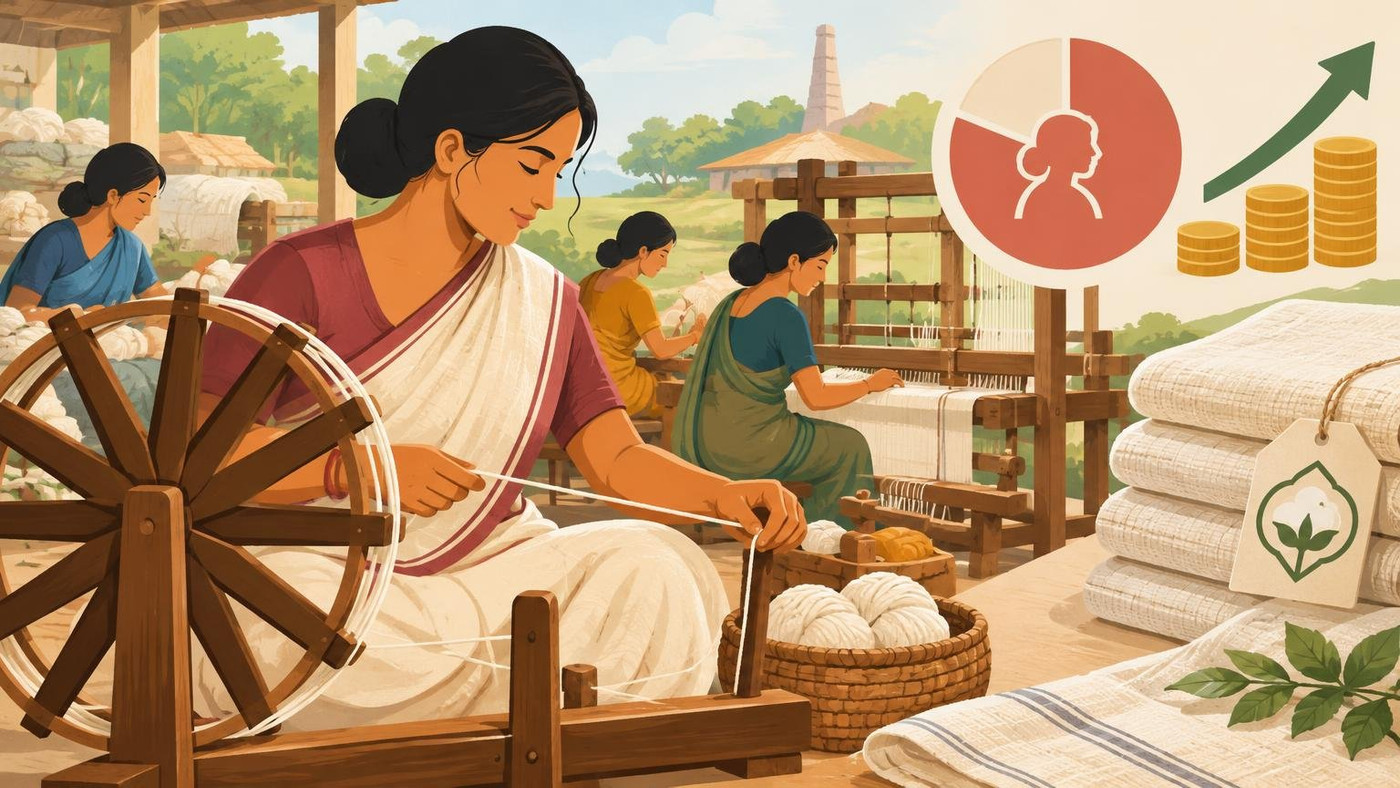
AI-generated illustration
Advertisement
About 80% of India's nearly five lakh Khadi artisans are women, government information reported on Oct 9, 2026 says, alongside wage rises and Ponduru Khadi's GI tag.
What Happened
Women make up about 80% of India's nearly five lakh Khadi artisans, according to government information on the Khadi and village industries sector reported on Friday, October 9, 2026. The update, linked to the Khadi and Village Industries Commission (KVIC), also set out steps taken to raise artisans' incomes and widen Khadi's reach abroad. These include higher wages for spinning and weaving from April 2025, the Geographical Indication (GI) tag granted to Ponduru Khadi from Andhra Pradesh, and the display of Indian handmade fabrics, including Ponduru Khadi, Bharat Kasturi Cotton and Bengal Muslin, at the first BRICS MSME Forum in Agra.
Key Facts
- Around 80% of India's nearly five lakh Khadi artisans are women.
- Women are also well represented in other village industries, including agarbatti, handmade paper, honey and service activities.
- Spinning and weaving wages for Khadi artisans were raised from April 2025.
- Ponduru Khadi, a handspun, handwoven cotton fabric from Ponduru village in Srikakulam district, Andhra Pradesh, has received a GI tag, which protects the name against counterfeits.
- Ponduru Khadi, Bharat Kasturi Cotton, Bengal Muslin and naturally coloured cotton were showcased at the first BRICS MSME Forum, held in Agra.
- KVIC is working with ICAR-CIRCOT, a central cotton research institute, on naturally coloured cotton, and says it is building branding for Khadi products.
Why It Matters
Khadi is often talked about as a symbol, but behind each length of fabric is a spinner or weaver, and most of them are women. A workforce that is four-fifths female means that any change in Khadi wages, demand or pricing directly affects women's earnings, especially in villages and small towns where other paid work can be scarce. Spinning and weaving can often be done close to home, which helps women combine income with care responsibilities.
That is why the wage revision from April 2025 matters. Higher wages make the work more viable and can help keep younger women in the craft rather than leaving it for other jobs.
The GI tag for Ponduru Khadi adds another layer of protection. Fine handspun fabrics are easy to imitate with machine-made cloth sold under the same name. A GI tag gives legal backing to the original, which can help genuine producers command better prices and push back against fakes.
For the fashion industry, the push to showcase fabrics such as Ponduru Khadi, Bengal Muslin and naturally coloured cotton at international forums is a signal. Designers and brands looking for sustainable, traceable materials have a growing domestic supply to draw on. Naturally coloured cotton, which needs less dyeing, fits the demand for lower-impact textiles. Stronger branding, if it reaches the market, could help Khadi move beyond government emporiums into mainstream fashion retail.
The open question is whether these steps translate into steady orders and higher take-home pay for the women at the start of the chain. Recognition at forums and legal tags are useful, but artisans benefit only when buyers pay fair prices for authentic products.
| Item | Detail |
|---|---|
| Khadi artisans | Nearly five lakh |
| Share of women | About 80% |
| Wage revision | Spinning and weaving wages raised from April 2025 |
| GI-tagged fabric | Ponduru Khadi, Andhra Pradesh |
| Fabrics showcased at BRICS MSME Forum | Ponduru Khadi, Bharat Kasturi Cotton, Bengal Muslin, naturally coloured cotton |
Impact
Short-term: Women Khadi artisans gain from the wage revision already in force, and Ponduru weavers have a GI tag to market their fabric as authentic.
Long-term: If branding and international promotion raise demand, more women could earn a stable income from spinning and weaving, and Indian handmade fabrics could find a larger place in sustainable fashion.
Who is affected: Women spinners and weavers in Khadi institutions, Ponduru's weaving community, fashion designers and brands sourcing handmade and sustainable fabrics, and buyers of Khadi products.
Key Takeaway
About 80% of India's nearly five lakh Khadi artisans are women, so wage rises, GI protection and global promotion of Khadi fabrics are, in practice, measures that shape women's incomes.
Questions and Answers
What share of Khadi artisans in India are women?
About 80% of India's nearly five lakh Khadi artisans are women, according to government information reported on October 9, 2026.
What is Ponduru Khadi?
It is a handspun, handwoven cotton fabric from Ponduru village in Srikakulam district, Andhra Pradesh, which has received a Geographical Indication tag protecting it against imitations.
Have Khadi artisans' wages changed?
Yes. Spinning and weaving wages were raised from April 2025.
Why does this matter for fashion buyers?
Fabrics such as Ponduru Khadi and naturally coloured cotton offer traceable, handmade and lower-impact options, and buying authentic products supports the mostly women artisans who make them.
Sourced and fact-checked by the Peepals Global Editorial Team
International Day of the Girl Child 2026: Where Girls' Rights Stand in India
Lab-grown diamond jewellery brand Zinara raises Rs 3.61 crore, led by IPV
Reported, fact-checked and published by the Peepals Global Editorial Team.
Advertisement