
ISRO places NVS-03 in orbit; NavIC back to four working satellites
 By Anika SharmaAI & Innovations Editor, Peepals Tech
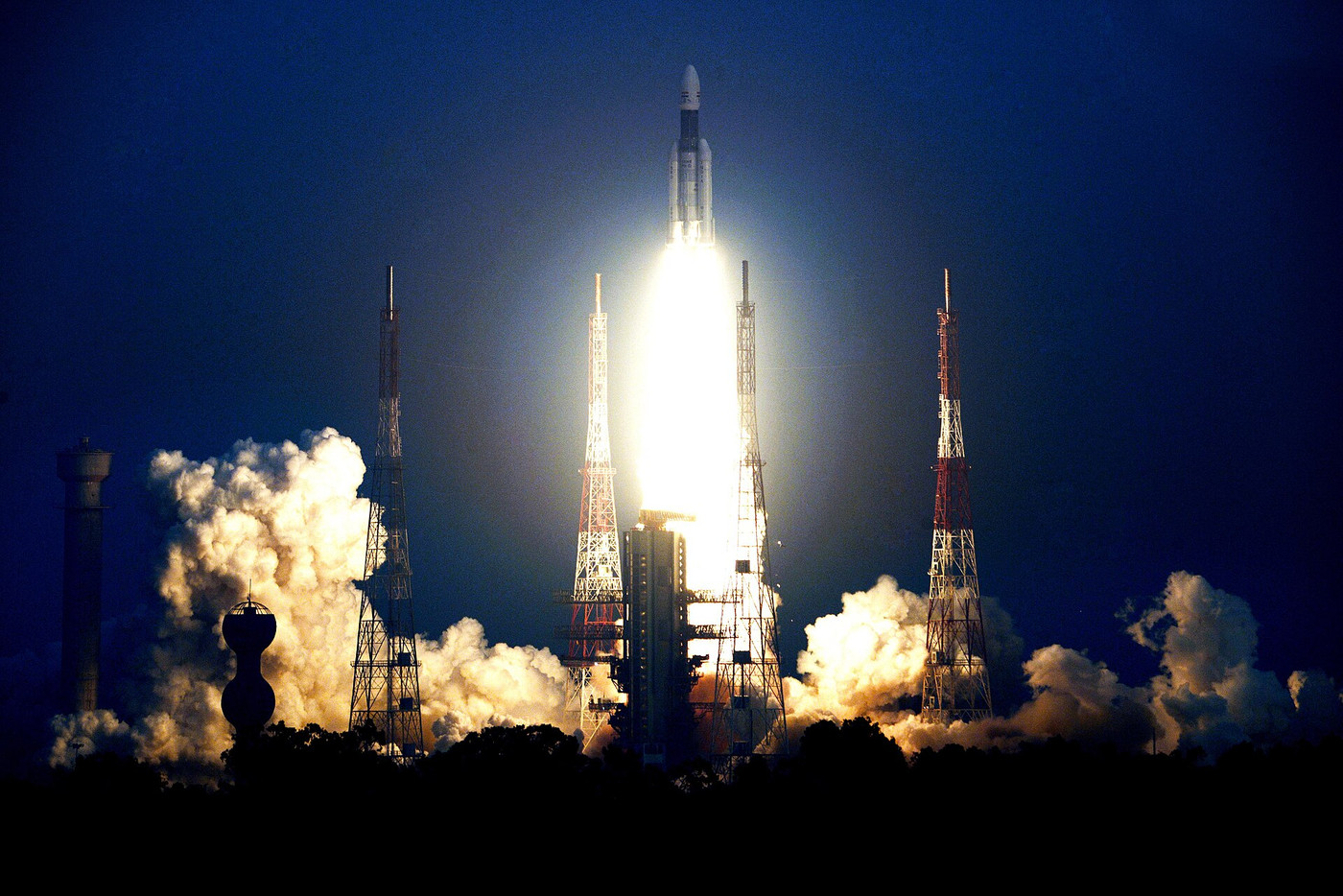
File photo: Indian Space Research Organisation (GODL-India), via Wikimedia Commons
ISRO's GSLV-F18 put the NVS-03 navigation satellite into orbit on the night of 30 October 2026, restoring NavIC to its minimum four-satellite setup.
What Happened
The Indian Space Research Organisation (ISRO) successfully placed the NVS-03 navigation satellite into orbit on the night of Friday, 30 October 2026. The GSLV-F18 rocket lifted off at 11:51 pm from the second launch pad at the Satish Dhawan Space Centre in Sriharikota, Andhra Pradesh, and delivered the satellite to a geosynchronous transfer orbit. ISRO Chairman V Narayanan said the launch restores NavIC, India's own satellite navigation system, to its minimum working configuration of four satellites, and that the satellite carries India's third home-built atomic clock in space.
Key Facts
- Rocket: GSLV-F18, on the 20th flight of the Geosynchronous Satellite Launch Vehicle (GSLV).
- Launch time: 11:51 pm IST on 30 October 2026, after a 24-hour countdown, from the second launch pad at Sriharikota.
- Satellite: NVS-03, weighing about 2,250 kg, placed in a geosynchronous transfer orbit about 18 minutes after liftoff.
- NavIC status: the constellation is back to its minimum operational configuration of four satellites, according to the ISRO chairman.
- Atomic clock: NVS-03 carries the third Indian-made atomic clock to reach orbit; two are already working in space, and the satellite also carries procured clocks.
- New signal: the satellite adds a signal in the L1 band, which is meant to make NavIC easier to use in smartphones and common navigation devices.
- Full coverage: Narayanan said seven satellites are needed in orbit for NavIC's full service.
Why It Matters
NavIC (Navigation with Indian Constellation) is India's regional satellite navigation system. It does the same job as the American GPS for India and the area around it: satellites send precise time signals, and a receiver works out its position by comparing how long the signals take to arrive. Narayanan described NavIC as a strategic national asset that gives India independent access to position, navigation and timing services, meaning the country does not have to depend on a foreign system in a crisis.
Before this launch, the number of fully working NavIC satellites had fallen below four, which is the minimum a receiver needs to fix its position. Restoring that minimum is the main result of the flight. Atomic clocks are at the heart of any navigation satellite, because an error of one billionth of a second in timing becomes a position error of about 30 centimetres. Building these clocks in India reduces reliance on imported parts, which is why the third Indian clock in orbit is a technical milestone in its own right.
The L1 signal matters for ordinary users. Most phones and car navigation units are designed around the L1 band used by GPS and other global systems. Adding NavIC signals in that band makes it simpler for chip makers to include NavIC alongside other systems, rather than needing separate hardware.
| Item | Before NVS-03 | After NVS-03 |
|---|---|---|
| Working NavIC satellites | Below the minimum of four | Four, the minimum operational set |
| Indian atomic clocks in orbit | Two | Three |
| Satellites needed for full service | Seven | Seven (three more to go) |
Impact
Short-term: Once NVS-03 reaches its working orbit and completes in-orbit checks, NavIC receivers in India should again be able to rely on four satellites.
Long-term: Full NavIC coverage needs seven satellites, so more launches are required. The everyday benefit for phone users also depends on handset makers adding NavIC support, which is still in progress.
Who is affected: Defence and security agencies, shipping, aviation and disaster-management services that use navigation and timing data; telecom networks and power grids that need accurate time; and smartphone users and app makers in India.
Key Takeaway
GSLV-F18's successful launch of NVS-03 on 30 October 2026 brings NavIC back to four working satellites and puts a third Indian atomic clock in orbit, though full service still needs seven.
Questions and Answers
Was the ISRO NVS-03 launch successful?
Yes. ISRO's GSLV-F18 rocket lifted off from Sriharikota at 11:51 pm IST on 30 October 2026 and placed the NVS-03 navigation satellite into a geosynchronous transfer orbit about 18 minutes later. ISRO declared the mission a success.
What is NavIC and how does NVS-03 help it?
NavIC is India's own satellite navigation system, similar to GPS but focused on India and nearby regions. NVS-03 brings the system back to four working satellites, the minimum needed for a receiver to fix its position, according to ISRO Chairman V Narayanan.
Why is the atomic clock on NVS-03 important?
Navigation satellites work by sending very precise time signals, so they depend on atomic clocks. NVS-03 carries the third Indian-made atomic clock to reach orbit, which reduces India's reliance on imported clocks for its navigation system.
Will NavIC now work fully on smartphones?
Not yet. The new L1 signal on NVS-03 is meant to make NavIC easier for phones to use, but full coverage needs seven satellites, and handset makers still have to add support.
Disclaimer: Prepared by the Peepals newsroom from publicly available sources with AI assistance. Information is accurate to the best of our knowledge at the time of publication and may change. Images may be representative. Not professional advice. Report an error via our contact page.
By Anika Sharma, AI & Innovations EditorCovers AI & Innovation and more for Peepals Tech. All stories by Anika Sharma
UNM Health cyberattack: hospitals recover; BYOD group offers keys, keeps data
Manastu Space raises Rs 22 crore after Rs 116 crore government green-propulsion backing
Get the day's stories in your inbox
Peepals Weekly: the week decoded, free. One email a week, unsubscribe in one click.
Anika Sharma is a pen name of the Peepals Global Editorial Team, which researches, fact-checks and publishes every story. The portrait is an illustration.