
MeitY unveils DEPA for AI Training draft to unlock data while protecting privacy
 By Anika SharmaAI & Innovations Editor, Peepals Tech

Representative image: Pexels / Pixabay
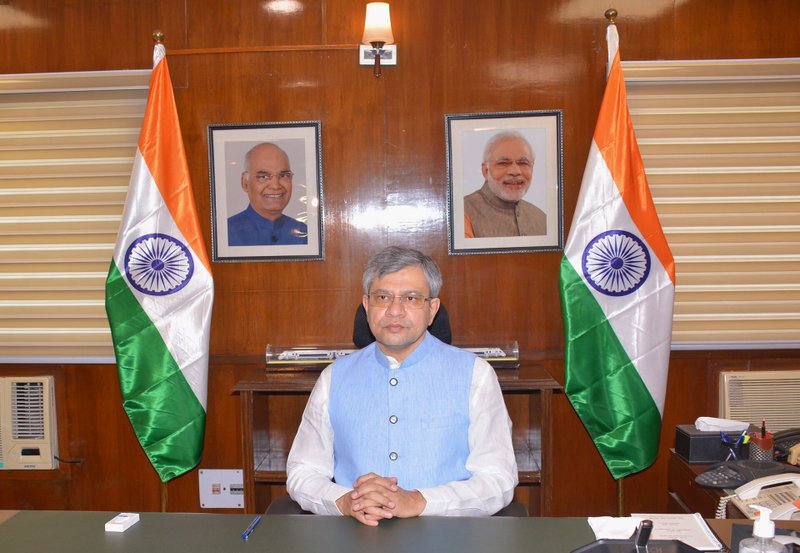
MeitY Secretary S Krishnan unveiled the DEPA for AI Training handbook in Bengaluru on 30 October 2026, a draft framework for training AI on Indian data without sharing raw datasets.
What Happened
The Ministry of Electronics and Information Technology (MeitY) has proposed a framework that would let companies, start-ups and researchers train artificial-intelligence models on Indian data without directly handing over the underlying datasets. MeitY Secretary S Krishnan unveiled the "DEPA for AI Training" handbook at a roundtable in Bengaluru on Friday, 30 October 2026. The draft framework is built around consent and privacy protections and is meant to work within India's data-protection law, the Digital Personal Data Protection (DPDP) Act.
Key Facts
- What: the DEPA for AI Training handbook, a draft framework steered by MeitY.
- When and where: unveiled by MeitY Secretary S Krishnan on 30 October 2026 at a roundtable in Bengaluru.
- DEPA stands for Data Empowerment and Protection Architecture, India's consent-based model for sharing data.
- Core idea: organisations can collaborate on training AI models without directly transferring the datasets they hold.
- Mechanism: "confidential clean rooms", secure computing environments where data is processed jointly without being exposed, along with digital contracts and limits on how much privacy can be used up.
- Checks: trained models would face independent checks for bias, fairness, security and explainability.
- The draft says the approach "provides the potential to unlock $500 billion in AI-driven value for India's GDP by 2030"; that is the framework's own estimate.
- Status: the framework is a draft and is being piloted with regulators, data providers and AI developers.
Why It Matters
Good AI models need large amounts of good data. India produces enormous volumes of data in health, finance, agriculture and government services, but much of it contains personal information. Sharing it freely would break privacy rules and public trust; locking it away leaves Indian AI developers dependent on foreign models trained mostly on foreign data. The DEPA approach tries to solve that problem.
In simple terms, a clean room is like a sealed laboratory. The data owner, say a hospital, places its records inside. The AI developer sends its training code in. The model learns from the data inside the room, and only the trained model comes out, not the patients' records. Rules written into digital contracts decide what can be done, and a "privacy budget" limits how much information about any individual can leak through repeated use.
The framework builds on India's approach of digital public infrastructure, in which shared rules and technology let many organisations use common systems. Applying that idea to AI training could let Indian start-ups and universities build models in Indian languages and for Indian conditions, while companies that hold data keep control of it and stay within the DPDP Act.
There are open questions. The handbook text itself has not been widely published, so details on how consent will be collected for bulk, de-identified data, who certifies the clean rooms, and who pays for them are not yet clear. Those answers will decide whether the framework is used widely.
| Feature | What the draft proposes |
|---|---|
| Data sharing | Training without directly transferring datasets |
| Where training happens | Confidential clean rooms |
| Rules | Digital contracts and privacy budgets |
| Model checks | Bias, fairness, security, explainability |
| Legal base | Works within the DPDP Act |
Impact
Short-term: AI start-ups, data-rich companies and research institutions can study the draft and take part in pilots. The pilots are meant to test how the clean rooms and contracts work in practice before any final version.
Long-term: If adopted, the framework could make Indian data available for building AI in sectors such as health and finance, without putting individuals' privacy at risk.
Who is affected: AI developers and start-ups, companies and public bodies that hold large datasets, privacy regulators, and citizens whose data could be used under the framework.
Key Takeaway
MeitY's draft DEPA for AI Training, unveiled on 30 October 2026, proposes training AI on Indian data inside secure clean rooms so the raw data never leaves its owner.
Questions and Answers
What is DEPA for AI Training?
It is a draft framework from the Ministry of Electronics and Information Technology, unveiled on 30 October 2026, that lets organisations train AI models on data held by others inside secure "clean rooms", without directly transferring the underlying datasets.
How does DEPA for AI Training protect privacy?
Training happens in confidential clean rooms, governed by digital contracts and privacy budgets, so the raw data stays with its owner. Trained models would also face independent checks for bias, fairness, security and explainability.
Is DEPA for AI Training already in force?
No. It is a draft framework that is being piloted with regulators, data providers and AI developers. MeitY has not announced a date for it to become operational.
Who could benefit from this framework?
Indian AI start-ups, universities and companies that need large, India-specific datasets to build models, as well as organisations that hold such data and want to share its value without giving up control of it.
Disclaimer: Prepared by the Peepals newsroom from publicly available sources with AI assistance. Information is accurate to the best of our knowledge at the time of publication and may change. Images may be representative. Not professional advice. Report an error via our contact page.
By Anika Sharma, AI & Innovations EditorCovers AI & Innovation and more for Peepals Tech. All stories by Anika Sharma
Nvidia rejects report that Jensen Huang was target of Chinese spy plot
NatWest removes 1,000 roles in Q3 as staff AI use rises 66%
Get the day's stories in your inbox
Peepals Weekly: the week decoded, free. One email a week, unsubscribe in one click.
Anika Sharma is a pen name of the Peepals Global Editorial Team, which researches, fact-checks and publishes every story. The portrait is an illustration.