
Manastu Space raises Rs 22 crore after Rs 116 crore government green-propulsion backing
 By Karan BansalTech Startups Correspondent, Peepals Tech

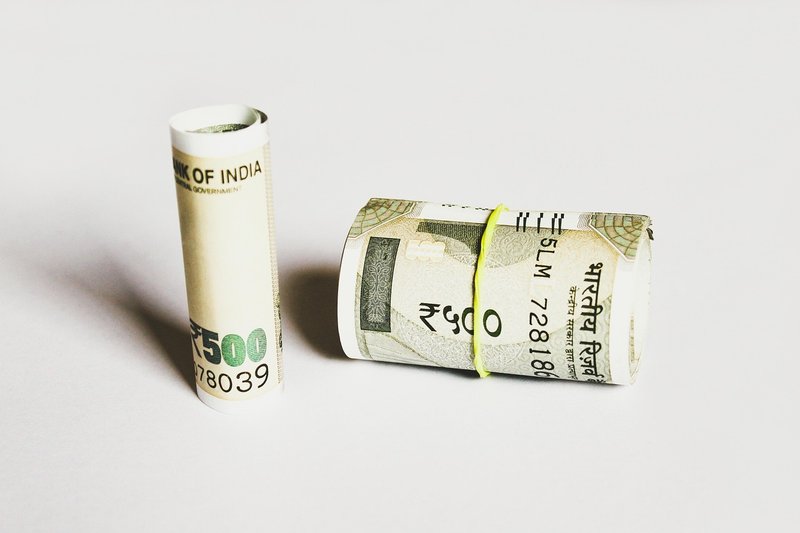
Representative image: PIRO4D / Pixabay
Mumbai spacetech start-up Manastu Space has raised Rs 22 crore in a Series A extension, days after the Technology Development Board committed Rs 116 crore to its green propulsion.
What Happened
Manastu Space, a Mumbai-based space technology start-up that makes cleaner propulsion systems for satellites, has raised Rs 22 crore (about $2.3 million) in an extension of its Series A funding round, it was reported on 30 October 2026. The investors are Gandhi Securities and Investments, the Thacker Legacy Trusts and individual angel investors. The raise comes days after the Technology Development Board (TDB) of the Department of Science and Technology signed an agreement to provide Rs 116 crore to the company under the government's Research Development and Innovation (RDI) Fund.
Key Facts
- Amount raised: Rs 22 crore in a Series A extension, from Gandhi Securities and Investments, the Thacker Legacy Trusts and angel investors.
- Government support: Rs 116 crore from the TDB through optionally convertible debentures, a form of loan that can later be turned into shares.
- The TDB support is part of a project with a total cost of Rs 277.63 crore, according to reports of the agreement.
- The stated aim is to take the company's propulsion technology from technology readiness level (TRL) 6 to TRL 9, meaning from a tested prototype to a system proven in actual missions.
- Founded in 2017, Manastu builds hydrogen peroxide-based "green" thrusters for satellites and is working on in-orbit refuelling and debris-avoidance technology.
- The company says its propulsion system was tested in space during ISRO's PSLV-C60 mission; it has raised more than $9 million in total, according to deal-tracking data.
Why It Matters
Satellites need small engines, called thrusters, to reach their final orbit, keep their position and avoid collisions. Many of these thrusters use hydrazine, a fuel that works well but is highly toxic and needs special handling, which adds cost and risk on the ground. Manastu's approach uses hydrogen peroxide-based fuel, which the company describes as safer to handle. That is why the industry calls it "green" propulsion. The claim of lower cost and easier handling is the company's; independent long-term performance data will come only from more flights.
The government backing is significant because of where it comes from. The RDI Fund is meant to help Indian companies carry deep-technology research all the way to commercial products, a stage where private investors are often cautious because results take years. Optionally convertible debentures let the TDB lend money now with the option of becoming a shareholder later, so the state shares in the upside if the company succeeds. The TDB has used the same fund for other space firms; earlier, it agreed Rs 200 crore of support for Agnikul Cosmos's reusable Agnibaan rocket.
For India's space start-up sector, the two deals together show a pattern: private money arriving in smaller amounts, alongside much larger, patient public funding for hardware that must be proven in orbit.
| Funding | Source | Instrument |
|---|---|---|
| Rs 22 crore | Gandhi Securities, Thacker Legacy Trusts, angel investors | Series A extension (equity) |
| Rs 116 crore | Technology Development Board, RDI Fund | Optionally convertible debentures |
| Rs 277.63 crore | Total project cost reported for the TDB-backed work | Mix of sources |
Impact
Short-term: The new money gives Manastu funds to build and test more flight units and to scale manufacturing, while the TDB agreement sets milestones for moving the technology to mission-proven readiness.
Long-term: If the thrusters prove reliable over many missions, Indian satellite makers would have a domestic option for propulsion, and the company could compete for orders abroad.
Who is affected: Indian satellite manufacturers and launch customers, investors in spacetech, engineers and students looking for jobs in the space sector, and the government agencies that fund deep-technology research.
Key Takeaway
Manastu Space now has Rs 22 crore of fresh private money and a Rs 116 crore government commitment to take its hydrogen peroxide satellite thrusters from prototype to mission-proven product.
Questions and Answers
How much has Manastu Space raised in October 2026?
Manastu Space raised Rs 22 crore in a Series A extension from Gandhi Securities and Investments, the Thacker Legacy Trusts and angel investors, as reported on 30 October 2026. Separately, the Technology Development Board committed Rs 116 crore through the RDI Fund.
What does Manastu Space make?
It makes "green" propulsion systems for satellites that use hydrogen peroxide-based fuel instead of toxic hydrazine, and it is developing in-orbit refuelling and debris-avoidance technology. The company says its system was tested in space on ISRO's PSLV-C60 mission.
What is an optionally convertible debenture?
It is a type of loan that the lender can later choose to convert into shares of the company. The Technology Development Board is using this instrument for its Rs 116 crore support to Manastu.
What is the RDI Fund?
The Research Development and Innovation Fund is a government fund, run through bodies such as the Technology Development Board, that supports Indian companies taking advanced technologies from research to commercial use. It has also backed other space firms, such as Agnikul Cosmos.
Disclaimer: Prepared by the Peepals newsroom from publicly available sources with AI assistance. Information is accurate to the best of our knowledge at the time of publication and may change. Images may be representative. Not professional advice. Report an error via our contact page.
By Karan Bansal, Tech Startups CorrespondentCovers Tech Start-ups & Stories and more for Peepals Tech. All stories by Karan Bansal
ISRO places NVS-03 in orbit; NavIC back to four working satellites
Sridhar Vembu: one person with AI can do the work of 10
Get the day's stories in your inbox
Peepals Weekly: the week decoded, free. One email a week, unsubscribe in one click.
Karan Bansal is a pen name of the Peepals Global Editorial Team, which researches, fact-checks and publishes every story. The portrait is an illustration.