MIT's Eric So warns heavy AI dependence can weaken thinking skills in new book

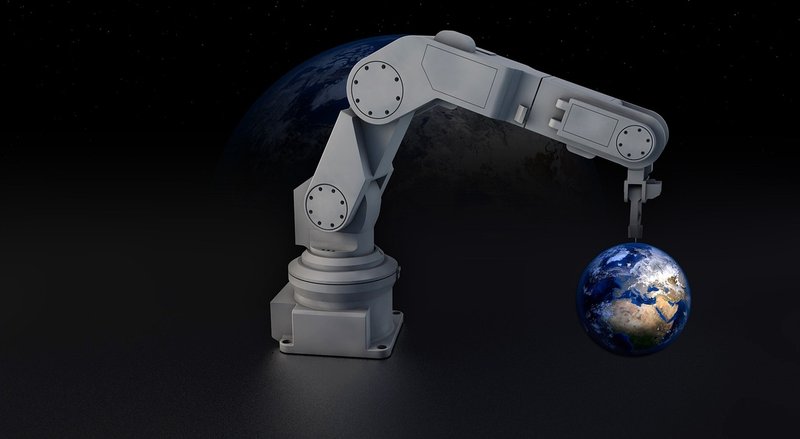
Representative image: didab56 / Pixabay
MIT Sloan professor Eric So's new book The Collision, discussed in an MIT Q&A on Oct 15, 2026, warns heavy AI use can cause cognitive atrophy.
What Happened
In artificial intelligence news that is drawing wide attention in the United States, MIT Sloan School of Management professor Eric So has warned that relying heavily on AI can weaken the very thinking skills people need to use it well. So, who teaches global economics and behavioural science, sets out the argument in his new book, "The Collision: What AI Does to Us", published this month by W.W. Norton. In a question-and-answer interview released by MIT on October 15, 2026, and in coverage the same day, he described the risk as a form of cognitive atrophy: people stop building, and stop keeping, core mental abilities because a machine does the hard part for them.
Key Facts
- Eric So is a professor of global economics and behavioural science at MIT Sloan.
- His book, "The Collision: What AI Does to Us", is published by W.W. Norton in October 2026; the publisher announced it on October 6.
- MIT released a Q&A with So about the book on October 15, 2026.
- So argues that heavy AI use can lead to cognitive atrophy, a loss of the ability to develop and retain essential thinking skills.
- He names a constant pull towards dependence that he calls "AI gravity".
- He cites research by the AI company Anthropic suggesting that about half of college students' queries sought simple, low-effort answers.
- His proposed answer is to use AI as a tutor or trainer for the mind, not as an answer machine.
Why It Matters
So's case does not rest on a single new laboratory experiment. It is a synthesis of existing research and his own observations, written by a behavioural scientist who studies how people make decisions. His central point is about effort. Learning, he argues, depends on productive struggle: wrestling with an idea, getting it wrong, and revising. AI tools remove much of that friction by producing quick, polished answers on demand. That suits a brain that naturally prefers instant reward and conserves energy, but it can cut out the work that builds lasting mastery.
He extends the concern to memory. Because many people now treat AI as their first stop for information, he says, it is changing how much they hold in their own heads. He also points to students as a group at particular risk, saying many are outsourcing their thinking to AI rather than working through problems themselves.
The idea of "AI gravity" explains why the pull is hard to resist. According to So, several forces push in the same direction: a biological instinct to save mental energy; social pressure, because when colleagues or classmates use AI everyone else feels they must keep up; and the difficulty of telling when someone has used AI at all. Together these create steady pressure to hand over more thinking in the name of efficiency. MIT Sloan has described the concept in exactly those terms, as the constant pressure to outsource more thinking to AI to become more efficient.
For India, the argument lands at a time when AI tools are spreading quickly through classrooms, coaching centres, offices and start-ups. Its relevance is practical rather than alarmist. So is not saying AI damages the brain instantly or that it should be avoided. He is saying that how it is used decides whether it strengthens or weakens a person. That is a question for students preparing for competitive exams, for teachers setting assignments, and for employers deciding how to measure the value of AI in their teams.
| Idea | What So argues |
|---|---|
| Cognitive atrophy | Heavy reliance on AI can stop people developing and keeping core thinking skills |
| AI gravity | Biology, peer pressure and hard-to-detect use combine into a steady pull towards dependence |
| Productive struggle | Effort, mistakes and revision are what build lasting mastery |
| Better use | Treat AI as a tutor or trainer, and spend saved time on deeper learning |
Impact
Short-term: The book and the interview add a well-known academic voice to a growing debate on whether AI assistants make people sharper or lazier. Schools, colleges and companies reviewing their AI rules are likely to find his framing useful when deciding where to allow or limit the tools.
Long-term: If his warning holds, the value of human skills such as sustained attention, judgement and the patience to solve hard problems could rise, because they become rarer. Education systems may need to design assignments that reward the process of thinking, not just the final answer, so that students still practise the struggle that builds expertise.
Who is affected: Students and young professionals who use AI chatbots daily, teachers and examiners, managers who track AI adoption in their teams, and anyone who uses AI as their main source of information.
Key Takeaway
MIT's Eric So argues that AI can either train the mind or let it weaken, and that the difference lies in whether users keep doing the hard thinking themselves.
Questions and Answers
What is the artificial intelligence news about the MIT professor and the brain?
MIT Sloan professor Eric So says in his October 2026 book, "The Collision: What AI Does to Us", that heavy dependence on AI can cause cognitive atrophy, meaning people fail to build and keep essential thinking skills because AI removes the effort that learning needs.
What does "AI gravity" mean?
It is So's term for the constant pull towards relying on AI. He links it to the brain's instinct to save energy, to social pressure when others use AI, and to the fact that AI use is hard to detect, which together push people to hand over more of their thinking.
Does So say people should stop using AI?
No. He argues that AI should be used as a tutor or a trainer for the mind rather than an answer machine, and that the time it saves should go into deeper learning instead of doing less thinking.
Is this based on a new scientific study?
No single new controlled study is behind it. So draws on existing academic and industry research, including Anthropic findings that roughly half of college students' queries sought simple, low-effort answers, along with his own observations as a behavioural scientist.
Disclaimer: Prepared by the Peepals newsroom from publicly available sources with AI assistance. Information is accurate to the best of our knowledge at the time of publication and may change. Images may be representative. Not professional advice. Report an error via our contact page.
Sourced and fact-checked by the Peepals Global Editorial Team
Fed's Beige Book: AI slows hiring in 5 of 12 US districts, entry-level jobs hit first
AI agents lift Modal: cloud start-up triples its value in five months in Accel deal
Reported, fact-checked and published by the Peepals Global Editorial Team.