
Hong Kong raises 2026 growth forecast to 4.8% on AI electronics exports
 By Neha KapoorEconomy Correspondent, Peepals Business
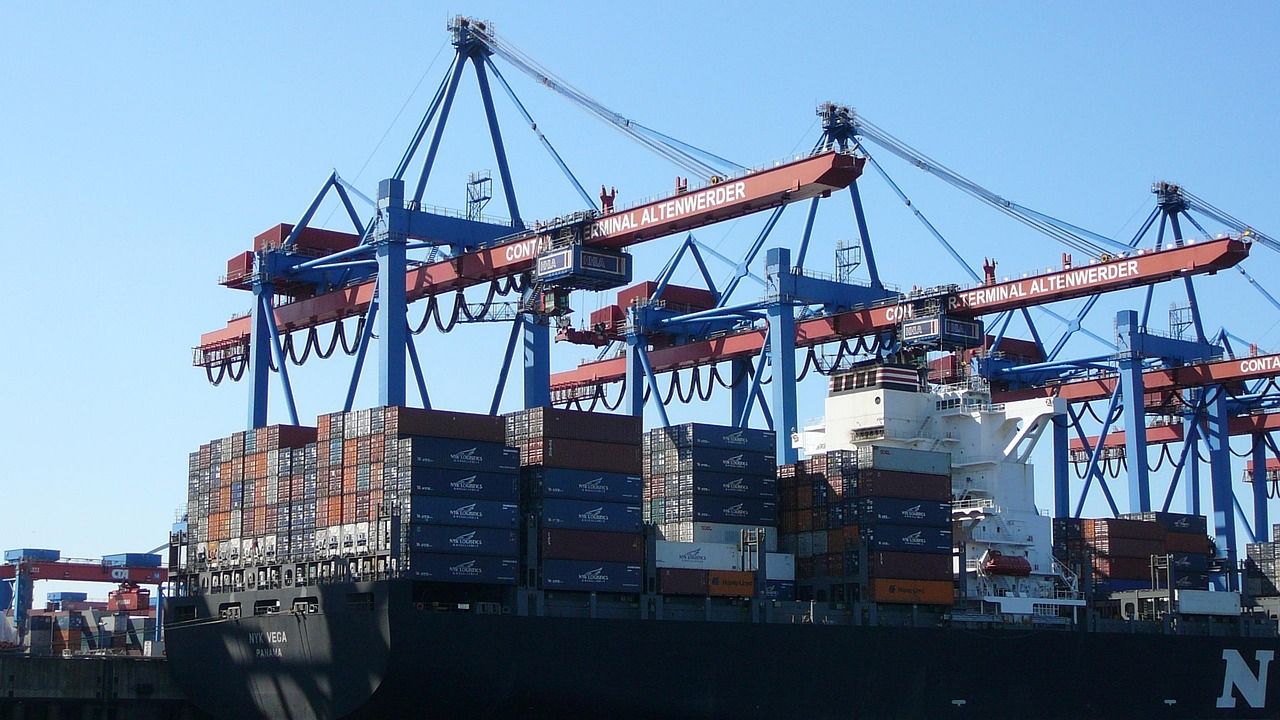
Representative image: Lekies / Pixabay
Hong Kong raised its 2026 GDP growth forecast to 4.8% on 13 November 2026 after confirming 5.2% third-quarter growth driven by AI-related electronics exports.
What Happened
Hong Kong has raised its forecast for economic growth in 2026 to 4.8%, from a range of 3.5% to 4.5%, after confirming that its economy grew 5.2% in the third quarter. Government Economist Irina Fan announced the revision on Friday, 13 November 2026, while presenting the Third Quarter Economic Report. Revised figures from the Census and Statistics Department kept July-to-September growth at 5.2% over a year earlier, unchanged from the advance estimate published on 3 November and up from 4.2% in the second quarter. The government credited a further pick-up in exports, driven by strong global demand for electronics used in artificial intelligence, together with solid demand at home.
Hong Kong GDP: key facts
- 2026 growth forecast: raised to 4.8%, from 3.5% to 4.5% earlier, announced 13 November 2026.
- Third quarter: real GDP up 5.2% year on year, confirmed in revised figures; up 1 percentage point from 4.2% in the second quarter.
- First three quarters: real GDP up 5.1% on a year earlier, the fastest pace for that period in five years, according to the government.
- Main driver: goods exports, boosted by global demand for AI-related electronic products.
- Private consumption also grew, by about 2.9% according to one report (2.8% in another).
- Economists polled by Reuters had expected 3.6% growth for the quarter before the advance estimate.
- Risks named by the government: geopolitical tensions, US monetary policy and trade protectionism.
- Hang Seng Bank has raised its own 2026 forecast to 4.4%.
Hong Kong GDP: why it matters
Hong Kong is a trading economy, so its growth rate is a quick reading of demand for goods passing through Asia. The government's own explanation for this year's surge is global demand for AI-related electronic products, which shows how strongly spending on AI hardware is now pulling trade in the region.
The upgrade is notable because growth of 5.1% in the first three quarters, the fastest for that period in five years, suggests that growth is broadening. Private consumption is growing again, although more slowly than exports, which means that the expansion still depends heavily on outside demand.
That dependence is also the main risk. The government itself pointed to geopolitical tensions, the path of US interest rates and protectionist trade measures. Any slowdown in AI-related spending worldwide, or new trade barriers on electronics, would hit its exports quickly.
For Indian readers, the figures are a reminder of how the AI hardware cycle is reshaping trade in Asia. Economies that sit on the electronics supply chain are growing faster as global companies spend on data centres.
Peepals calculation: The new 4.8% forecast is 0.8 percentage points above the midpoint of the earlier 3.5% to 4.5% range (4.8 − 4.0). Third-quarter growth of 5.2% beat the 3.6% average expectation in the Reuters poll by 1.6 percentage points, a margin of about 44% over the forecast (1.6 ÷ 3.6). The government's 4.8% is 0.4 points above Hang Seng Bank's new 4.4% forecast. Our calculation from the reported figures.
| Measure | Figure |
|---|---|
| Q2 2026 growth (year on year) | 4.2% |
| Q3 2026 growth (year on year) | 5.2% |
| First three quarters 2026 | 5.1% |
| 2026 forecast, earlier | 3.5% to 4.5% |
| 2026 forecast, now | 4.8% |
Impact
Short-term: The stronger forecast may support confidence among businesses and investors in Hong Kong as the year ends, and gives the government more room in its budget planning. Exporters of electronics are the clearest winners.
Long-term: Whether the growth lasts depends on the AI investment cycle and on trade policy between the US and China. If electronics demand cools, Hong Kong's growth could slow quickly, because domestic spending is not yet strong enough to carry the economy alone.
Who is affected: Hong Kong's exporters, logistics and trade companies, workers in those sectors, investors in the city's markets, and trading partners across Asia.
Key Takeaway
Hong Kong raised its 2026 growth forecast to 4.8% on 13 November 2026 after confirming 5.2% third-quarter growth, powered by exports of AI-related electronics.
Questions and Answers
What is Hong Kong's GDP growth forecast for 2026?
4.8%, raised on 13 November 2026 from an earlier range of 3.5% to 4.5%, according to Government Economist Irina Fan.
How fast did Hong Kong's economy grow in the third quarter of 2026?
Real GDP grew 5.2% year on year, confirmed in revised figures on 13 November, up from 4.2% in the second quarter.
Why is Hong Kong's economy growing faster?
Mainly because of strong exports, driven by global demand for AI-related electronic products, supported by steady growth in local consumption.
What risks did the Hong Kong government flag?
Geopolitical tensions, US monetary policy and trade protectionist measures, which could hit its export-led growth.
Disclaimer: Prepared by the Peepals newsroom from publicly available sources with AI assistance. Information is accurate to the best of our knowledge at the time of publication and may change. Images may be representative. Not professional advice. Report an error via our contact page.
By Neha Kapoor, Economy CorrespondentCovers Economy and more for Peepals Business. All stories by Neha Kapoor
Tamil Nadu rice stock limit: traders capped at 2,000 tonnes till January
MSTC share price hits 20% upper circuit on RBI TReDS nod, record Q2
Get the day's stories in your inbox
Peepals Weekly: the week decoded, free. One email a week, unsubscribe in one click.
Neha Kapoor is a pen name of the Peepals Global Editorial Team, which researches, fact-checks and publishes every story. The portrait is an illustration.
Responsible for this story: the Peepals Global Editorial Team, led by editor Prashant Sonar. How we report