
RBI money transfer rules 2026: Rs 50,000 cash NEFT for walk-in customers
 By Neha KapoorEconomy Correspondent, Peepals Business
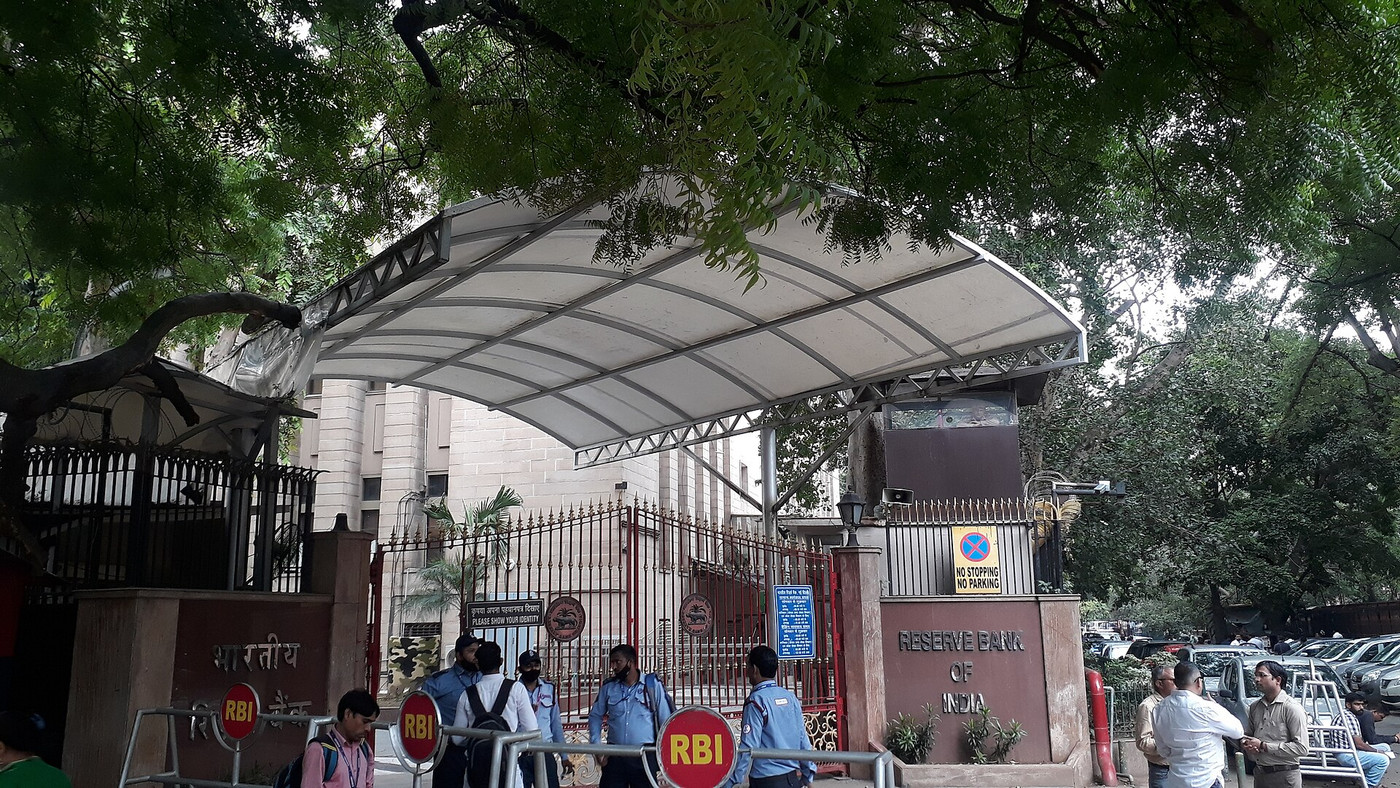
File photo: Pinakpani (CC BY-SA 4.0), via Wikimedia Commons
The RBI's Domestic Money Transfer Directions, 2026, reported on 11 November, keep a Rs 50,000 walk-in cash NEFT limit and Rs 5,000 agent limit.
What Happened
The Reserve Bank of India (RBI) has brought all its rules on small domestic money transfers into a single document, the Reserve Bank of India (Domestic Money Transfer) Directions, 2026, it was reported on Wednesday, 11 November 2026. Under the directions, a walk-in customer at a bank branch can deposit up to Rs 50,000 in cash and send it to a beneficiary's bank account through NEFT, even without holding an account at that bank. The directions keep the existing limits for transfers through business correspondents and ATMs and replace two older circulars, from October 2011 and July 2024.
Key Facts
- Walk-in customers at bank branches can transfer up to Rs 50,000 in cash through the National Electronic Funds Transfer (NEFT) system into a beneficiary's bank account.
- Through business correspondents (BCs), ATMs and other permitted channels, the limit is Rs 5,000 per transaction and Rs 25,000 a month for each sender.
- Where the money is paid out in cash to the receiver, the cap is Rs 10,000 per transaction and Rs 25,000 a month for each beneficiary.
- Senders must be registered using a verified mobile number and a self-certified officially valid document under the RBI's 2025 KYC (Know Your Customer) Directions, and every transaction needs an additional factor of authentication.
- Banks must run velocity checks, alert customers about credits to their accounts, and investigate unusual spikes in credits.
- The directions replace the October 2011 circular that relaxed transfer limits and the July 2024 circular that reviewed the framework.
Why It Matters
Domestic money transfer is the service that lets someone without a bank account, or without an account at a particular bank, send money to family or others in a different part of the country. In India it matters most for migrant workers in cities who send part of their wages home to villages, often in cash, through a bank branch, a neighbourhood business correspondent or an ATM. A business correspondent is an agent, often a local shopkeeper, authorised by a bank to offer basic banking services on its behalf.
Most of these rules are not new. The July 2024 review had already tightened KYC checks and introduced additional authentication, and those rules took effect on 1 November 2024. The 2026 directions put everything in one place, so banks, agents and customers can find all the limits and conditions in a single document instead of across circulars issued 13 years apart.
The safeguards are aimed at fraud. Cash-based transfers by people without a bank relationship are harder to trace, and accounts receiving many small cash deposits from different senders are a known sign of money mule activity, where fraudsters move stolen money through other people's accounts. Velocity checks, which flag an account receiving too many transfers too quickly, are meant to catch that pattern.
Peepals calculation: A sender using a business correspondent or ATM can make at most five full-value transfers a month (Rs 25,000 ÷ Rs 5,000 = 5), while a single walk-in NEFT transfer at a branch can carry ten times as much as one such transaction (Rs 50,000 ÷ Rs 5,000 = 10). A receiver taking cash in hand can get at most two full Rs 10,000 payouts and one of Rs 5,000 in a month before reaching the Rs 25,000 cap (10,000 + 10,000 + 5,000 = 25,000). Our calculation from the reported figures.
| Channel | Per transaction | Monthly cap |
|---|---|---|
| Walk-in cash through NEFT at a branch | up to Rs 50,000 | not reported |
| Business correspondent, ATM and other channels | Rs 5,000 | Rs 25,000 per sender |
| Cash payout to the receiver | Rs 10,000 | Rs 25,000 per beneficiary |
Impact
Short-term: For customers, little changes in practice, since the limits are the same as before. Banks and their business correspondent networks will need to check that their procedures match the single set of directions and the 2025 KYC rules it refers to.
Long-term: One clear rulebook makes it easier for the RBI to supervise and for banks to train agents. The repeated stress on velocity checks and on investigating spikes in credits shows that fraud control, rather than higher limits, is the RBI's priority for this service.
Who is affected: Migrant workers and other people who send money home in cash, families who receive it, bank branches, business correspondents and ATM operators, and banks' fraud and compliance teams.
Key Takeaway
The RBI's Domestic Money Transfer Directions, 2026 keep the Rs 50,000 limit for walk-in cash NEFT transfers and the Rs 5,000 per transaction limit through agents and ATMs, while putting all the rules and fraud checks in one document.
Questions and Answers
How much cash can I send through NEFT without a bank account?
Under the RBI's Domestic Money Transfer Directions, 2026, a walk-in customer at a bank branch can deposit up to Rs 50,000 in cash and send it by NEFT to a beneficiary's bank account, without holding an account at that bank.
What is the limit for sending money through a business correspondent or ATM?
Rs 5,000 per transaction, with a monthly cap of Rs 25,000 for each sender.
Can the receiver collect the money in cash?
Yes, where the bank allows cash payout, but such payouts are capped at Rs 10,000 per transaction and Rs 25,000 a month for each beneficiary.
What documents does a sender need?
The sender must be registered with a verified mobile number and a self-certified officially valid document under the RBI's 2025 KYC Directions, and each transaction needs an additional authentication factor.
Disclaimer: Prepared by the Peepals newsroom from publicly available sources with AI assistance. Information is accurate to the best of our knowledge at the time of publication and may change. Images may be representative. Not professional advice. Report an error via our contact page.
By Neha Kapoor, Economy CorrespondentCovers Economy and more for Peepals Business. All stories by Neha Kapoor
Rentomojo share price jumps 10% to 52-week high despite 63% profit fall
Siemens Energy results: dividend tripled, STOXX 600 closes at record
Get the day's stories in your inbox
Peepals Weekly: the week decoded, free. One email a week, unsubscribe in one click.
Neha Kapoor is a pen name of the Peepals Global Editorial Team, which researches, fact-checks and publishes every story. The portrait is an illustration.