
Piyush Goyal warns EU carbon tax will raise Europe's living costs, inflation
 By Neha KapoorEconomy Correspondent, Peepals Business
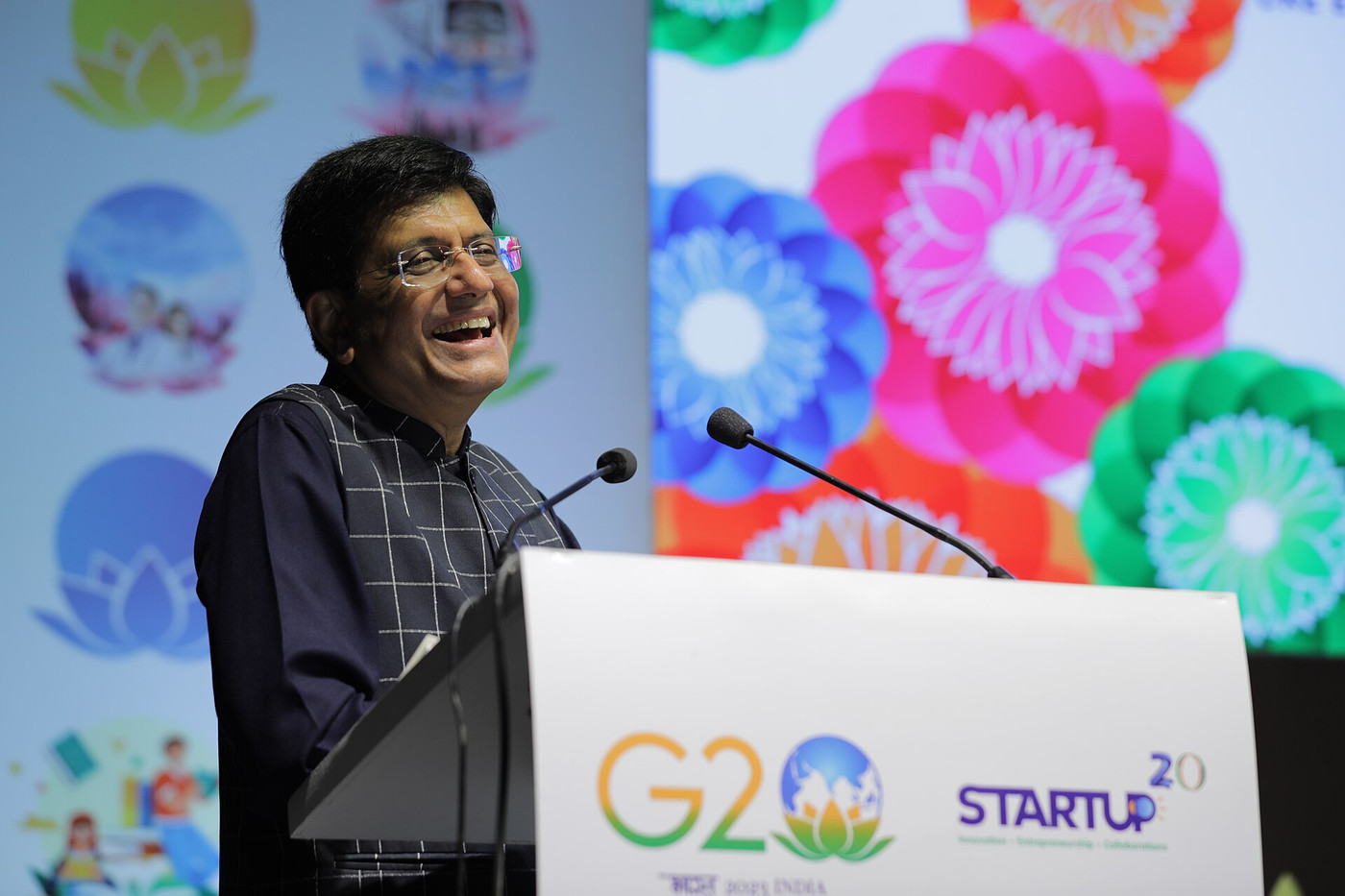
File photo: Shariquejamalworld (CC BY-SA 4.0), via Wikimedia Commons
At the Berlin Global Dialogue on October 23, 2026, Piyush Goyal said the EU's carbon border tax and steel duty would raise Europe's costs and inflation.
What Happened
Commerce and Industry Minister Piyush Goyal warned the European Union on October 23, 2026 that its carbon tax on imports and its high duty on steel would raise living costs and inflation in Europe. Speaking at the Berlin Global Dialogue in Germany, Goyal said the EU was "inviting disaster" by imposing a carbon levy on steel, and argued that such rules could prompt trading partners to answer with measures of their own. The levy he criticised is the EU's Carbon Border Adjustment Mechanism (CBAM).
Key Facts
- When and where: October 23, 2026, at the Berlin Global Dialogue in Berlin.
- Target of criticism: the EU's Carbon Border Adjustment Mechanism and what Goyal described as a 50 per cent EU duty on steel imports.
- Goyal's warning: higher costs of steel, aluminium and cement in Europe would spread to infrastructure such as ports, airports, highways and utilities, pushing up living costs and inflation.
- He said regulatory barriers could invite reciprocal measures from trading partners, which would hurt European businesses.
- He also criticised developed countries for unmet promises on climate finance and technology transfer to developing nations.
- An estimate by the think tank Global Trade Research Initiative suggests CBAM could add the equivalent of 20 to 35 per cent in costs on Indian exports of steel, aluminium and cement to the EU.
Why It Matters
CBAM is the EU's system for charging importers for the carbon emitted while making certain goods abroad, such as steel, aluminium and cement. The idea is that European factories already pay for their emissions under the EU's carbon market, so imports should face a similar cost. The EU calls it a climate tool; India and several other developing countries see it as a trade barrier, because their producers rely more on coal and would face higher charges.
For India, the stakes are concentrated in metals and cement, the sectors Goyal named. Behind the large producers stand supply chains of small and medium firms. If CBAM charges make Indian metal dearer in Europe, buyers may turn to suppliers with cleaner production, or Indian firms may have to accept lower prices. Either way, margins and jobs in the metals chain could be affected.
Goyal's argument in Berlin turned the issue around: he framed the cost as falling on Europe itself. If imported steel, aluminium and cement become more expensive, European builders and utilities pay more, and households eventually feel it through prices and taxes. That framing is aimed at European audiences who are already worried about high energy prices and weak industry.
The speech also matters for India's trade negotiations with the EU. A free trade agreement between the two has been under negotiation, and how CBAM is treated is one of the hardest questions in it. Goyal has said the government is looking for ways to address CBAM for Indian exporters.
For Indian businesses, the practical message is that carbon costs are now part of export pricing. Firms selling metals to Europe will need to measure and report the emissions in their products, and those that can cut emissions may face lower charges.
| Item | Detail |
|---|---|
| Event | Berlin Global Dialogue, October 23, 2026 |
| Speaker | Piyush Goyal, Commerce and Industry Minister |
| EU measure criticised | Carbon Border Adjustment Mechanism (CBAM), steel duty |
| Sectors most exposed in India | Steel, aluminium, cement |
| Estimated cost impact (GTRI) | 20-35 per cent equivalent on these exports |
Impact
Short-term: The remarks raise the political temperature around CBAM as India and the EU continue trade talks. Indian metal exporters face continued uncertainty over how much they will pay to sell in Europe.
Long-term: If the EU does not ease CBAM for developing countries, Indian producers will have stronger reasons to cut emissions, or to sell more to markets without such charges. If trading partners retaliate, as Goyal warned, trade between Europe and other economies could become more costly.
Who is affected: Indian steel, aluminium and cement exporters and the small firms that supply them; European builders and consumers; and negotiators on both sides of the India-EU trade talks.
Key Takeaway
On October 23, 2026, Piyush Goyal told a Berlin audience that the EU's carbon border tax and steel duty would raise Europe's own inflation and living costs, sharpening India's opposition to a measure that weighs on its metal exports.
Questions and Answers
What did Piyush Goyal say about the EU carbon tax?
At the Berlin Global Dialogue on October 23, 2026, Goyal said the EU was "inviting disaster" with its carbon tax on steel, warning that it would raise costs, living expenses and inflation in Europe and could invite retaliation from trading partners.
What is CBAM?
The Carbon Border Adjustment Mechanism is an EU system that charges importers for the carbon emitted in producing goods such as steel, aluminium and cement outside the EU, to match the carbon costs European producers pay.
How does CBAM affect Indian exports?
It makes Indian steel, aluminium and cement costlier to sell in the EU. The Global Trade Research Initiative estimates the effect at the equivalent of 20 to 35 per cent on these exports.
Does this affect the India-EU trade deal?
Yes. How CBAM applies to Indian goods is one of the difficult issues in the India-EU free trade talks, and India is seeking ways to shield its exporters.
Disclaimer: Prepared by the Peepals newsroom from publicly available sources with AI assistance. Information is accurate to the best of our knowledge at the time of publication and may change. Images may be representative. Not professional advice. Report an error via our contact page.
By Neha Kapoor, Economy CorrespondentCovers Economy and more for Peepals Business. All stories by Neha Kapoor
Telangana cotton buying opens as Adilabad traders pay Rs 9,260, above MSP
Coforge Q2 results: revenue up 53.6%, record $1.04 billion order intake
Neha Kapoor is a pen name of the Peepals Global Editorial Team, which researches, fact-checks and publishes every story. The portrait is an illustration.