
Bank of Korea holds rate at 3% after two hikes, signals more tightening
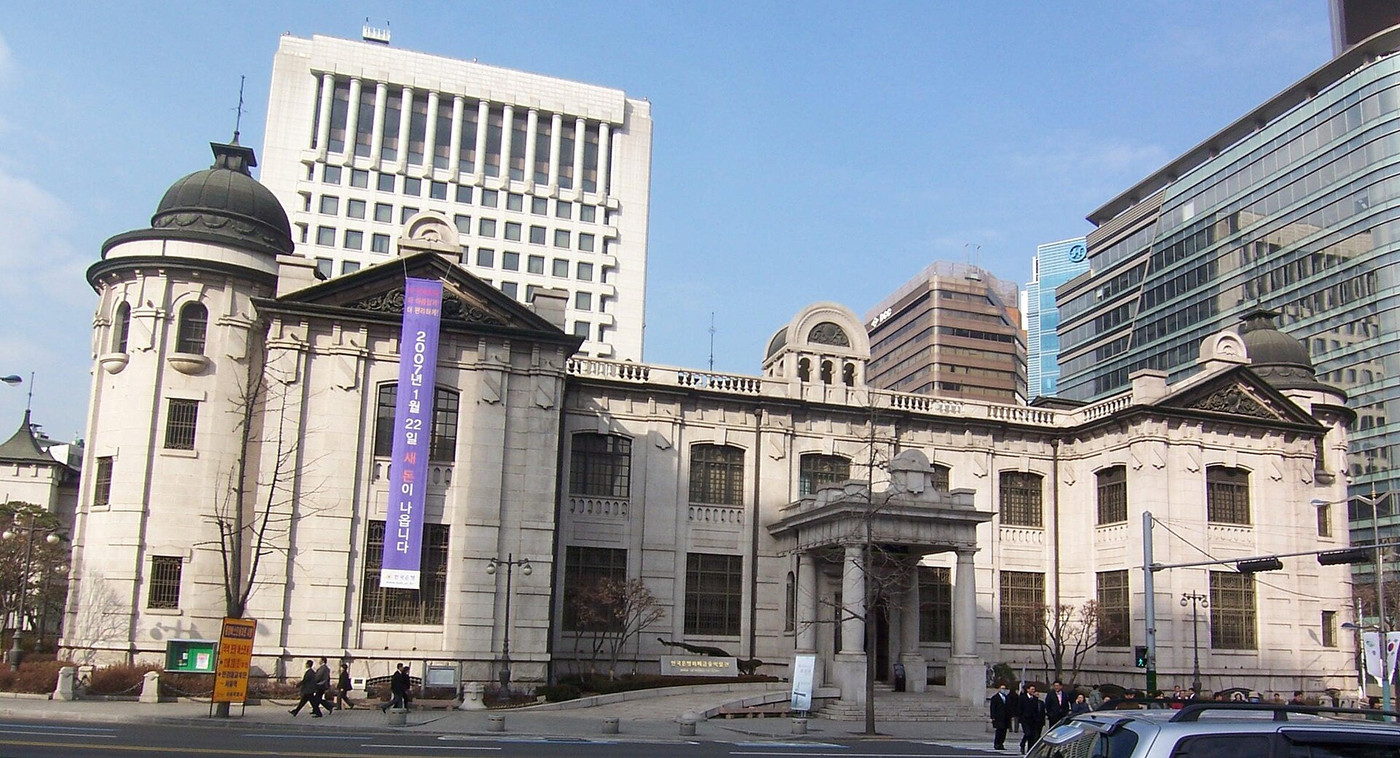
File photo: Me (Public domain), via Wikimedia Commons
The Bank of Korea kept its base rate at 3.00% on October 22, 2026, pausing after hikes in July and August, with inflation at 2.9% and growth stronger than expected.
What Happened
The Bank of Korea, South Korea's central bank, kept its base rate unchanged at 3.00% on Thursday, October 22, 2026. The decision was unanimous and followed two quarter-point increases in July and August, the bank's first back-to-back rate rises in more than three years. The bank said it expects growth this year and next to be considerably higher than it had earlier projected, and markets read the pause as a signal that another increase could come at its next meeting in November.
Key Facts
- Decision: base rate held at 3.00% on October 22, 2026, a unanimous vote of the bank's monetary policy board.
- Recent moves: the rate was raised by 0.25 percentage point in July and again in August 2026.
- Inflation: consumer prices rose 2.9% in September from a year earlier, above the bank's 2% target.
- Growth: the bank said growth for 2026 and 2027 is expected to be considerably higher than its previous projections.
- Housing: the decision came after President Lee called for more housing supply, as officials try to cool property prices in Seoul.
- Next meeting: November 26, 2026, which analysts quoted in Korean and international reports see as a likely date for a rise to 3.25%.
- Governor: the bank is led by Governor Hyun Song Shin, according to Korean reports of the decision.
Why It Matters
A central bank raises its main interest rate to slow borrowing and spending when prices are rising too fast, and pauses to see how earlier increases are working through the economy. The Bank of Korea's base rate is the rate it uses to guide what banks charge each other for short-term loans, and it feeds through to mortgages, business loans and savings rates across the country. By holding after two increases, the bank is giving those hikes time to take effect while keeping its options open.
The pause is described by market analysts as hawkish, meaning it leans towards more tightening rather than towards cuts. Inflation at 2.9% is well above target, and the bank itself says the economy is growing faster than it expected. Those two facts together usually push a central bank to keep rates high or raise them further. Property is the third pressure: the government wants more homes built in Seoul, where prices have risen sharply, and higher rates are one way to cool demand for home loans.
For Indian readers, South Korea's choice is part of a wider turn in Asia. The Reserve Bank of India raised its repo rate by 0.25 percentage point to 5.50% at its Monetary Policy Committee meeting on October 5 to 7, and shifted to a stance of calibrated tightening, as the network reported earlier. Several central banks in the region are now dealing with higher oil prices and a strong US dollar at the same time, which push up import costs and weaken local currencies. When major Asian economies keep rates high, investors compare returns across the region, and that can affect how much foreign money flows into Indian shares and bonds.
The difference in levels is worth reading carefully. India's rate is higher than South Korea's mainly because India's inflation target is higher, at 4% against 2%, and its economy has historically run with faster price rises. What the two have in common is direction: both central banks have stopped talking about cuts and are focused on keeping inflation in check, which matters for anyone in either country planning to borrow in the coming months.
| | Item | South Korea | India | |
|---|---|---|
| | Main policy rate | 3.00% (held October 22) | 5.50% (raised in October) | |
| | Latest inflation | 2.9% in September | not covered here | |
| | Inflation target | 2% | 4% | |
| | Recent direction | two hikes, then a pause | hike, stance tightened | |
Impact
Short-term: Korean borrowers keep paying the higher rates set in July and August, with no further rise for now. Currency and bond traders will focus on the November 26 meeting; any sign that inflation is easing could reduce the chance of another hike.
Long-term: If growth stays strong and prices keep rising, the Bank of Korea is likely to raise rates again, which would make loans and mortgages dearer for households already carrying high debt. A cooler property market would ease one of the government's main worries but could slow construction and consumer spending.
Who is affected: South Korean households with home loans and businesses that borrow, savers who earn more on deposits, foreign investors in Korean bonds, and Asian markets, including India, that compete for the same investment money.
Key Takeaway
The Bank of Korea held its rate at 3.00% on October 22, 2026, but with inflation at 2.9% and growth beating forecasts, its next move is more likely to be up than down.
Questions and Answers
What did the Bank of Korea decide on October 22, 2026?
It kept its base rate at 3.00% in a unanimous decision, pausing after raising the rate by 0.25 percentage point in both July and August 2026.
Why did the Bank of Korea not raise rates again?
The bank is giving its two recent increases time to take effect. It still faces inflation of 2.9%, above its 2% target, and stronger-than-expected growth, so analysts see a pause rather than the end of tightening.
When is the next Bank of Korea rate decision?
The next meeting is on November 26, 2026. Analysts in Korean and international reports see a rise to 3.25% as possible at that meeting.
Does the Korean decision affect India?
Not directly. It is part of a wider tightening in Asia that includes the Reserve Bank of India's October hike to 5.50%, and higher rates across the region can shift where foreign investors put their money, including Indian shares and bonds.
Disclaimer: Prepared by the Peepals newsroom from publicly available sources with AI assistance. Information is accurate to the best of our knowledge at the time of publication and may change. Images may be representative. Not professional advice. Report an error via our contact page.
Sourced and fact-checked by the Peepals Global Editorial Team
Reported, fact-checked and published by the Peepals Global Editorial Team.