
Public sector bank stake sale: Centre plans 75% cap in four banks

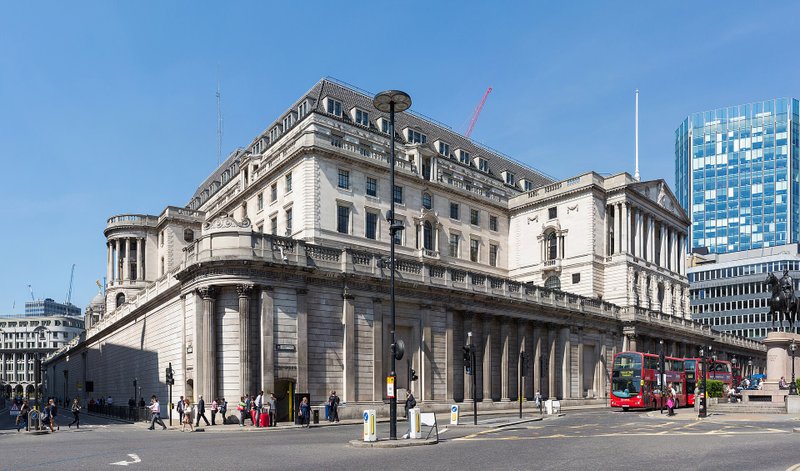
Representative image: pprasantasahooo / Pixabay
The Centre plans to cut its stake in Central Bank of India, UCO Bank, Punjab & Sind Bank and Indian Overseas Bank to 75% to meet Sebi's public shareholding rule, officials said on 23 October 2026.
What Happened
The government's public sector bank privatisation plan in India has a new, narrower step: the Centre is planning to bring its shareholding in four state-run lenders down to 75%, according to reports published on 23 October 2026 that cite an official. The four are Central Bank of India, UCO Bank, Punjab & Sind Bank and Indian Overseas Bank (IOB). The sales are meant to meet the Securities and Exchange Board of India (Sebi) rule that at least 25% of a listed company's shares must be held by the public. The official said the government would sell through the offer for sale (OFS) route, depending on market conditions.
Key Facts
- Banks named: Central Bank of India, UCO Bank, Punjab & Sind Bank and Indian Overseas Bank.
- Target: government holding of 75% in each, so that public shareholders own at least 25%.
- These four banks had been exempted from the minimum public shareholding (MPS) rule until August 2026, according to the reports.
- Route: offer for sale on the stock exchanges, timed to market conditions, according to the official quoted.
- The government holds more than 90% in IOB, UCO Bank and Punjab & Sind Bank, so those three need bigger sales than Central Bank of India, according to the reports.
- The reports describe the target period as roughly one year. No formal notification or date for the first sale has been announced.
Why It Matters
Most listed companies in India must keep at least a quarter of their shares with the public. The rule exists so that shares trade freely, prices are set by a wide pool of investors, and a single owner cannot dominate a stock completely. Public sector banks have been given repeated extensions because the government held almost all their shares after years of capital infusions to clean up bad loans. With the latest exemption having run to August 2026, the four lenders are now the most visible gap between the rule and practice.
An offer for sale is different from a fresh share issue. In an OFS, the government sells shares it already owns, and the money goes to the government, not to the bank. In a qualified institutional placement (QIP), the bank itself issues new shares to institutions and keeps the capital. Both reduce the government's percentage, but only a QIP strengthens the bank's balance sheet directly. The government has used both routes before; reports note a small OFS in IOB in December 2025.
The plan comes soon after the Union Cabinet cleared the sale of a controlling stake in IDBI Bank, which has renewed talk of wider privatisation. Reports say NITI Aayog had at one point identified Central Bank of India and IOB as possible candidates. But the step now described is about compliance with Sebi's rule: at 75%, the government would still own three of every four shares and control all four banks. Reports also say the Centre's longer-term aim is a smaller number of large state-owned banks.
For investors, a large supply of shares from the government can weigh on prices around the time of each sale, because an OFS is usually priced at a discount to attract buyers. Over time, a larger free float can make these shares easier to trade and more likely to be included in market indices.
Impact
Short-term: Shares of the four banks may react to every report on timing and pricing of the sales. No date has been fixed, and the official said market conditions would decide.
Long-term: Bringing the four banks into line with the 25% public shareholding rule would close one of the oldest exemptions in Indian markets and may make later decisions, such as mergers or privatisation, easier to carry out. Any move beyond 75% would need separate decisions and, for some steps, changes to the laws under which these banks were nationalised.
Who is affected: Shareholders and employees of Central Bank of India, UCO Bank, Punjab & Sind Bank and IOB; institutional investors who would buy in the sales; and taxpayers, since OFS proceeds go to the Centre.
Key Takeaway
The Centre plans to sell shares in four state-run banks to bring its holding down to 75%, a step to meet Sebi's public shareholding rule rather than a decision to privatise them.
Questions and Answers
What is the latest public sector bank privatisation plan in India?
Reports on 23 October 2026, citing an official, say the Centre plans to reduce its stake in Central Bank of India, UCO Bank, Punjab & Sind Bank and Indian Overseas Bank to 75%. This is a sale of a minority of shares to meet Sebi's 25% public shareholding rule, not a transfer of control.
Why must the government sell shares in these banks?
Sebi requires listed companies to have at least 25% of their shares held by the public. These four banks had an exemption until August 2026, and the government holds more than 75% in each of them.
How will the stake be sold?
Through an offer for sale on the stock exchanges, according to the official quoted, with timing set by market conditions. In an offer for sale the money goes to the government, not to the bank.
Will the government lose control of these banks?
No. At 75%, the government would still own three of every four shares and would remain in control. Any further reduction would need separate decisions.
Disclaimer: Prepared by the Peepals newsroom from publicly available sources with AI assistance. Information is accurate to the best of our knowledge at the time of publication and may change. Images may be representative. Not professional advice. Report an error via our contact page.
Sourced and fact-checked by the Peepals Global Editorial Team
Bonfiglioli Transmissions lists flat at Rs 586 despite 46-times IPO demand
Gold rate today: MCX gold slips below Rs 1.42 lakh, silver below Rs 2 lakh
Reported, fact-checked and published by the Peepals Global Editorial Team.