
Kanchipuram temple chariot enters Dalit colony after 42 years
 By Ishita SenCulture & Heritage Editor, Peepals Sanskriti
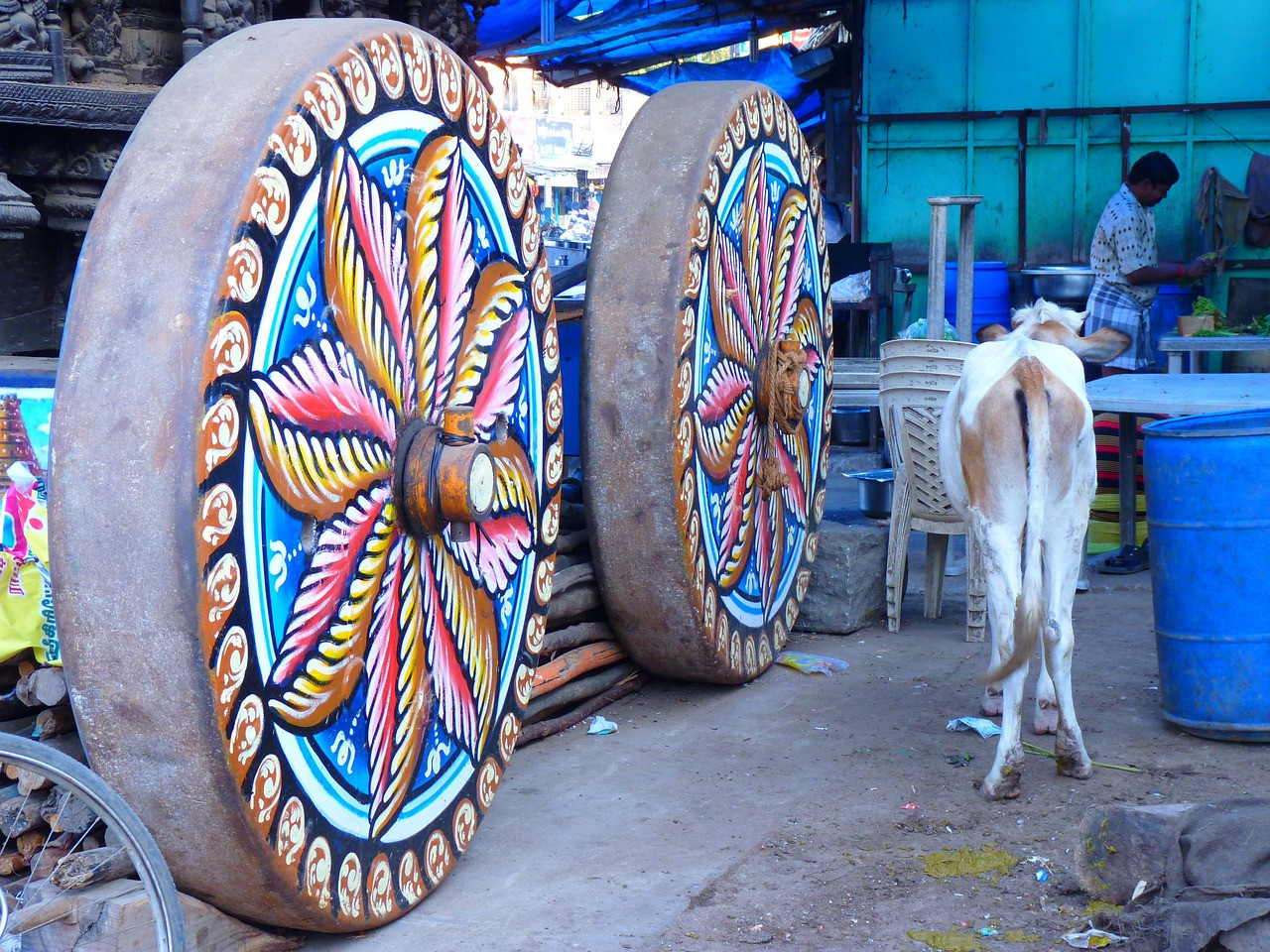
Representative image: LoggaWiggler / Pixabay
On 25 October 2026 the Muthu Kolakki Amman temple chariot at Puthagaram, Kanchipuram, entered the Dalit colony for the first time in 42 years.
What Happened
On Sunday, 25 October 2026, the temple chariot of the Arulmigu Sri Muthu Kolakki Amman Temple in Puthagaram village, near Walajabad in Tamil Nadu's Kanchipuram district, was pulled through the village's Dalit residential area for the first time in 42 years. The procession was a trial run held on the directions of the district administration, and two state ministers, Welfare of Non-Resident Tamils Minister Thenarasu and Forest Minister Ranjith Kumar, flagged it off. The run follows a Madras High Court order of November 2025 that directed the chariot to enter the locality.
Key Facts
- The chariot belongs to the Arulmigu Sri Muthu Kolakki Amman Temple at Puthagaram, near Walajabad in Kanchipuram district.
- The trial run on 25 October 2026 was held on the directions of the district administration and flagged off by Ministers Thenarasu and Ranjith Kumar.
- More than 200 police personnel were deployed, with District Superintendent of Police Aravindan overseeing security.
- Residents offered prayers and helped pull the chariot rope to drums and chenda melam, a percussion ensemble.
- The Madras High Court, in a ruling by Justice P.B. Balaji reported on 7 November 2025, had ordered that the chariot route include the colony.
- The court held that untouchability, abolished by Article 17 of the Constitution, is abolished "in letter and spirit", not only in its physical form.
Why It Matters
A temple car festival, known in Tamil as ther thiruvizha, is one of the most public moments in the life of a village temple. According to temple tradition, the deity is taken out of the sanctum and carried through the streets on a large wooden chariot so that every household can receive darshan, the sight of the deity, at its own doorstep. Devotees from the village pull the thick ropes together. Because the route decides which streets the deity visits, it carries social as well as religious meaning.
At Puthagaram, residents of the Dalit colony had asked that the chariot also pass through their street. Some other residents objected, and the disagreement over the route reached the High Court. In the court record, the Kanchipuram District Collector filed a status report saying there was no ban on Scheduled Caste devotees entering the temple or taking part in the festival. Respondents in the case argued that the procession route had stayed the same for decades and that changing it would cause complications. The Collector concluded that extending the route through the colony was feasible.
Justice P.B. Balaji ruled for the petitioner. The judgment, as reported in legal publications, said that no street is unworthy of the chariot or of the god it carries, and that "faith cannot be fenced by caste or confined by prejudice". The court tied this to Article 17 of the Constitution, which abolishes untouchability and forbids its practice in any form. The order was passed nearly a year ago; Sunday's run is the first time it has been carried out on the ground.
The district administration, not the temple alone, directed the trial run, with ministers present and a large police deployment, an approach meant to prevent friction and to make the new route a settled part of the festival.
| Point | Detail |
|---|---|
| Temple | Arulmigu Sri Muthu Kolakki Amman Temple, Puthagaram |
| Location | Near Walajabad, Kanchipuram district, Tamil Nadu |
| Court order | Madras High Court, Justice P.B. Balaji, reported 7 November 2025 |
| Trial run | Sunday, 25 October 2026, after a gap of 42 years |
| Security | More than 200 police personnel |
Impact
Short-term: The trial run sets the route that the chariot can take through the Dalit colony. The next test is whether the full festival procession follows it without dispute.
Long-term: If the new route becomes the normal route, every household in Puthagaram will be part of the festival in the same way. The case also adds to a line of Madras High Court rulings that treat equal participation in public temple festivals as a constitutional matter, which other villages and district administrations may look to when similar disputes arise.
Who is affected: Residents of the Dalit colony at Puthagaram, who now see the deity at their own street; the other devotees and the temple's administrators, who share the festival; the Kanchipuram district administration and police, who must keep the peace; and temple communities elsewhere in Tamil Nadu that face similar questions about procession routes.
Key Takeaway
The Muthu Kolakki Amman temple chariot entered Puthagaram's Dalit colony on 25 October 2026 for the first time in 42 years, carrying out a Madras High Court order that the procession route must not exclude any street on the basis of caste.
Questions and Answers
Where did the temple chariot enter a Dalit locality after 42 years?
In Puthagaram village, near Walajabad in Kanchipuram district of Tamil Nadu. The chariot of the Arulmigu Sri Muthu Kolakki Amman Temple was taken through the village's Dalit residential area on Sunday, 25 October 2026, in a trial run directed by the district administration.
Why did the chariot go through the colony now?
The Madras High Court, in a ruling by Justice P.B. Balaji reported on 7 November 2025, ordered that the chariot's route include the colony after a petition by Selvaraj, a Scheduled Caste resident of the village. The order had not been carried out until this trial run.
What did the High Court say in its order?
The court held that no street is unworthy of the chariot or the god it carries, and that "faith cannot be fenced by caste or confined by prejudice". It linked the ruling to Article 17 of the Constitution, which abolishes untouchability in all forms.
Who attended the trial run and how was it managed?
Ministers Thenarasu and Ranjith Kumar flagged it off. More than 200 police personnel were deployed under District Superintendent of Police Aravindan.
Disclaimer: Prepared by the Peepals newsroom from publicly available sources with AI assistance. Information is accurate to the best of our knowledge at the time of publication and may change. Images may be representative. Not professional advice. Report an error via our contact page.
By Ishita Sen, Culture & Heritage EditorCovers Culture & Heritage and more for Peepals Sanskriti. All stories by Ishita Sen
WHO launches traditional medicine working papers, starting with cupping training
ASI resumes Dronasagar dig in Kashipur; Shunga-Kushan brick found
Ishita Sen is a pen name of the Peepals Global Editorial Team, which researches, fact-checks and publishes every story. The portrait is an illustration.