
Manchirevula inscriptions: Brahmi, Telugu-Kannada letters found in Hyderabad hills
 By Devansh TiwariKnowledge Systems Writer, Peepals Sanskriti
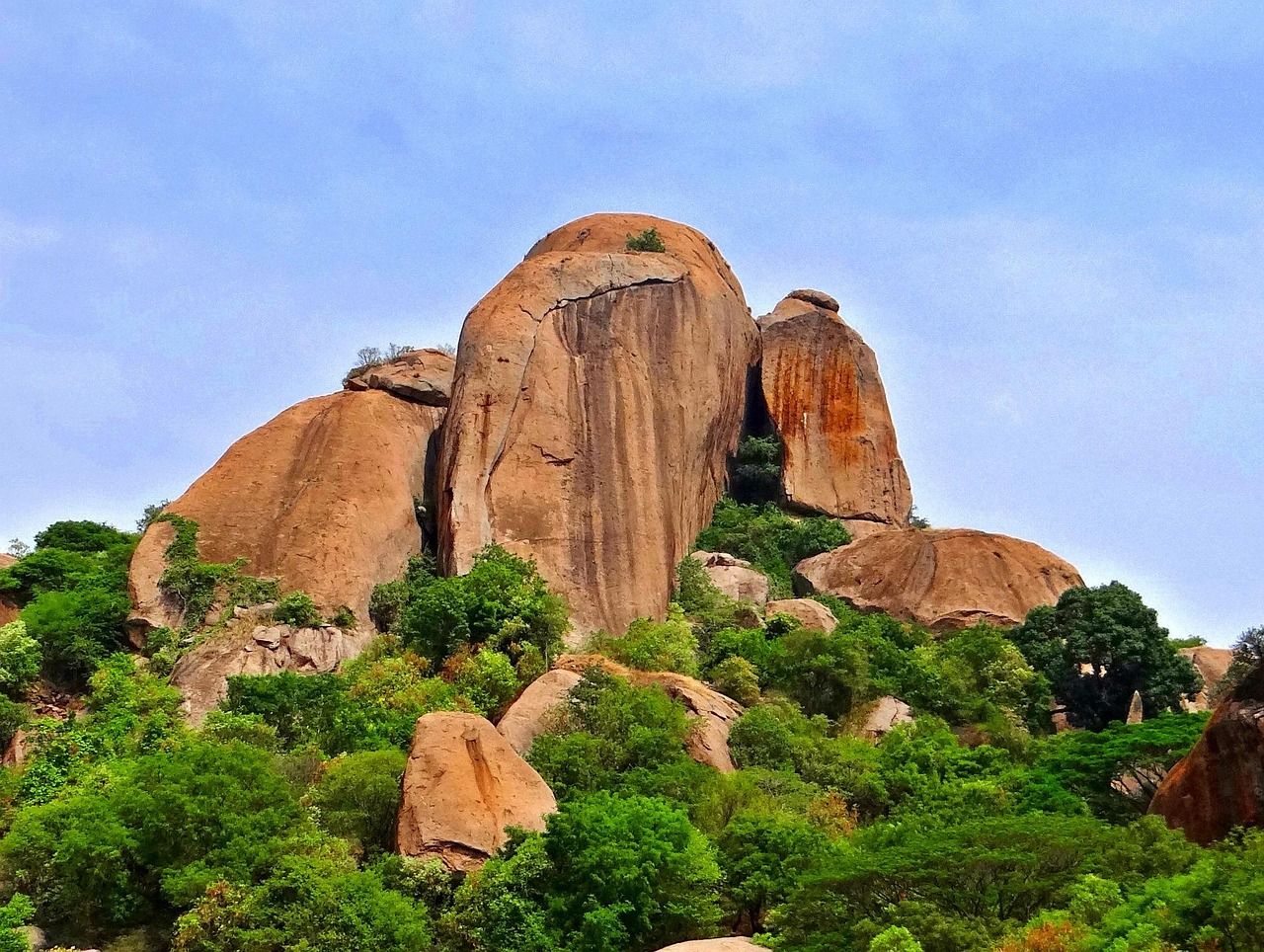
Representative image: sarangib / Pixabay
Faded red inscriptions found on 21 November 2026 in Hyderabad's Manchirevula hills are read as first-century Brahmi and seventh-century Telugu-Kannada.
Manchirevula inscriptions: what happened
Heritage enthusiasts have found faded red-coloured inscriptions on a boulder at an ancient habitation site in the Manchirevula hills of Hyderabad, Telangana. The find was made on Saturday, 21 November 2026, by members of the Kotha Telangana Charitra Brundam, Save Rocks and Climate Front Telangana. Sriramoju Haragopal, president of the Brundam, has given a preliminary reading of traces of five inscriptions, one of which he dates to first-century Brahmi script and the others to the seventh-century Telugu-Kannada script.
Manchirevula inscriptions: key facts
- Place: a hill next to the Ghar-e-Mubarak Dargah hill, near the Manchirevula Forest Trek Park, Hyderabad.
- Date of find: Saturday, 21 November 2026.
- Found by: members of the Kotha Telangana Charitra Brundam, a heritage research group, with Save Rocks and Climate Front Telangana; the site was identified by Kavali Chandrakanth of the Brundam.
- Inscriptions: traces of five, painted in red on a boulder wall.
- Reading by Sriramoju Haragopal: one letter, read as 'Vi', in first-century Brahmi; four others, read as 'Ta', 'Tarah', '(Ku)shta Charu' and 'Duru', in seventh-century Telugu-Kannada script.
- Condition: rain has washed away much of the pigment, making the letters hard to read.
- Site background: the hill is already known for rock art and Palaeolithic (Old Stone Age) stone tools.
Manchirevula inscriptions: why it matters
Brahmi is the ancestor of most scripts used in India and South-East Asia today, including Devanagari, Telugu, Kannada and Tamil. Early Brahmi letters, from around the time of the Mauryas and soon after, are among the oldest writing found in the subcontinent. Finding even a single Brahmi letter at a site near a modern city suggests that people who could write, or who used written marks, were present there about two thousand years ago.
The Telugu-Kannada script, which developed out of Brahmi in the Deccan, was shared by both languages before the two scripts separated in later centuries. Seventh-century letters in this script at the same spot suggest the site was visited or used across several hundred years. Short labels like these are often names, marks left by travellers or monks, or notes connected to shelters, rather than long texts.
The find also adds to a pattern. The Brundam has documented similar short label inscriptions and stray letters, ranging from Brahmi to Telugu-Kannada, at other sites in Telangana, including Pandavulagutta, Wargal and Seethammaloddi. Together they help researchers map how writing spread across the region and how long such hill sites remained in use.
It is important to keep the limits in mind. The readings are preliminary and come from one researcher's study of faded traces. They have not yet been examined or published by the Archaeological Survey of India or the state archaeology department, and paint-based inscriptions are harder to date than carved ones. A formal survey would be needed to confirm the readings and protect the site.
Peepals calculation: If the Brahmi letter belongs to the first century and the Telugu-Kannada letters to the seventh, the inscriptions on the same rock span roughly 600 years (7th century minus 1st century). The oldest letter would be close to 1,900 to 2,000 years old. Our calculation from the reported figures.
| Inscription read as | Script | Period (preliminary) |
|---|---|---|
| Vi | Brahmi | 1st century |
| Ta | Telugu-Kannada | 7th century |
| Tarah | Telugu-Kannada | 7th century |
| (Ku)shta Charu | Telugu-Kannada | 7th century |
| Duru | Telugu-Kannada | 7th century |
Manchirevula inscriptions: impact
Short-term: The find draws attention to the Manchirevula hills as a heritage site, and the groups involved are likely to press for its documentation and protection from quarrying and construction.
Long-term: If experts confirm the readings, the site could join the list of early inscription sites in Telangana and help scholars trace the history of writing and settlement around Hyderabad.
Who is affected: Historians, epigraphists and archaeologists; heritage groups and trekkers who use the Manchirevula area; the Telangana heritage and archaeology departments; and residents of a fast-growing part of Hyderabad.
Manchirevula inscriptions: key takeaway
Visitors to the Manchirevula hills should leave the painted boulder untouched, since the faded letters still await expert study and are easily damaged.
Manchirevula inscriptions: questions and answers
What was found in the Manchirevula hills?
Faded red-painted inscriptions on a boulder wall at an ancient habitation site near the Manchirevula Forest Trek Park in Hyderabad, found on 21 November 2026 by local heritage groups.
How old are the Manchirevula inscriptions?
According to a preliminary reading by heritage researcher Sriramoju Haragopal, one letter is in first-century Brahmi and four are in seventh-century Telugu-Kannada script. These dates have not yet been confirmed by an official archaeology body.
What is Brahmi script?
Brahmi is one of the oldest writing systems in India and the ancestor of most modern Indian scripts, including Devanagari, Telugu, Kannada and Tamil.
Who found the inscriptions?
Members of the Kotha Telangana Charitra Brundam, Save Rocks and Climate Front Telangana. The site was identified by Kavali Chandrakanth of the Brundam.
Disclaimer: Prepared by the Peepals newsroom from publicly available sources with AI assistance. Information is accurate to the best of our knowledge at the time of publication and may change. Images may be representative. Not professional advice. Report an error via our contact page.
By Devansh Tiwari, Knowledge Systems WriterCovers Knowledge Systems and more for Peepals Sanskriti. All stories by Devansh Tiwari
Lucknow tribal festival: folk dances from 13 states at UP Darshan Park
Surajkund Millet Festival 2026: free entry, 100 stalls from November 27
Your week ahead, every Sunday. Free.
Exam and result dates, IPOs opening, scheme deadlines, government holidays and the RBI decision for the next 7 days, plus the week's top stories. One email a week, unsubscribe in one click.
Devansh Tiwari is a pen name of the Peepals Global Editorial Team, which researches, fact-checks and publishes every story. The portrait is an illustration.
Responsible for this story: the Peepals Global Editorial Team, led by editor Prashant Sonar. How we report