
TKDL MoU: CSIR, Education Ministry's IKS Division join hands on traditional knowledge
 By Devansh TiwariKnowledge Systems Writer, Peepals Sanskriti
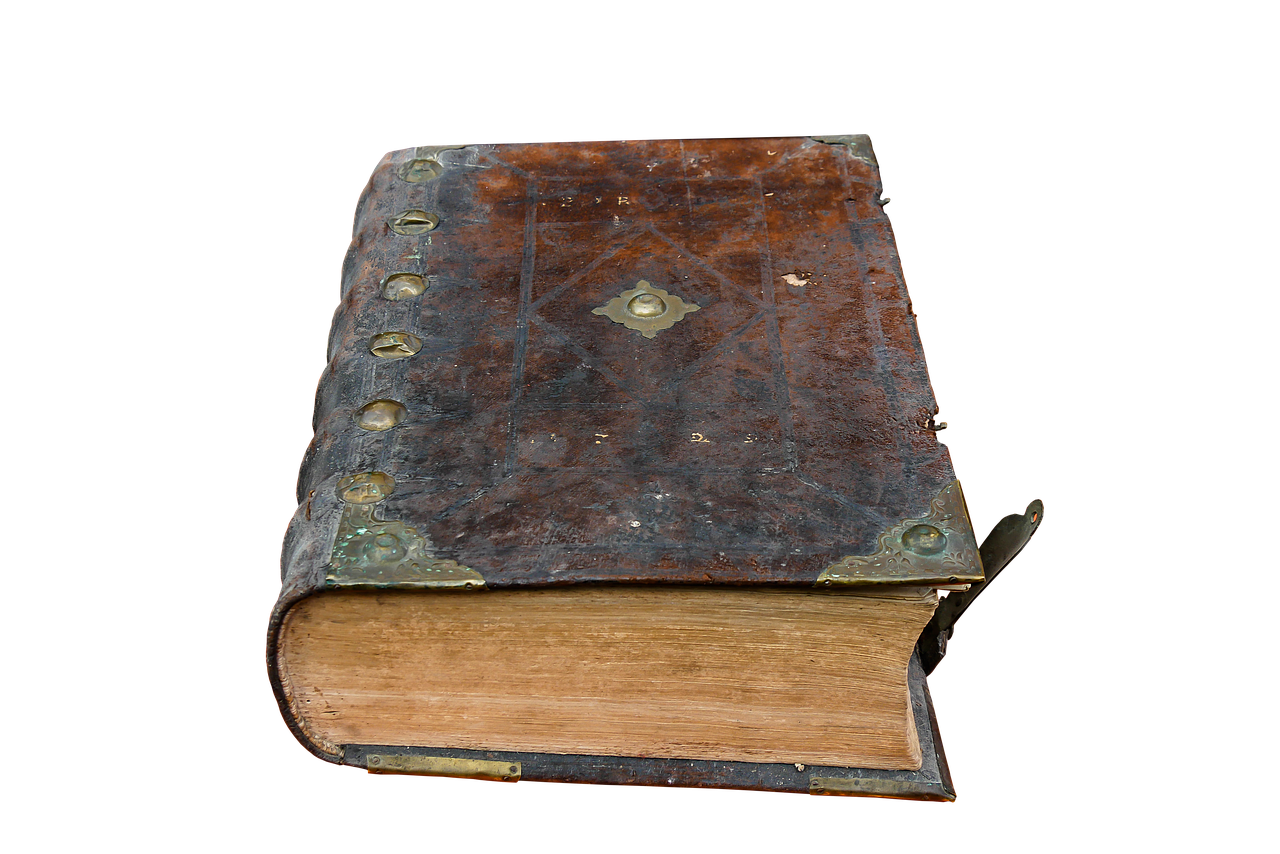
Representative image: garten-gg / Pixabay
CSIR's Traditional Knowledge Digital Library and the Education Ministry's IKS Division signed an MoU on 19 November 2026 on traditional knowledge and IPR.
TKDL: what happened
The Traditional Knowledge Digital Library (TKDL) unit of the Council of Scientific and Industrial Research and the Indian Knowledge Systems (IKS) Division of the Ministry of Education signed a memorandum of understanding (MoU) in New Delhi on Thursday, 19 November 2026. According to the PIB release, the agreement is meant to strengthen their work together on traditional knowledge, intellectual property rights, people's rights over traditional knowledge, and the TKDL itself. Prof. Ganti S. Murthy of IIT Indore, National Coordinator of the IKS Division, signed for the division, and Dr Viswajanani J. Sattigeri, Scientist-H and Head of the CSIR-TKDL Unit, signed for CSIR.
TKDL: key facts
- Date: Thursday, 19 November 2026, New Delhi.
- Parties: the CSIR-TKDL Unit and the IKS Division of the Ministry of Education.
- Signatories: Prof. Ganti S. Murthy (IKS Division) and Dr Viswajanani J. Sattigeri (CSIR-TKDL).
- Areas covered: traditional knowledge, intellectual property rights (IPR), the rights of communities over their knowledge, and the TKDL.
- The TKDL holds information on more than 5.2 lakh formulations and practices from Ayurveda, Unani, Siddha, Sowa Rigpa and Yoga.
- Patent offices get access to the full database only under non-disclosure agreements; at least 18 offices worldwide have signed.
- CSIR credits TKDL evidence with more than 375 patent applications worldwide being revoked, rejected, amended, withdrawn or abandoned.
TKDL: why it matters
The two bodies do very different jobs. The TKDL is a defensive tool. It records traditional formulations and practices from old Indian texts in a structured, translated form so that patent examiners abroad can see that a "new" invention based on, say, a herbal remedy is already described in India's literature. That is how India fights what is often called biopiracy: patents granted on knowledge that communities have used for centuries.
The IKS Division, set up in 2020 under the Ministry of Education and based at AICTE, works on the other side: bringing Indian knowledge traditions into research, teaching and textbooks through IKS centres, fellowships and grants. Students and researchers in that network are now producing new work on old texts, from mathematics and astronomy to medicine and architecture.
Putting the two together makes sense. Research funded through the IKS network can draw on the TKDL's documentation, while the TKDL can benefit from scholars who read source texts in Sanskrit, Tamil and other classical languages. The MoU's mention of people's rights over traditional knowledge also matters: the question of who benefits when old knowledge becomes a product, and how communities are recognised, is one of the hardest in this field.
Belief and evidence should be kept apart here. Recording that a formulation exists in a classical text proves that the knowledge is old; it does not prove that the remedy works. The TKDL's role is to establish prior art for patent law, not to certify medical claims.
Peepals calculation: If the TKDL's evidence has helped stop or change more than 375 patent applications across at least 18 patent offices, that works out to roughly 21 applications for every office with access (375 ÷ 18 ≈ 20.8), a rough average, since the cases are not spread evenly. Our calculation from the reported figures.
Peepals timeline: The IKS Division was set up in October 2020. Brazil's patent office signed a TKDL access agreement in February 2026, and IP Australia signed one in July 2026. On 19 November 2026 the TKDL unit signed this MoU with the IKS Division.
| Body | Role |
|---|---|
| CSIR-TKDL Unit | Documents traditional knowledge to block wrong patents |
| IKS Division, Ministry of Education | Funds research and teaching on Indian knowledge systems |
| Patent offices with access | Use TKDL as prior art under non-disclosure agreements |
TKDL: impact
Short-term: The agreement gives researchers in the IKS network a formal route to work with the TKDL team on documentation and IPR questions.
Long-term: Joint work could widen the database beyond medicine and yoga and build more Indian expertise in protecting traditional knowledge in patent law.
Who is affected: Researchers and students in IKS centres; Ayush practitioners and makers; traditional knowledge-holding communities; and patent examiners who rely on TKDL records.
TKDL: key takeaway
Watch for joint projects from this MoU: they will show whether India's teaching of traditional knowledge and its legal protection begin to work as one system.
TKDL: questions and answers
What is the TKDL MoU signed on 19 November 2026?
It is an agreement between CSIR's Traditional Knowledge Digital Library unit and the Ministry of Education's IKS Division to work together on traditional knowledge, intellectual property rights and communities' rights over that knowledge.
What does the Traditional Knowledge Digital Library do?
It records more than 5.2 lakh traditional formulations and practices so that patent offices can check them as prior art and avoid granting patents on knowledge that already exists.
Who can see the full TKDL database?
Patent examiners at offices that have signed non-disclosure agreements with CSIR; at least 18 patent offices worldwide have access.
Does inclusion in TKDL prove a remedy works?
No. It shows that the knowledge is documented in traditional texts; it is not a test of whether the remedy is safe or effective.
Disclaimer: Prepared by the Peepals newsroom from publicly available sources with AI assistance. Information is accurate to the best of our knowledge at the time of publication and may change. Images may be representative. Not professional advice. Report an error via our contact page.
By Devansh Tiwari, Knowledge Systems WriterCovers Knowledge Systems and more for Peepals Sanskriti. All stories by Devansh Tiwari
Turmeric for knee pain: Cochrane review finds little or no relief
Janjatiya Gaurav Diwas 2026: Aizawl museum, Itanagar institute among 246 tribal projects
Your week ahead, every Sunday. Free.
Exam and result dates, IPOs opening, scheme deadlines, government holidays and the RBI decision for the next 7 days, plus the week's top stories. One email a week, unsubscribe in one click.
Devansh Tiwari is a pen name of the Peepals Global Editorial Team, which researches, fact-checks and publishes every story. The portrait is an illustration.
Responsible for this story: the Peepals Global Editorial Team, led by editor Prashant Sonar. How we report