
Christine Lagarde to leave ECB on February 7, nine months early
 By Priya NairLeadership & Growth Editor, Peepals Shakti
Representative image: fotoblend / Pixabay
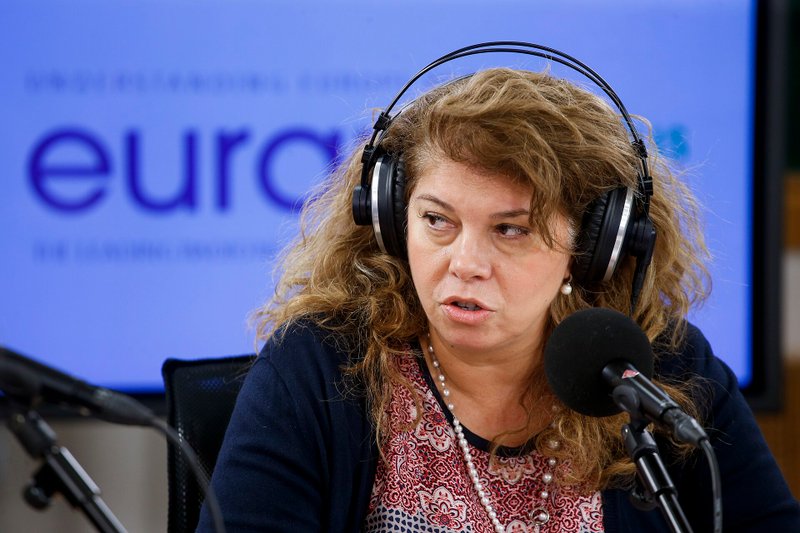
Christine Lagarde, the first woman to lead the European Central Bank, said on October 29, 2026 she will step down on February 7, 2027.
What Happened
Christine Lagarde, the first woman to lead the European Central Bank (ECB), will step down as its president on February 7, 2027, about nine months before her eight-year term was due to end, the bank announced on Thursday, October 29, 2026. The ECB said she had informed its Governing Council and the President of the European Council, António Costa, of her decision. Her term had been set to run until October 31, 2027.
Key Facts
- Lagarde has led the ECB since November 1, 2019, when she succeeded Mario Draghi; she was the first woman in the post.
- Before that she was the first woman to head the International Monetary Fund (IMF), from July 2011 until she resigned in 2019 after being nominated to the ECB.
- The ECB said its Governing Council thanked her and gave her a long standing ovation.
- Costa praised her work as ECB president since November 2019 and said the process to choose her successor would start immediately.
- The European Council will appoint the next president under Article 283 of the Treaty on the Functioning of the European Union.
- Former central bank governors Klaas Knot of the Netherlands and Pablo Hernández de Cos of Spain have been reported as frontrunners.
Why It Matters
The ECB sets interest rates for the countries that use the euro, so its president is one of the most powerful economic officials in the world. Lagarde arrived in 2019 as an outsider: she was the first ECB chief without formal economics training or central banking experience, coming instead from a legal and political career that included serving as France's finance minister and then running the IMF. Some market participants called her a credibility risk at the time. Her career is one of the clearest examples of a woman reaching the very top of global finance, a field where central bank governors have been overwhelmingly men.
Her time at the ECB was turbulent. As Covid-19 spread in 2020, the bank rolled out emergency bond-buying that steadied markets. Her biggest test was inflation: prices in the euro area rose 10.6% a year in October 2022, and the ECB raised rates ten times in a row from July 2022. Some economists say the bank was about six months slow to act, while others, including former Bank of England official Willem Buiter, have judged her tenure good on the whole, noting the euro area brought inflation down faster than Britain and the United States.
The bank gave no reason for her early exit. A source quoted by a news agency said Lagarde wanted to be free to speak on political matters in France and around the world, which the neutrality expected of an ECB president does not allow. The early date also gives current European leaders time to agree on a successor well before France's next presidential election. Speculation about her plans had been running since February 2026.
For women in leadership, the change raises a pointed question. The two names most often mentioned to replace her are both men. If one of them is chosen, the top seats in European central banking will return to the pattern Lagarde broke in 2019. Women-led central banks remain rare worldwide, so who follows her will be watched as a signal of how far that has changed.
For India, the ECB's direction matters through the euro's value, borrowing costs for Indian firms that raise money in Europe, and the strength of demand in one of India's largest export markets. A smooth handover would limit uncertainty for markets.
| Christine Lagarde's top roles | Period |
|---|---|
| Managing Director, IMF (first woman) | July 2011 to 2019 |
| President, ECB (first woman) | November 1, 2019 to February 7, 2027 |
| Original end of ECB term | October 31, 2027 |
Impact
Short-term: Euro-area leaders now begin choosing a successor, and markets will watch for any sign that the change could affect the ECB's interest-rate path in early 2027.
Long-term: The choice of the next president will shape eurozone monetary policy for eight years and will show whether women keep a place at the very top of global central banking.
Who is affected: Households and businesses in the euro area, investors and exporters dealing in euros, including Indian companies, and women pursuing careers in economics and public finance.
Key Takeaway
Christine Lagarde, the first woman to head both the IMF and the ECB, will leave the European Central Bank on February 7, 2027, nine months before her term ends.
Questions and Answers
When will Christine Lagarde step down as ECB president?
The European Central Bank said on October 29, 2026 that she will step down on February 7, 2027, about nine months before her term was due to end on October 31, 2027.
Why is Christine Lagarde leaving the ECB early?
The ECB gave no reason. A source quoted by a news agency said she wanted to be able to speak on political matters in France and globally, which an ECB president is expected to avoid.
Who could replace Christine Lagarde at the ECB?
The European Council will choose under Article 283 of the EU treaty. Klaas Knot of the Netherlands and Pablo Hernández de Cos of Spain have been reported as frontrunners, but nothing has been decided.
Was Lagarde the first woman to head the ECB?
Yes. She became the first woman to lead the ECB on November 1, 2019, after earlier becoming the first woman to run the IMF in 2011.
Disclaimer: Prepared by the Peepals newsroom from publicly available sources with AI assistance. Information is accurate to the best of our knowledge at the time of publication and may change. Images may be representative. Not professional advice. Report an error via our contact page.
By Priya Nair, Leadership & Growth EditorCovers Leadership & Growth and more for Peepals Shakti. All stories by Priya Nair
Get the day's stories in your inbox
Peepals Weekly: the week decoded, free. One email a week, unsubscribe in one click.
Priya Nair is a pen name of the Peepals Global Editorial Team, which researches, fact-checks and publishes every story. The portrait is an illustration.