

WHO urges shift from psychiatric hospitals to community mental health care
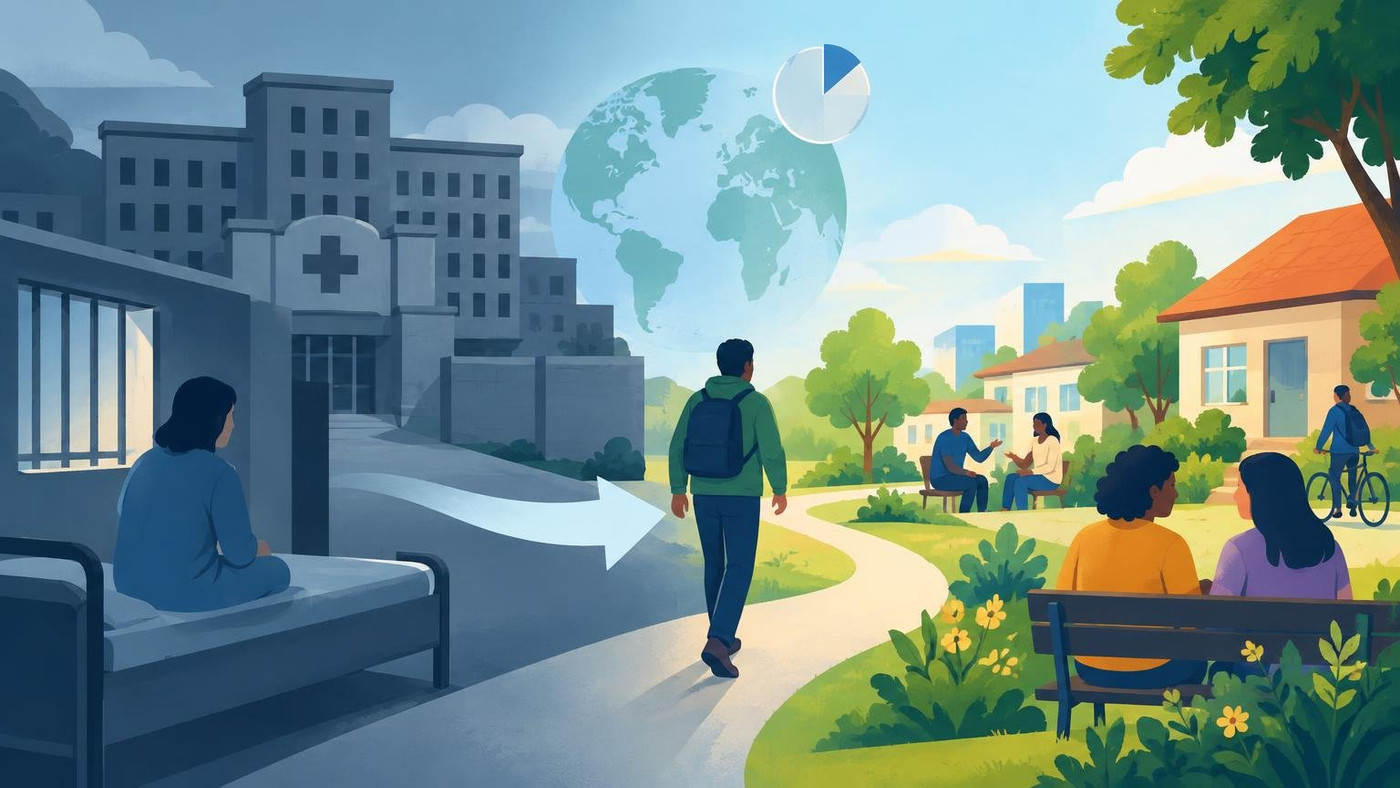
AI-generated illustration
Advertisement
On October 9, 2026, WHO released a guide to move people from long psychiatric hospital stays to community care; only about 9% of countries have fully made the shift.
What Happened
The World Health Organization (WHO) on Friday, October 9, 2026, released a practical guide urging countries to move people out of long stays in psychiatric hospitals and towards care in their own communities. The guide, titled "Supporting the transition to community-based mental health and social care: practical guide to the deinstitutionalization of psychiatric hospitals", is aimed at hospital leaders and was issued on the eve of World Mental Health Day, observed on Saturday, October 10. This year's day carries the theme "Lived experiences heard: real voices, real change", chosen by the World Federation for Mental Health and carried by WHO in its global campaign.
Key Facts
- WHO published the guide on October 9, 2026, a day before World Mental Health Day on October 10.
- According to WHO, only about 1 in 10 countries (9%) have fully moved from institution-based mental health care to community-based models.
- Around half of countries (53%) are still in the early stages of that shift, WHO said.
- About half (49%) of reported psychiatric hospital admissions are involuntary, and more than one in five hospital stays (23%) last longer than a year.
- The guide sets out three phases of work, plan, prepare and provide, starting with cutting admissions and shortening hospital stays.
- WHO Director-General Tedros Adhanom Ghebreyesus said: "People should not have to give up their freedom, dignity or place in their community to receive ongoing mental health support."
Why It Matters
For many families, mental illness still means a choice between struggling alone at home or a long, isolating stay in a hospital far away. WHO's figures show how common the second path remains: nearly half of admissions happen without the person's consent, and almost a quarter of stays stretch beyond a year. The new guide is WHO's attempt to give hospital managers a step-by-step route out of that pattern.
Community-based care means support close to where people live: outpatient clinics, mental health services in general hospitals, home visits, peer support and help with housing and work. The idea is that people can keep their jobs, relationships and routines while being treated, rather than losing them during a long admission. WHO defines deinstitutionalisation as helping people who have spent six months or more in psychiatric hospitals return to live in their communities.
This has a quiet but real link to women's lives. When care moves into the community, families take on a larger share of day-to-day support, and in many households that work falls on mothers, wives and daughters. A rights-based system therefore has to support carers as well as patients, so that one person's recovery does not come at the cost of another's health. Women are also among those receiving care, and keeping them close to children and family can make recovery easier.
The theme of this year's World Mental Health Day points the same way. "Lived experiences heard" asks governments and health services to involve people who have experienced mental health conditions in designing policy and services, not only as patients but as partners.
| WHO measure | Figure |
|---|---|
| Countries fully moved to community-based care | About 9% |
| Countries in early stages of the shift | 53% |
| Psychiatric admissions that are involuntary | About 49% |
| Hospital stays longer than a year | 23% |
Impact
Short-term: Health ministries and hospital leaders get a concrete checklist to begin cutting long stays and involuntary admissions, and the guide gives advocates a WHO benchmark to cite.
Long-term: If countries follow it, more people with mental health conditions could be treated close to home, keeping their rights, jobs and family ties, while hospitals shrink their long-stay wards.
Who is affected: People living with mental health conditions, their families and carers, many of them women, psychiatric hospital staff and managers, and health policymakers in every country.
Key Takeaway
WHO's October 9, 2026, guide asks countries to replace long psychiatric hospital stays with community care, noting that only about 9% of countries have fully made that move.
Questions and Answers
What did WHO release before World Mental Health Day 2026?
On October 9, 2026, WHO released a practical guide to help psychiatric hospitals reduce admissions and long stays and help people return to life in their communities.
What is the theme of World Mental Health Day 2026?
The theme is "Lived experiences heard: real voices, real change", chosen by the World Federation for Mental Health and promoted by WHO.
How many countries have fully moved to community-based mental health care?
According to WHO, only about 1 in 10 countries, or 9%, have fully made the transition; around 53% are still in early stages.
What does community-based mental health care mean for families?
It means treatment closer to home, so people can keep their routines and relationships, but it also means families and carers need support, since more day-to-day care happens at home.
Sourced and fact-checked by the Peepals Global Editorial Team
Lakmé Fashion Week x FDCI returns to Delhi Oct 13-18; Péro opens, Malhotra is back
El Niño puts 347 million children at risk, UNICEF warns; 190 million in Asia
Reported, fact-checked and published by the Peepals Global Editorial Team.
Advertisement