
Google's Project Suncatcher satellite runs Gemma 4 AI model in orbit
 By Anika SharmaAI & Innovations Editor, Peepals Tech

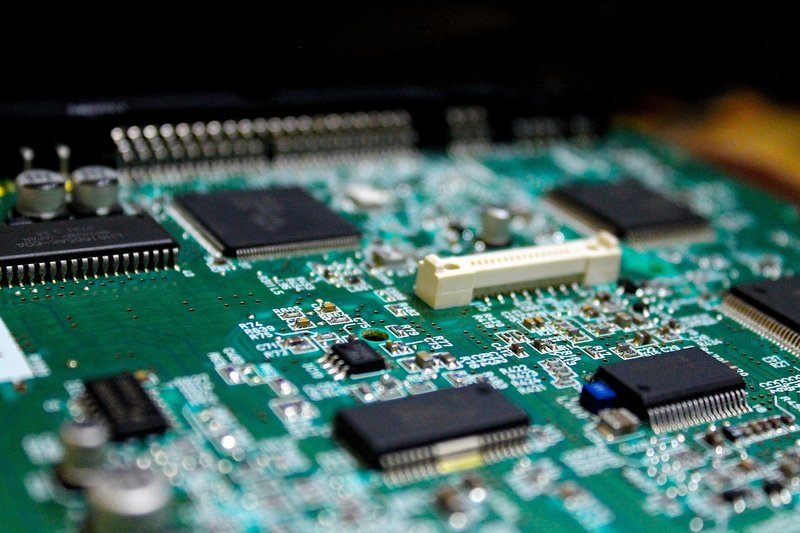
Representative image: motionstock / Pixabay
Google's Project Suncatcher prototype ran the Gemma 4 AI model on a TPU in orbit and sent a reply to Earth, reported October 30, 2026.
What Happened
Google says its Project Suncatcher prototype, a satellite built to test whether artificial intelligence computing can work in space, has run the company's Gemma 4 AI model in orbit and sent a complete response back to Earth. The milestone was reported on Friday, October 30, 2026. Google's team sent a command to the satellite, switched on one of its Tensor Processing Units (TPUs, Google's own AI chips), ran a prompt asking for a haiku about space, and received the answer as the satellite passed over Svalbard, Norway. Google chief executive Sundar Pichai called it a "hello world" moment for the project.
Key Facts
- Project: Project Suncatcher, Google's prototype for a space-based AI data centre.
- Launch: the prototype satellite went up on October 1, 2026, on a SpaceX Falcon 9 rideshare mission, and spent several weeks being commissioned.
- Test: it ran the Gemma 4 model in orbit and returned a full response; the downlink came over Svalbard, Norway.
- Hardware: four TPUs and up to 1 kilowatt of power, enough to run one chip for roughly 20 minutes at a time, so only one TPU runs at once.
- The team also ran space-themed limericks and telemetry requests; a Google spokesperson said the satellite was "operating nominally".
- Next steps: stress tests under extreme heat and radiation; reports say networks of linked satellites are planned for 2027.
Why It Matters
Training and running AI models takes enormous amounts of electricity, and data centres on the ground are running into limits on power, land and water for cooling. The idea behind Project Suncatcher is that satellites in orbit could draw on near-constant sunlight through solar panels and run AI chips there instead. A data centre in space is still a distant prospect, but before anything larger can be built, engineers need to show that ordinary AI chips can switch on, run a real model and return results in the harsh conditions of orbit. That is what this test demonstrates.
It is important to be clear about scale. The prototype can power only one chip at a time, for about 20 minutes, and it answered short poetry prompts. Some coverage has described it as an orbital data centre, but others treat it as a measured technical step rather than a working facility. The company's own description, a "hello world" moment, is the kind of first test programmers run to check that a system works at all.
There are also serious open questions. Getting rid of heat is difficult in a vacuum, because there is no air to carry it away, and AI chips run hot. Radiation in orbit can damage electronics. Critics also point out that large numbers of satellites add to the risk of space debris and to light pollution that affects astronomers. The next round of heat and radiation testing will show how far the idea can go.
For India, where data-centre operators also need large and reliable power supplies, the experiment is worth following as one of several attempts to find new ways to power AI. If computing in orbit ever becomes practical, it would also matter to satellite builders and launch providers, including India's own space industry.
| Item | Detail |
|---|---|
| Satellite launch | October 1, 2026, SpaceX Falcon 9 rideshare |
| AI model run in orbit | Gemma 4 |
| Chips on board | Four Tensor Processing Units, one used at a time |
| Power | Up to 1 kilowatt |
| Next phase | Heat and radiation stress tests; linked satellites planned for 2027 |
Impact
Short-term: Google will run further tests on the prototype, including stress tests for heat and radiation. Results will show whether the chips stay reliable over time in orbit.
Long-term: If the approach works at larger scale, part of the world's AI computing could one day move off the ground, easing pressure on power grids. If heat, radiation or cost prove too difficult, the project may remain an experiment.
Who is affected: AI companies and data-centre operators looking for new power sources; satellite and launch companies; astronomers concerned about crowded orbits; and, eventually, users of AI services, whose costs depend on the price of computing.
Key Takeaway
Google's Project Suncatcher prototype ran the Gemma 4 AI model on a TPU in orbit and sent a response to Earth, reported on October 30, 2026, an early proof that AI chips can work in space, though far from a working space data centre.
Questions and Answers
What is Google's Project Suncatcher?
Project Suncatcher is Google's experiment to test whether AI computing can be done on satellites powered by sunlight. Its first prototype satellite was launched on October 1, 2026.
What did the Project Suncatcher satellite do?
It switched on one of its four Tensor Processing Units, ran Google's Gemma 4 AI model on a prompt asking for a haiku about space, and sent the full answer back to Earth as it passed over Svalbard, Norway.
Is Project Suncatcher a working data centre in space?
Not yet. The prototype has up to 1 kilowatt of power and can run only one chip for about 20 minutes at a time. Google described the test as a "hello world" milestone, the first step before larger systems.
What are the problems with data centres in space?
Removing heat from chips is hard in a vacuum, radiation can damage electronics, and critics warn that more satellites add to space debris and light pollution. Google plans heat and radiation stress tests next.
Disclaimer: Prepared by the Peepals newsroom from publicly available sources with AI assistance. Information is accurate to the best of our knowledge at the time of publication and may change. Images may be representative. Not professional advice. Report an error via our contact page.
By Anika Sharma, AI & Innovations EditorCovers AI & Innovation and more for Peepals Tech. All stories by Anika Sharma
Get the day's stories in your inbox
Peepals Weekly: the week decoded, free. One email a week, unsubscribe in one click.
Anika Sharma is a pen name of the Peepals Global Editorial Team, which researches, fact-checks and publishes every story. The portrait is an illustration.