
World Bank's AI development report launched in Delhi; Vaishnaw cites farm, TB gains
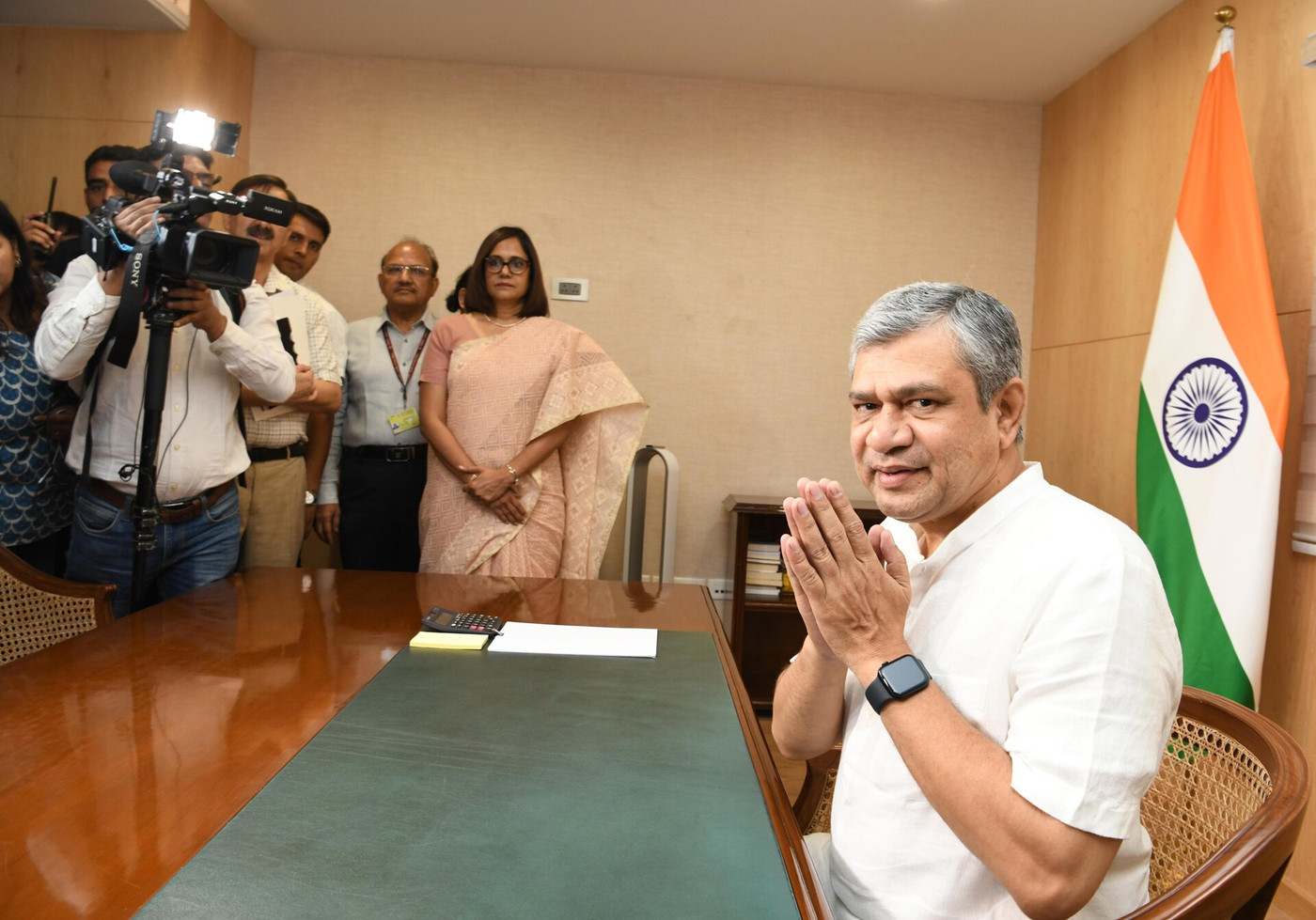
File photo: Ministry of Railways (GODL-India), via Wikimedia Commons
Ashwini Vaishnaw launched the World Bank's World Development Report 2026 on AI in New Delhi on October 8, citing AI gains in sugarcane farming and TB detection.
What Happened
Union Electronics and IT Minister Ashwini Vaishnaw launched the World Bank's World Development Report 2026, titled "The Promise of Artificial Intelligence", in New Delhi on Thursday, October 8, 2026. The launch, held at The Oberoi, was organised by the IndiaAI Mission under the Ministry of Electronics and Information Technology together with the World Bank Group. Speaking at the event, the minister said AI was already changing the lives of ordinary people in India and pointed to gains in sugarcane farming in Baramati and in tuberculosis detection. The report itself, the World Bank's flagship annual study, was first released globally on August 4, 2026, and argues that AI can speed up growth in developing countries if governments close gaps in power, connectivity, skills and institutions.
Key Facts
- The India launch took place on October 8, 2026, at an event organised by the IndiaAI Mission and the World Bank Group.
- Vaishnaw said sugarcane yields in Baramati rose by 40% while water and fertiliser use fell by 30%, using a mix of satellite, sensor, weather and farm-level data.
- He said tuberculosis detection had increased by 35% with the help of AI tools.
- The report finds that generative AI puts about 4.5% of jobs in low- and middle-income countries at risk of automation, against 14.2% in high-income countries.
- It estimates that 16.2% of jobs in developing economies could see a meaningful productivity boost from AI, close to the 18.7% expected in rich countries.
- The report recommends a three-step approach for developing countries: adopt existing AI tools, adapt them to local needs, and build domestic capability.
Why It Matters
The World Development Report is one of the most widely cited documents in development policy, and the 2026 edition is the World Bank's main statement on what AI means for poorer economies. Its central message is cautiously optimistic. It says the threat of job losses is less immediate in developing countries because more people there do manual work rather than the cognitive tasks that generative AI can automate. The report's director, Gaurav Nayyar, has said AI is more likely to complement people's work in these countries than to replace it.
There is an important catch. The report notes that the productivity gains from AI are expected to be much bigger in advanced economies because they are adopting the technology more widely and more quickly. In other words, the benefit depends on adoption, and adoption depends on electricity, internet access, skills and capable institutions. Countries that fall behind on these basics risk falling further behind.
For India, the launch was a chance to present its own approach as a model. The examples the minister chose, from a sugarcane belt in Maharashtra and from public health, point to AI reaching farmers and patients, not only office workers. The IndiaAI Mission, which co-hosted the event, runs programmes on public computing capacity, datasets, skills and start-up funding.
The report's job figures need careful reading in India's case. India has a large services sector, and the report itself notes that early disruption is concentrated in knowledge-intensive services. That means the overall developing-country average may understate the exposure of India's IT and back-office workforce.
| Measure | Low- and middle-income countries | High-income countries |
|---|---|---|
| Jobs at risk of automation by generative AI | 4.5% | 14.2% |
| Jobs that could see a productivity boost | 16.2% | 18.7% |
Impact
Short-term: The launch puts AI in agriculture and health at the centre of India's policy messaging and gives the IndiaAI Mission a global platform for its programmes.
Long-term: If the report's advice is followed, the focus of AI policy in developing countries will shift from building frontier models towards adopting and adapting existing tools, backed by investment in power, connectivity and skills.
Who is affected: Policymakers, farmers and health workers using AI tools, India's IT and services workforce, and AI start-ups building for local needs.
Key Takeaway
The World Bank says AI can lift growth in developing countries without the job losses feared in rich ones, but only if they adopt it fast, and India used the Delhi launch to showcase its farm and health results.
Questions and Answers
What is the World Development Report 2026 about?
It is the World Bank's flagship annual report, and this edition, titled "The Promise of Artificial Intelligence", looks at how AI can help developing countries grow and what they must do to benefit.
When was it launched in India?
Union Minister Ashwini Vaishnaw launched it in New Delhi on October 8, 2026, at an event organised by the IndiaAI Mission and the World Bank. The report was first released globally on August 4, 2026.
Does the report say AI will take away jobs in countries like India?
It estimates that about 4.5% of jobs in low- and middle-income countries are at risk from generative AI, compared with 14.2% in high-income countries, but notes that knowledge-intensive services face early disruption.
What examples did India give at the launch?
The minister said AI-linked technology raised sugarcane yields in Baramati by 40% with 30% less water and fertiliser, and that tuberculosis detection had increased by 35%.
Disclaimer: Prepared by the Peepals newsroom from publicly available sources with AI assistance. Information is accurate to the best of our knowledge at the time of publication and may change. Images may be representative. Not professional advice. Report an error via our contact page.
Sourced and fact-checked by the Peepals Global Editorial Team
Samsung reportedly cuts Q4 phone output by up to 30% as memory costs soar
byteXL raises $9 million to take AI skilling to 120 engineering colleges
Reported, fact-checked and published by the Peepals Global Editorial Team.