

Venus brightest in November 2026: guides give dates from 24 to 29
 By Rhea MalhotraDigital Life Writer, Peepals Yuva
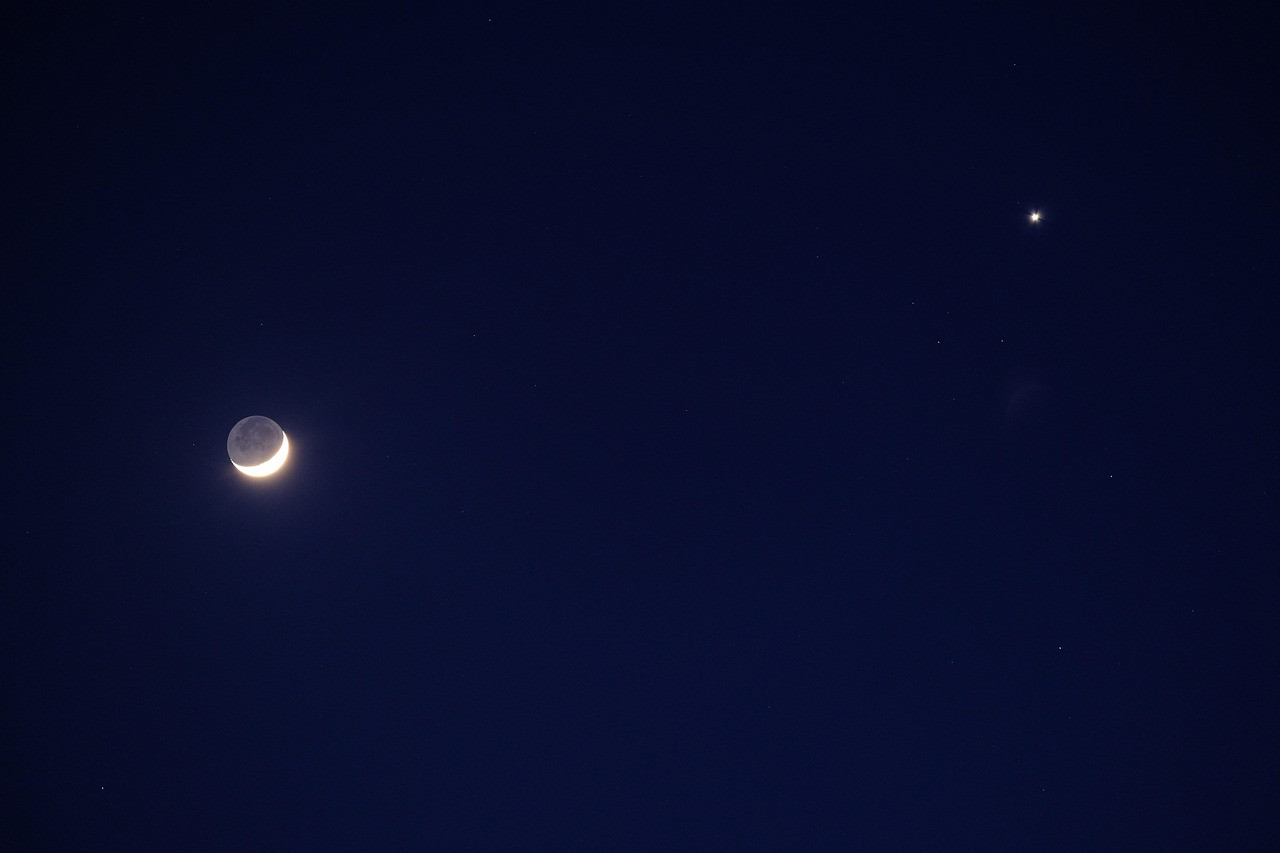
Representative image: Hans / Pixabay
Venus reaches greatest brilliancy in the morning sky in late November 2026; guides give dates from 24 to 29 November and magnitudes of minus 4.4 to minus 4.9.
What Happened
Venus, already the brightest object in the dawn sky, is heading for its brightest showing of this morning appearance in late November 2026, but sky guides do not agree on the exact day. EarthSky puts the planet's greatest brilliancy on Sunday, 29 November, at about magnitude minus 4.4. Other guides give Friday, 27 November, at magnitude minus 4.7 to minus 4.9; Saturday, 28 November, at about minus 4.9; and one astronomy club's calendar lists Tuesday, 24 November, at minus 4.9. The guides agree that Venus will shine low in the eastern sky before sunrise, near the star Spica, and that the peak falls in the last week of November.
Key Facts
- Event: Venus reaches greatest brilliancy, its brightest point of the current morning appearance.
- Dates given: 24 November (one club calendar), 27 November (two guides), 28 November (one guide), 29 November (EarthSky).
- Brightness: estimates range from about magnitude minus 4.4 to minus 4.9; on the astronomical magnitude scale, a more negative number means a brighter object.
- Where: low in the eastern sky before sunrise, near the bright star Spica.
- Background: Venus passed inferior conjunction, between Earth and the Sun, in late October, and has since moved into the morning sky, according to one guide.
- Earlier this month, Venus was already shining at about magnitude minus 4.7, according to Astronomy magazine's weekly sky guide.
Why It Matters
For anyone who is up before dawn, whether for a run, a commute or a study session, Venus is the easiest planet to find. It does not need a telescope or any special skill: it is simply the brilliant point of light in the east before sunrise, far brighter than any star. Late November is when that light reaches its peak for this appearance, which makes the coming weeks a good time to start looking.
The disagreement over the date is not a mistake so much as a difference in definitions. One guide explains that "greatest brilliancy" is the peak of a brightness model, while related measures, such as the moment the planet shows the largest lit area, can fall several days apart. Each calculation is done slightly differently, so the published dates spread across almost a week. For a viewer, the difference is invisible: Venus will look almost equally dazzling on any morning in that window.
There is also a simple reason Venus changes in brightness at all. Like the Moon, it shows phases. After passing between Earth and the Sun, it appears as a thin crescent that is close to us; as it moves away, more of it is lit but it is farther off. Somewhere between those two effects lies the brightest point, which is what the guides are calculating.
For students interested in astronomy, the Venus peak is an easy first observation, and a steady pair of binoculars can show the planet's phase.
Peepals calculation: The published dates span 24 to 29 November, a window of six days counting both ends. The brightness estimates differ by half a magnitude (minus 4.9 against minus 4.4). On the magnitude scale, a difference of 0.5 means one value is about 1.6 times as bright as the other (2.512 to the power 0.5 ≈ 1.58), though this reflects different methods rather than a real change of that size. Our calculation from the reported figures.
| Guide | Date of greatest brilliancy | Magnitude |
|---|---|---|
| Astronomy club calendar | Tuesday, 24 November | about minus 4.9 |
| Two guides | Friday, 27 November | minus 4.7 to minus 4.9 |
| One guide | Saturday, 28 November | about minus 4.9 |
| EarthSky | Sunday, 29 November | about minus 4.4 |
Impact
Short-term: Through the rest of November, Venus will be an obvious bright light in the eastern sky before sunrise, reaching its brightest in the final week of the month.
Long-term: After the peak, Venus will stay in the morning sky as it slowly moves farther from Earth, so early risers can follow it for weeks.
Who is affected: Early risers, students, amateur astronomers and sky photographers.
What to watch next: The last week of November 2026, when guides place Venus at its brightest of this appearance.
Key Takeaway
Venus reaches its brightest of this morning appearance in the last week of November 2026, with guides giving dates from 24 to 29 November; look low in the east before sunrise.
Questions and Answers
When is Venus brightest in November 2026?
Guides place Venus's greatest brilliancy between 24 and 29 November 2026. EarthSky gives 29 November, two guides give 27 November, one gives 28 November and an astronomy club calendar gives 24 November.
Where can I see Venus in the morning sky?
Look low in the eastern sky before sunrise. Venus will be the brightest point of light there, near the star Spica.
Why do guides give different dates for Venus at its brightest?
They use slightly different definitions and models of brightness. One guide notes that greatest brilliancy and the date of the largest lit area can fall several days apart.
Do I need a telescope to see Venus?
No. Venus is easy to spot without any instrument. Binoculars can show its crescent shape.
Disclaimer: Prepared by the Peepals newsroom from publicly available sources with AI assistance. Information is accurate to the best of our knowledge at the time of publication and may change. Images may be representative. Not professional advice. Report an error via our contact page.
By Rhea Malhotra, Digital Life WriterCovers Digital Life and more for Peepals Yuva. All stories by Rhea Malhotra
IBPS RRB PO call letter: Officers Scale-I prelims on November 21-22
Anuj Shrivatri becomes India's 100th Grandmaster, first from Madhya Pradesh
Get the day's stories in your inbox
Peepals Weekly: the week decoded, free. One email a week, unsubscribe in one click.
Rhea Malhotra is a pen name of the Peepals Global Editorial Team, which researches, fact-checks and publishes every story. The portrait is an illustration.